1 citations
,
January 2023 in “Science Advances” This study found that bacterially induced metabolic changes in stem cells can enhance skin and hair follicle regeneration in both mice and humans, suggesting potential strategies for improving recovery after injury.
 1 citations
,
January 2023 in “Mycopathologia”
1 citations
,
January 2023 in “Mycopathologia” In this case report, a 34-year-old woman with black dot tinea capitis did not respond to oral Itraconazole but was successfully treated with Terbinafine.

This study discovered that androgenetic alopecia disrupts the scalp microbiome balance across the whole scalp, not just areas with hair loss, and introduced a microbial index for early detection and severity prediction.
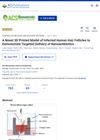 July 2024 in “ACS Biomaterials Science & Engineering”
 In this study, researchers used a 3D in vitro organ culture system to show that rifampicin-loaded lipid nanocapsules can penetrate hair follicles more effectively than free rifampicin, highlighting the potential advantage of nanocarrier-based antibiotic treatments for follicular infections.
 October 2025 in “Infection Control and Hospital Epidemiology”
 This article discusses developing a standardized operating procedure for PRP administration to align with infection prevention regulatory standards and reports no new clinical results.
 May 2023 in “BMC Women's Health”
 This study found that female patients in Finnish specialized health care with a history of doping use exhibited high rates of psychiatric and substance use disorder morbidity, with less than half of those using anabolic androgenic steroids showing atypical red blood cell parameters.
 6 citations
,
December 2023 in “Lancet. Infectious diseases/The Lancet. Infectious diseases”
6 citations
,
December 2023 in “Lancet. Infectious diseases/The Lancet. Infectious diseases” This study found that treatment with the synbiotic SIM01 significantly alleviated multiple symptoms of post-acute COVID-19 syndrome compared to placebo, suggesting potential management benefits through gut microbiome modulation.
 37 citations
,
March 1990 in “The Journal of Pediatrics”
37 citations
,
March 1990 in “The Journal of Pediatrics” Toxic shock syndrome is caused by a complex interaction of bacterial toxins and the immune system, and understanding this can help improve diagnosis and treatment.
 February 2018 in “Trends in Immunology”
 This study demonstrated that antigens from the skin bacterium Staphylococcus epidermidis can stimulate CD8+ T cells, which in turn enhance wound healing.
 October 2007 in “Journal of Investigative Dermatology”
 The document suggests a bacteria plays a significant role in acne rosacea and that white hair can regain color after transplant, meriting more research on reversing grey hair.
 97 citations
,
April 2016 in “Andrology”
97 citations
,
April 2016 in “Andrology” This review discusses the etio-pathogenetic factors in benign prostatic hyperplasia and their role in the development of lower urinary tract symptoms but reports no new research findings.
 62 citations
,
September 2014 in “PLoS ONE”
62 citations
,
September 2014 in “PLoS ONE” This study identified distinct human and bacterial protein profiles in sebaceous follicular casts, with acne samples showing proteins linked to inflammation and normal samples showing proteins involved in stress protection.
 January 2023 in “Wiadomości Lekarskie”
 In this study, the researchers shared their experiences with using local intracanal antibiotic therapy for treating endodontic bacterial infections, noting that current disinfectants, though effective, are highly toxic to human cells.
 November 2015 in “European Journal of Inflammation”
 This review discusses the potential pathogenic mechanisms of cicatricial alopecia and emphasizes the need for further research on treatment methods, but it reports no new clinical findings.
 76 citations
,
January 2019 in “Nanoscale”
76 citations
,
January 2019 in “Nanoscale” Created material boosts hair growth and kills bacteria for wound healing.
 January 2026 in “Quality in Sport”
 This review highlights that isotretinoin effectively treats acne by addressing its pathogenic mechanisms, although managing its teratogenic risk and side effects through structured monitoring is crucial for safe use.
 41 citations
,
December 2015 in “Journal of the European Academy of Dermatology and Venereology”
41 citations
,
December 2015 in “Journal of the European Academy of Dermatology and Venereology” This review discusses the challenges and potential solutions in studying Demodex mites and their possible pathogenic role in human skin disorders but reports no new findings.
 3 citations
,
September 2020 in “Case reports in dermatological medicine”
3 citations
,
September 2020 in “Case reports in dermatological medicine” This case report described a misdiagnosed kerion in a 10-year-old child initially treated as a bacterial abscess, leading to unnecessary surgery and residual scarring alopecia.
 16 citations
,
September 2017 in “PLoS ONE”
16 citations
,
September 2017 in “PLoS ONE” This study hypothesizes that a mummified 19th Century girl in San Francisco died of severe undernourishment potentially due to a bacterial-borne disease, highlighting historical health challenges mitigated by modern sanitation and medicine.
 9 citations
,
October 2012 in “Natural Product Communications”
9 citations
,
October 2012 in “Natural Product Communications” This study analyzed the essential oil from Chamaecyparis lawsoniana and found that it is rich in limonene and exhibits antibacterial and antifungal properties, particularly against Candida albicans and certain Gram-positive bacteria.
 2 citations
,
February 2022 in “Research Square (Research Square)”
2 citations
,
February 2022 in “Research Square (Research Square)” This study found that the ethanolic root extract of Onosma dichroantha exhibits antioxidant activity and significant antimicrobial effects against 11 bacterial species.
 90 citations
,
June 2006 in “The American Journal of Dermatopathology”
90 citations
,
June 2006 in “The American Journal of Dermatopathology” This review outlines the classification, histopathologic presentation, and pathogenetic concepts of scarring and nonscarring alopecias, reporting no new clinical results and emphasizing the need for clinicopathologic correlation.
 January 2024 in “Wiadomości Lekarskie”
 This study found that in prodromal Alzheimer's disease, pro-inflammatory gut bacteria were associated with reduced cerebral blood flow and reactivity, while beneficial gut bacteria correlated with better outcomes.
 January 2024 in “Wiadomości Lekarskie”
 In this study, researchers analyzed the clinical phenotype and primary pathogenic links in patients who survive the acute phase of a critical illness and rely on prolonged intensive care, finding that these patients show persistent inflammation, nutritional deficiencies, and other chronic complications over time.
 June 2025 in “International Journal of Environmental Sciences”
 In this study, researchers developed an herbal shampoo using extracts from multiple plants and observed that specific combinations effectively inhibited bacteria like Pseudomonas aeruginosa and Staphylococcus species, with certain formulations also being well-received by consumers for color and overall satisfaction.
 September 2023 in “Clinical, cosmetic and investigational dermatology”
 In this study, the researchers found that a 28-day topical treatment with a postbiotic ferment complex notably altered the scalp microbiome in women with sensitive scalps, increasing certain bacterial species and decreasing others, while also reportedly alleviating symptoms of sensitive skin syndrome in all participants.
 23 citations
,
January 2010 in “Journal of Medical Primatology”
23 citations
,
January 2010 in “Journal of Medical Primatology” This study found that alopecia in captive Rhesus macaques may be linked to chronic hypersensitivity dermatitis with CD4+ cell inflammation, possibly influenced by altered housing and reduced pathogen exposure.
 19 citations
,
January 2012 in “International Journal of Trichology”
19 citations
,
January 2012 in “International Journal of Trichology” This case series suggests that Propionibacterium acnes colonization may contribute to the development of hair casts and diffuse non-scarring alopecia, as patients' symptoms improved with antibiotics targeting the bacteria.
 8 citations
,
July 2018 in “European Journal of Dermatology”
8 citations
,
July 2018 in “European Journal of Dermatology” A medication may help with hair growth in psoriasis, and a skin condition might be linked to a specific bacteria.
 January 2025 in “International Journal of Advanced Biochemistry Research”
 This study found that in dogs with dermatological disorders, fungal dermatitis was diagnosed in 20.77% of cases, with Microsporum spp. being the most common fungal pathogen, emphasizing the need for thorough diagnostic approaches including clinical, microscopic, and cultural assessments.