16 citations
,
November 2024 in “Human Genetics and Genomics Advances” This study identified 24 independent genetic variations and 127 unique genes associated with nociplastic pain, suggesting it is a complex, heritable trait with links to various cognitive and metabolic pathways.
 16 citations
,
May 2000 in “Endocrinology”
16 citations
,
May 2000 in “Endocrinology” This study identified a new gene, mrp4, in mice, which suggests it may have a unique role in the growth and development of hair follicles in the ears and tails.
 June 2021 in “bioRxiv (Cold Spring Harbor Laboratory)”
 This research found that the microtubule catastrophe factor KIF18B plays a crucial role in promoting spindle orientation in keratinocytes, linking this process to cell fate decisions during hair follicle morphogenesis.
 97 citations
,
March 2002 in “Molecular and cellular biology”
97 citations
,
March 2002 in “Molecular and cellular biology” This study found that mice with a mutant CDP/Cux protein lacking the homeodomain showed severely impaired growth, high postnatal mortality, and reduced fertility, highlighting CDP/Cux's role in developmental regulation.
December 2024 in “European journal of medical research” This study suggests that the NCSTN knockout mouse could serve as an HS animal model, with tamoxifen potentially used for gene deletion in mice.
9 citations
,
February 2001 in “Journal of Dermatological Science” This study found that the expressions of CDK inhibitors p21waf1/cip1 and p27kip1 were higher during the anagen phase compared to telogen, suggesting a role in follicular epithelial cell differentiation.
 6 citations
,
October 2012 in “Journal of Heredity”
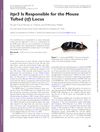
6 citations
,
October 2012 in “Journal of Heredity” This study identified the Itpr3 gene as responsible for the tufted hair loss phenotype in the BTBR mouse strain.
8 citations
,
June 2001 in “Journal of Biological Chemistry” This study found that the truncated hHb1-DeltaN transcript in breast cancer cells is produced by a cryptic intron promoter and responds to DNA demethylation, potentially altering cancer cell adhesion.
60 citations
,
July 2014 in “Autophagy” This study found that autophagy is impaired in Birt-Hogg-Dubé syndrome-associated renal tumors and identified that the FLCN protein interacts with key autophagy components regulated by ULK1.
 16 citations
,
March 2016 in “The journal of investigative dermatology/Journal of investigative dermatology”
16 citations
,
March 2016 in “The journal of investigative dermatology/Journal of investigative dermatology” In this study, researchers observed that a noncanonical mechanism involving the γ-secretase-dependent, RBPj-independent Notch intracellular domain improves survival in Msx2-Cre mice by delaying hair follicle destruction and reducing disease severity.
10 citations
,
May 2020 in “Frontiers in cell and developmental biology” In this study, researchers found that Dicer, but not Tarbp2, plays a crucial role in regulating the growth phase of hair follicles in post-natal mice.
 February 2024 in “Journal of Investigative Dermatology”
 In this study, the deletion of NIPP1 in keratinocytes led to chronic skin inflammation and epidermal changes in mice, with early cell-cycle arrest and premature senescence observed, potentially contributing to reduced mutagen sensitivity.
115 citations
,
December 2019 in “The Plant Journal” This study found that nitrate, rather than ammonium, significantly enhances phosphate starvation responses in plants through a regulatory cascade involving NIGT1, SPX, and PHR1 proteins.
7 citations
,
January 2024 in “Cancer Research Communications” This study found that TAp63 and ΔNp63 isoforms in the p63 family interact with different transcription factors to regulate distinct transcriptional programs, affecting various biological functions like metabolic pathways, oxidative stress response, and epithelial morphogenesis in mouse epidermal cells.
 81 citations
,
November 2012 in “Journal of the National Cancer Institute”
81 citations
,
November 2012 in “Journal of the National Cancer Institute” This study found that FLCN deficiency in mice muscles led to increased mitochondrial biogenesis and a metabolic shift towards oxidative phosphorylation, with a similar advantage observed in FLCN-null kidney cancer cells.
 April 2023 in “Cancer research”
 This study suggests that KRTAP2-3 may serve as a novel biomarker to identify cells in the polyaneuploid cancer cell state, which is linked to therapy resistance and poor prognosis in prostate cancer.
 18 citations
,
December 2009 in “Canadian Journal of Animal Science”
18 citations
,
December 2009 in “Canadian Journal of Animal Science” This study reports that BMP2 expression in goat skin is higher during late telogen and early anagen phases, indicating a potential role in hair follicle regeneration.
 October 2024 in “Journal of the Endocrine Society”
 This study found that certain CYP21A2 mutations significantly reduce enzyme activity, contributing to non-classic congenital adrenal hyperplasia phenotypes, which may aid in enhancing diagnosis and treatment strategies.
 September 2024 in “Frontiers in Genetics”
 In this study, researchers found a significant association between the rs13405699 SNP at 2q31.1 and male pattern baldness among Han Chinese men, suggesting genetic influence on this condition in this population.
 3 citations
,
February 2019 in “Animal biotechnology”
3 citations
,
February 2019 in “Animal biotechnology” In this study, the PLP2 gene was found to promote secondary hair follicle development in Liaoning cashmere goats, with its expression negatively regulated by melatonin and potentially affecting follicle development via the BMP pathway.
 93 citations
,
June 2011 in “Journal of Neuroscience”
93 citations
,
June 2011 in “Journal of Neuroscience” This study found that the transcription factor p63 is crucial for horizontal basal cell differentiation in the olfactory epithelium, suggesting a p63-dependent mechanism activates reserve stem cells after injury.
4 citations
,
February 2008 in “Cell stem cell” NFATc1 is crucial for keeping hair follicle stem cells inactive.
 August 2023 in “Journal of Dermatological Science”
 A specific RNA molecule blocks hair growth by affecting a protein related to hair loss conditions.
January 2018 in “bioRxiv (Cold Spring Harbor Laboratory)” This study found that the mutant hairless rhino bald protein in mice interacts with the vitamin D receptor but cannot repress its transactivation and shows abnormal cellular localization.
 5 citations
,
February 2016 in “Genetic Testing and Molecular Biomarkers”
5 citations
,
February 2016 in “Genetic Testing and Molecular Biomarkers” This study found that the expression levels of nucleolin, nucleophosmin, and UBTF genes were lower in normal sites compared to hair loss sites in males with alopecia.

This study found that CYP21A2 gene mutations are the most common cause of non-classic congenital adrenal hyperplasia, while CYP11B1 mutations are rare and may partially impair enzyme activity.
 95 citations
,
February 2019 in “The New England Journal of Medicine”
95 citations
,
February 2019 in “The New England Journal of Medicine” This article discusses the potential genetic basis of central centrifugal cicatricial alopecia in women of African ancestry but does not provide new research results.
 7 citations
,
August 2020 in “Animal biotechnology”
7 citations
,
August 2020 in “Animal biotechnology” This study found that lncRNA-599547 positively regulates the expression of the Wnt10b gene by interacting with miR-15b-5p, enhancing the inductive property of dermal papilla cells in cashmere goats.
 65 citations
,
September 2004 in “The American journal of pathology”
65 citations
,
September 2004 in “The American journal of pathology” This study found that overexpressing the BMP inhibitor Noggin in transgenic mice led to a significant loss of nontylotrich hair follicles, suggesting a critical role for BMP signaling in hair follicle morphogenesis and cycling.
14 citations
,
September 1999 in “Journal of Investigative Dermatology” Lack of TrkC receptor delays hair follicle development.