 August 2025 in “Lasers in Medical Science”
 In this study, the combination of low-level laser therapy and topical minoxidil was found to improve hair density and diameter more effectively than minoxidil alone in treating androgenic alopecia, with similar safety profiles observed in both groups.
May 2019 in “Case medical research” 1 citations
,
November 2022 in “International Journal of Cosmetic Science” In this study, a topical application of Lotus corniculatus seed extract significantly reduced sebum production and skin oiliness in humans through inhibition of lipid synthesis pathways.
1 citations
,
October 2023 in “BMC Genomics” This study identified miRNAs within the Dlk1-Gtl2 region on chromosome 18 as potential epigenetic regulators of lamb fur traits, with possible implications for the PI3K-AKT signaling pathway.
 5 citations
,
November 2014 in “Hair transplant forum international”
5 citations
,
November 2014 in “Hair transplant forum international” This article introduces a series on low level laser light therapy, focusing on its science, regulatory aspects, and controlled trial methodologies, but reports no new clinical results.
 January 2025 in “Advances in Clinical Medicine”
 This source highlights that fractional CO2 laser, as a minimally invasive technology, shows significant benefits in treating various skin and mucosal conditions by improving therapeutic outcomes, shortening recovery times, and enhancing precise personalized interventions through emerging technologies like AI and biomarker monitoring.
January 2023 in “Figshare” This meta-analysis found that a combination of clobetasol, hydroxychloroquine, and N-acetylcysteine may be the most effective treatment approach for lichen planopilaris compared to other therapies.
 13 citations
,
May 2019 in “Cancer Prevention Research”
13 citations
,
May 2019 in “Cancer Prevention Research” This study found that a three-month regimen of leucoselect phytosome, a grape seed extract complex, was well tolerated and significantly reduced bronchial proliferation markers in heavy active and former smokers.
1 citations
,
December 2007 in “Journal of Microbiology and Biotechnology” This study found that Minoxidil included in triamino alpha-cyclodextrin significantly promoted hair growth in mice, potentially due to its enhanced substantivity on skin.
 May 2024 in “Medical Journal Armed Forces India/MJAFI”
 This study found that low-level light therapy was as effective as 5% minoxidil for increasing hair density in men with androgenetic alopecia over six months.
 2 citations
,
December 2019 in “Bioanalysis”
2 citations
,
December 2019 in “Bioanalysis” This article reviews analysis techniques in LC-MS/MS and discusses the potential use of a novel in-sample calibration curve method, but reports no new experimental results.
 6 citations
,
July 2009 in “Biomolecules & therapeutics”
6 citations
,
July 2009 in “Biomolecules & therapeutics” This study found that combining MSM with MAP significantly enhanced hair growth in mice, comparable to or better than minoxidil, due to increased intradermal retention of MAP.
14 citations
,
February 2022 in “The Journal of clinical investigation/The journal of clinical investigation” This study found that the development of Merkel cell carcinoma from hair follicles in mice can be driven by in vivo reprogramming with ATOH1 and relies on p53 loss for progression.
 3 citations
,
May 2022 in “Clinical and experimental dermatology”
3 citations
,
May 2022 in “Clinical and experimental dermatology” This review discusses potential EMT-targeting drugs for treating lichen planopilaris and emphasizes the need for clinical trials, as current evidence is limited to individual cases or case series.
July 2026 in “Journal of Investigative Dermatology” This study in mice found that using modified illite as a carrier for topical minoxidil enabled effective delivery without the solvent toxicity typically associated with minoxidil, while the illite also promoted hair growth through anti-inflammatory and pro-proliferative mechanisms.
 16 citations
,
December 2018 in “ACS Biomaterials Science & Engineering”
16 citations
,
December 2018 in “ACS Biomaterials Science & Engineering” This research found that a biodegradable fibrous membrane incorporating fibroblast-derived ECM accelerated wound healing and improved neovascularization in a mouse model.
 April 2016 in “Journal of Investigative Dermatology”
 This study reported that the absence of Lsh in skin led to significant epidermal hyperplasia and altered gene expression, suggesting its crucial role in regulating epidermal proliferation, differentiation, and wound healing.
 October 2025 in “Plastic & Reconstructive Surgery”
 This study evaluated the safety and effectiveness of MNC-QQ cell therapy in five men with androgenic alopecia, reporting no adverse effects and improvements in hair growth, hair density, and quality of life over six months.
36 citations
,
July 1996 in “The journal of investigative dermatology/Journal of investigative dermatology” This research reports a new autosomal recessive mutation in mice, 'lanceolate hair', causing generalized alopecia and hair shaft abnormalities, which may serve as a model for Netherton's syndrome in humans.
This study found that MNX@Arg-CLAVs nanovesicles enhanced hair regeneration and reduced aging in hair follicles in AGA mice, with less skin irritation compared to traditional minoxidil tincture.
 6 citations
,
July 2015 in “European Journal of Dermatology”
6 citations
,
July 2015 in “European Journal of Dermatology” Stopping methotrexate might reverse lymphoma-like conditions in some patients.
 1 citations
,
March 2015 in “Journal of the European Academy of Dermatology and Venereology”
1 citations
,
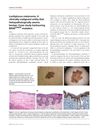
March 2015 in “Journal of the European Academy of Dermatology and Venereology” This letter to the editor shares a case study of lentiginous melanoma that appears clinically malignant but histopathologically benign, involving the BRAFV600R mutation.
2 citations
,
October 2024 in “Artificial Cells Nanomedicine and Biotechnology” This study found that silver nanoparticles synthesized using Lens culinaris extract exhibited potent anticancer activity against MCF-7, HCT-116, and HepG2 cell lines and significant antimicrobial effects against Klebsiella pneumoniae and Acinetobacter baumannii.
 6 citations
,
March 2018 in “Journal of Chromatography A”
6 citations
,
March 2018 in “Journal of Chromatography A” This study describes an analytical technique combining field-enhanced sample stacking with dispersive liquid-liquid microextraction, offering improved sensitivity for detecting finasteride and its metabolite in urine samples from patients treated for androgenetic alopecia.
20 citations
,
June 1964 in “Archives of Dermatology” This study described three cases of follicular mucinosis and observed that one case responded rapidly to systemic corticosteroids, suggesting a potential therapeutic effect.
 1 citations
,
April 2025 in “Romanian Journal of Ophthalmology”
1 citations
,
April 2025 in “Romanian Journal of Ophthalmology” This study indicates that central serous chorioretinopathy linked to topical minoxidil use is rare, suggesting the need for early detection and discontinuation if it occurs.
September 2025 in “OPAL (Open@LaTrobe) (La Trobe University)” In this study, researchers investigated the formation of spherical crystals of minoxidil in various alcoholic solvents, discovering new types like spherulite aggregates and a unique butterfly-shaped crystal, with the spherulite aggregates showing improved powder flow properties compared to other forms.
January 2010 in “USFEU Scientific Library (Ural State Forest Engineering University)” This study developed a grooved microneedle platform enabling precise transdermal delivery of triamcinolone acetonide for alopecia areata, achieving accurate dosing by controlling groove position and drug concentration.
April 2023 in “Journal of Drug Delivery Science and Technology” This study reported that optimized transfersomes and their gel form significantly improved transdermal delivery and hair growth promotion of minoxidil in C57BL/6 mice compared to commercial formulations.
 November 2023 in “The journal of investigative dermatology/Journal of investigative dermatology”
 In this study, mice lacking the Mcpip1 gene in their myeloid cells did not develop SCC-like tumors but instead showed increased melanocyte activity and hair loss, indicating a distinct role for myeloid Mcpip1 in skin cancer development compared to keratinocyte Mcpip1.