17 citations
,
January 2025 in “Journal of Nanobiotechnology” This review discusses the potential of bacterial extracellular vesicles in regenerative medicine, highlighting their advantages in addressing current EV challenges, and provides strategies for optimizing their preparation; it reports no new clinical results.
 December 2025 in “Journal of Pharma Insights and Research.”
 This paper reviews the state of knowledge on injectable cryogels, highlighting their unique properties such as shape-memory and mechanical integrity, which allow for minimally invasive delivery via needles and potential applications in oncology and regenerative medicine.
8 citations
,
November 2019 in “International Journal of Pharmaceutics” This work explores using a liquid crystalline phase to stabilize benzoyl peroxide nanosuspensions, suggesting a promising method to potentially reduce the side effects of acne treatments.
 19 citations
,
July 2019 in “Biomedical Microdevices”
19 citations
,
July 2019 in “Biomedical Microdevices” This review discusses the safety and potential adverse events of microneedling as both a medical and consumer product, noting the need for further understanding; no new clinical results are presented.
9 citations
,
May 2013 in “European Journal of Dermatology” This article discusses eruptive vellus hair cysts, describing their clinical characteristics, and reports no new research findings.
1 citations
,
June 2011 in “대한구강악안면외과학회지” This case study reports an epidermoid cyst diagnosis in a woman who developed swelling in the left parotid gland following botulinum toxin injection in the left masseter muscles.
 57 citations
,
March 2024 in “Nano-Micro Letters”
57 citations
,
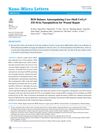
March 2024 in “Nano-Micro Letters” In this study, researchers created a core-shell nanozyme, CeO2@ZIF-8/Au, which autonomously regulates ROS levels to efficiently eliminate bacteria, reduce inflammation, and promote wound healing by balancing ROS generation and scavenging in response to environmental conditions.
1 citations
,
February 2020 in “The Journal of clinical investigation/The journal of clinical investigation” This study elucidates a mechanism for acne-like skin toxicity caused by EGFR/MEK inhibitors, involving an interaction with skin bacteria to trigger inflammation, which supports existing antibiotic treatment practices.
39 citations
,
May 2015 in “Advanced drug delivery reviews” This review discusses skin tissue engineering and highlights the potential role of microRNAs in improving bioengineered skin equivalents, concluding that further exploration of microRNA targets could address unmet clinical needs.
3 citations
,
August 2025 in “Fermentation” In this study, researchers produced a biosurfactant from yeast that effectively reduces surface tension, acts as a good oil emulsifier, demonstrates antioxidant and antimicrobial properties, and exhibits no cytotoxicity, suggesting its potential use in eco-friendly cosmetic formulations.
February 2012 in “Proceedings of SPIE, the International Society for Optical Engineering/Proceedings of SPIE” This study observed nestin-GFP expressing stem cells in the hair follicle bulge of living mice using high-resolution in-vivo multiphoton tomography, allowing migration tracking within their natural skin environment.
 April 2018 in “Journal of Investigative Dermatology”
 This study found that combining CelluTome system and RCM is a safe and effective protocol for evaluating wound healing responses in patients with epidermolysis bullosa.
January 2020 in “Advanced ultrasound in diagnosis and therapy” This case report highlights a misdiagnosis of an epidermoid cyst as a dermoid cyst using ultrasound, suggesting that specific ultrasound features can improve diagnostic accuracy for skin lesions.
 August 2019 in “Journal of Invertebrate Pathology”
 This study observed that different alkaline buffers had a significant impact on the volume of liquid consumed by fall armyworm larvae, emphasizing the importance of measuring imbibed volumes to reduce dose errors in bioassays.
 1 citations
,
February 2023 in “International journal of research - granthaalayah”
1 citations
,
February 2023 in “International journal of research - granthaalayah” This study reports that electromagnetic energy from a hydrocolloid wound dressing paste adversely affected human skin lipid droplets in vitro, but the implications, including potential cancer links, are unknown.
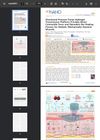
This study developed a directional pressure-pump hydrogel delivery platform that enhances wound healing in diabetic mechanically dynamic wounds by targeting antibacterial agents and nanozymes directly to the lesion site, disrupting biofilms, mitigating tissue damage, and supporting proper skin closure and vascular remodeling in animal models.
February 2026 in “Journal of drug targeting” This study found that combining laser ablation with nanoparticulate drug formulations effectively enhanced the skin and follicular delivery of hydrophilic drugs like minoxidil and minocycline in preclinical models.
 January 2024 in “Wiadomości Lekarskie”
 This study reported the development of fluorescent markers using wide band gap metal oxides with rare earth ions for early tumor detection and treatment. Testing in animals showed high efficiency and selectivity, with potential applications in contrast-enhanced MRI, targeted drug delivery, and photodynamic cancer therapy.
 25 citations
,
July 2019 in “Journal of drug delivery science and technology”
25 citations
,
July 2019 in “Journal of drug delivery science and technology” This study developed lipid-core nanocapsules for encapsulating menthol, improving its solubility and thermal stability, and demonstrated their safety and rapid skin absorption in ex vivo tests, highlighting potential applications for cosmeceuticals.
12 citations
,
September 2024 in “JID Innovations” This review highlights the potential of microfluidic skin-on-a-chip models in skin research, emphasizing their ability to mimic human skin structure and improve control over cellular and molecular distribution compared to traditional in vitro models.
 31 citations
,
May 2019 in “Nature communications”
31 citations
,
May 2019 in “Nature communications” This study found that Blimp1+ cells from mice can generate sebaceous gland organoids in vitro, which mimic natural gland traits and may aid in studying acne vulgaris.
15 citations
,
May 2009 in “Chemical Physics Letters” This study demonstrated that a metric based on rotational echo intensity in 2H magic-angle spinning NMR can derive kinetic information for conformational exchange without complex modelling, achieving activation barriers consistent with prior findings.
 12 citations
,
February 2025 in “Scientific Reports”
12 citations
,
February 2025 in “Scientific Reports” This study found that extracellular vesicles derived from mesenchymal stem cells and umbilical cord blood plasma enhanced wound healing and reduced scar formation in mice, suggesting their potential as therapeutic agents for skin repair.
July 2025 in “OPAL (Open@LaTrobe) (La Trobe University)” In this study, researchers developed a novel method using ultrasound stimulation and a hydrogel delivery system to enhance the regenerative effects of stem cell-derived extracellular vesicles on severe skin injuries, resulting in improved healing and hair follicle regeneration in a mouse model.
 17 citations
,
January 2023 in “Nanoscale Advances”
17 citations
,
January 2023 in “Nanoscale Advances” The microneedle arrays effectively promote wound healing and have potential for clinical use.
99 citations
,
May 2013 in “Familial cancer” This article discusses the pulmonary manifestations of Birt-Hogg-Dubé syndrome, noting diagnostic challenges in differentiating it from other lung conditions, and underlines the need for further research on folliculin's role in cyst formation.
5 citations
,
April 2023 in “Bioengineering & Translational Medicine” This study found that STAR particles, when applied to human skin, were well tolerated and highly acceptable at various pressures and with repeated daily use, suggesting they may provide a safe and effective method for enhancing drug delivery through the skin.
 3 citations
,
January 2022 in “Medical Mycology Journal”
3 citations
,
January 2022 in “Medical Mycology Journal” This study observed Malassezia hyphae in the keratotic plugs of healthy individuals, which contrasts with previous findings of these hyphae primarily in lesions of pityriasis versicolor patients.
 18 citations
,
April 2022 in “Frontiers in bioengineering and biotechnology”
18 citations
,
April 2022 in “Frontiers in bioengineering and biotechnology” This study found that gelatin microspheres delivering adipose-derived stem cells significantly accelerated diabetic wound healing in rats, suggesting a promising approach for enhancing cell-based therapies.
 July 2023 in “Revista Ibero-Americana de Humanidades, Ciências e Educação”
 This study found that combining ultrasound with vacuum therapy showed promise in reducing cellulite and improving skin texture more effectively than individual treatments, albeit with mild, temporary side effects; ongoing research is needed to standardize protocols and understand the mechanisms involved.