 260 citations
,
June 2011 in “Cell”
260 citations
,
June 2011 in “Cell” This study found that Wnt signaling in the hair follicle is crucial for coordinating the behavior of epithelial and melanocyte stem cells, which drives hair regeneration and melanocyte differentiation in mice.
 59 citations
,
April 2016 in “Cell Reports”
59 citations
,
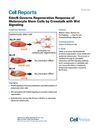
April 2016 in “Cell Reports” This study demonstrated that EdnrB signaling promotes melanocyte stem cell proliferation and differentiation, enhancing hair and epidermal melanocyte regeneration, especially under conditions of active Wnt signaling.
51 citations
,
February 2004 in “Journal of Investigative Dermatology” MCSP may help identify and regulate skin stem cells, affecting hair growth and regeneration.
 45 citations
,
April 2016 in “Journal of Dermatological Science”
45 citations
,
April 2016 in “Journal of Dermatological Science” This study found that the Wnt/β-catenin signaling pathway activates melanocyte stem cells, promoting hair follicle regeneration both in vitro and in vivo.
41 citations
,
April 2019 in “PLOS genetics” This study found that CD34- melanocyte stem cells regenerated pigmentation more efficiently, while CD34+ cells showed potential for neuron myelination, suggesting different therapeutic applications for each population.
 41 citations
,
December 2018 in “Experimental Dermatology”
41 citations
,
December 2018 in “Experimental Dermatology” This review explores recent findings on the roles of melanocyte and melanocyte stem cells in the hair follicle, highlighting their importance for skin health and potential applications in regenerative medicine, but reports no new clinical results.
33 citations
,
December 2015 in “International Journal of Molecular Sciences” This review discusses recent research on melanocyte stem cells and explores the differences between mouse and human skin, but it reports no new clinical results.
 24 citations
,
March 2018 in “Pigment Cell & Melanoma Research”
24 citations
,
March 2018 in “Pigment Cell & Melanoma Research” This review discusses the interactions between melanocyte stem cells and their niche in hair regeneration and repair, but reports no new results; recent studies on molecular pathways are highlighted.
 16 citations
,
April 2021 in “International Journal of Molecular Sciences”
16 citations
,
April 2021 in “International Journal of Molecular Sciences” This study found that micro-current electrical stimulation may promote hair growth in human hair follicle-derived papilla cells and a mice model by enhancing cell proliferation, migration, and activating key growth pathways.
 16 citations
,
July 2020 in “Health and Quality of Life Outcomes”
16 citations
,
July 2020 in “Health and Quality of Life Outcomes” This study found that health-related quality of life was significantly lower in women with polycystic ovary syndrome, especially those with the anovulatory phenotype, compared to non-PCOS controls attending a tertiary hospital.
 7 citations
,
July 2020 in “Pigment cell & melanoma research”
7 citations
,
July 2020 in “Pigment cell & melanoma research” In this study, RT1640 was found to promote hair pigment system regeneration and expand melanocyte stem cell pools in a mouse model, suggesting potential applications for aging-related hair disorders.
6 citations
,
January 2023 in “International journal of molecular sciences” This review discusses the bidirectional interactions between human mast cells and CD8 T cells in the skin, particularly in the context of disorders like psoriasis, atopic dermatitis, and vitiligo, and reports no new findings.
 5 citations
,
January 2016 in “Stem Cells International”
5 citations
,
January 2016 in “Stem Cells International” This study found that epidermal stem cells in nonglabrous skin are connected to the distal end of the arrector pili muscle, which may play a role in epidermal renewal and wound healing.
4 citations
,
February 2023 in “International Journal of Stem Cells” The FTO gene hinders stem cells in hair follicles from becoming pigment cells.
4 citations
,
May 2023 in “Pigment Cell & Melanoma Research” In this study, researchers found that deleting the Bmi1 gene in murine melanocytes caused premature hair greying and loss of melanocyte lineage cells, highlighting BMI1's role in protecting melanocyte stem cells from stress and oxidative damage.
3 citations
,
October 2020 in “Journal of Investigative Dermatology” This study established that the Dct::CreERT2 mouse line is effective for targeting and studying adult melanocyte stem cells, contributing to the understanding of melanocyte biology and hair pigmentation.

This study found that women with PCOS, particularly those with the anovulatory phenotype, reported significantly lower physical health-related quality of life than women without PCOS at a tertiary hospital.
 1 citations
,
September 2023 in “The journal of investigative dermatology/Journal of investigative dermatology”
1 citations
,
September 2023 in “The journal of investigative dermatology/Journal of investigative dermatology” This study found that stress-induced inactivation of the enzyme Dicer in melanocytes can cause premature hair greying by preventing proper melanocyte placement and melanin transfer in mice, suggesting the Dicer-miR92b-ItgaV pathway as an important link between stress and grey hair.
1 citations
,
January 2012 in “Pigment Cell & Melanoma Research” This study identified key components of melanocyte stem cell niches that maintain stem cells in a dormant state and established a culture system that potentially replicates some aspects of in vivo stem cell activity.
 1 citations
,
January 2018 in “Methods in molecular biology”
1 citations
,
January 2018 in “Methods in molecular biology” This research describes methods to activate melanocyte stem cells during hair follicle regeneration and to isolate melanocytes from neonatal mouse skin, with the aim of studying melanogenesis for potential clinical applications.
 December 2023 in “International Journal of Biological Macromolecules”
 This study found that MCS nanoparticles improved Minoxidil's hair growth effects in an animal model compared to the commercial formulation, but they were less effective than CS nanoparticles despite showing better solubility with minimal side effects.
 January 2025 in “American Journal of Stem Cells”
 This review discusses the role of melanocyte stem cells in skin pigmentation and potential regenerative therapies, but reports no new clinical results.
 September 2025 in “Digital Commons - RU (Rockefeller University)”
 This study found that when NFIB was removed in adult mouse hair follicle stem cells, it did not affect their maintenance but unexpectedly led to increased proliferation and differentiation of nearby melanocyte stem cells.
 June 2021 in “bioRxiv (Cold Spring Harbor Laboratory)”
 This study discovered that the gene Tfap2b identifies a melanocyte stem cell population in zebrafish, essential for regenerating melanocytes with multi-fate potential into adult pigment cells.
January 2019 in “Social Science Research Network” This study reports that in mice, retinoic acid mediates communication between hair follicle and melanocyte stem cells by influencing differentiation in their shared niche during hair regeneration.
This review discusses the roles and characteristics of skin stem cells, their niches, and signaling pathways in skin maintenance, aging, and cancer, highlighting their potential in therapeutic applications but presenting no new clinical findings.
January 1999 in “Praxis sociológica” This study demonstrates that melanocyte stem cells can be a source of melanoma in a mouse model, resembling human melanoma in both heterogeneity and gene signatures.
44 citations
,
January 2021 in “Research” This study explored the use of manganese-doped calcium silicate nanowire-incorporated alginate hydrogels (MCSA hydrogels) for treating melanoma and promoting wound healing, finding that these hydrogels effectively ablate melanoma under near-infrared irradiation and enhance vascular endothelial cell activity for tissue regeneration.
January 1999 in “Universitas Philosophica” This study found that cornifin-alpha/SPRR1 expression in mouse skin increases significantly in response to phorbol ester treatment and in papillomas and squamous cell carcinomas, particularly in differentiated areas.
124 citations
,
January 2012 in “Journal of Allergy and Clinical Immunology” This study found that activation of cannabinoid 1 receptors in human scalp hair follicles may limit excessive mast cell activation and maturation, suggesting a potential therapeutic strategy for managing MC-dependent skin diseases.