September 2017 in “The journal of investigative dermatology/Journal of investigative dermatology” This study found that N-acetyl-GED may protect and partially rescue human hair follicles from experimentally-induced epithelial-mesenchymal transition ex vivo, suggesting its potential in treating scarring alopecias like lichen planopilaris.
 14 citations
,
January 2020 in “Korean Journal of Family Medicine”
14 citations
,
January 2020 in “Korean Journal of Family Medicine” This case study reported a rare occurrence of lepromatous leprosy with Lucio phenomenon in a 50-year-old Indonesian living in Malaysia, highlighting the necessity for primary care practitioners, even in non-endemic areas, to recognize this serious leprosy reaction to prevent complications and transmission.
October 2022 in “Zenodo (CERN European Organization for Nuclear Research)” This study reported that combining Poly-D,L-Lactic Acid with Platelet-Rich Plasma for facial rejuvenation reduced wrinkle severity and improved skin tone and hyperpigmentation in a 45-year-old female patient.
3 citations
,
April 2019 in “Journal of Mind and Medical Sciences” This review discusses the application of photodynamic therapy for treating oral lichen planus and indicates its potential benefits, but it reports no new clinical results.
 June 2022 in “Journal of the Liaquat University of Medical and Health Sciences”
 This study investigated the relationship between lichen planus and dyslipidemia but did not report any clinical findings.
 December 2023 in “Journal of General Procedural Dermatology and Venereology Indonesia”
 The abstract highlights that lichen planus can manifest as cicatricial alopecia or lichen planopilaris, while discoid lupus erythematosus, a common form of lupus erythematosus, typically causes scarring alopecia. Results are not reported here.
January 2016 in “프로그램북(구 초록집)” This study found that combining a thulium laser with intra-perifollicular PDRN injections significantly improved hair thickness but not hair counts compared to mesotherapy and PDRN in patients with pattern hair loss.
 June 2026 in “Lasers in Medical Science”
 This randomized trial found that diode laser achieved more favorable long-term hair removal outcomes but induced more discomfort and transient adverse effects compared to intense pulsed light in women with Fitzpatrick skin types I-IV.
 1 citations
,
July 2025 in “Scientific Reports”
1 citations
,
July 2025 in “Scientific Reports” This study found that combining diagonal earlobe crease with lipoprotein(a) provides strong diagnostic value for coronary heart disease.
 38 citations
,
June 2015 in “Expert Opinion on Therapeutic Targets”
38 citations
,
June 2015 in “Expert Opinion on Therapeutic Targets” This review explores potential indications for prolactin receptor inhibitors beyond breast and prostate cancers, emphasizing the need for potent antibodies to further research prolactin receptor expression.
 52 citations
,
February 2006 in “Archives of Dermatology”
52 citations
,
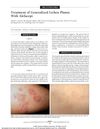
February 2006 in “Archives of Dermatology” This case report describes a 25-year-old woman with widespread lichen planus who did not respond to multiple systemic treatments, including antihistamines, hydroxychloroquine sulfate, and corticosteroids.

In this clinical trial, patients with lichen planopilaris treated with the oral TYK2 inhibitor deucravacitinib showed significant improvement in PGA, LPPAI, and Skindex-16 scores over 24 weeks, with transcriptomic analyses indicating decreased inflammatory and immune pathway activity post-treatment.
 May 2024 in “Journal of the Egyptian Women's Dermatologic Society /Journal of the Egyptian Women's Dermatologic Society”
 In this split-scalp study, researchers observed that combining fractional CO2 laser and PRP treatment was significantly more effective in improving hair parameters in women with female pattern hair loss than using each intervention alone or placebo.
 5 citations
,
July 2013 in “Our Dermatology Online”
5 citations
,
July 2013 in “Our Dermatology Online” This study found that lichen planopilaris was the most common variant of cicatricial alopecia among patients, with perifollicular fibrosis being a prevalent histopathological feature.
 3 citations
,
October 2017 in “Journal of Cosmetic Dermatology”
3 citations
,
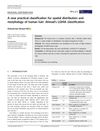
October 2017 in “Journal of Cosmetic Dermatology” This study presents a new classification of adult human scalp hair patterns based on high-resolution photographs, which may assist hair restoration surgeons and dermatologists in determining appropriate punch size for follicular unit extraction.
15 citations
,
January 2008 in “PubMed” This article reviews considerations and requirements for performing laser hair removal and reports no new clinical results.
 33 citations
,
March 2017 in “Dermatologic Surgery”
33 citations
,
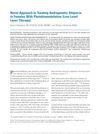
March 2017 in “Dermatologic Surgery” In this clinical study, low-level laser therapy using the HANDI-DOME LASER device increased hair counts by 51% compared to controls, indicating its potential as a safe and effective treatment for androgenetic alopecia in women aged 18 to 60.
35 citations
,
January 2020 in “Journal of the American Academy of Dermatology” Avoiding certain allergens in personal care products may improve symptoms for some patients with lichen planopilaris or frontal fibrosing alopecia.
March 2025 in “International Journal of Molecular Sciences” This study analyzed proteomic changes in Jiangnan cashmere goats' secondary hair follicles and found that the PLIN2 gene significantly impacts hair follicle growth cycles by affecting dermal papilla cell proliferation, offering insights into breeding strategies to enhance cashmere yield.
 49 citations
,
January 2003 in “Clinical and Experimental Dermatology”
49 citations
,
January 2003 in “Clinical and Experimental Dermatology” This report from the UK reviews the literature on post-menopausal frontal fibrosing alopecia and highlights its under-recognition and distinctive characteristics compared to lichen planopilaris, but does not provide new results.
 7 citations
,
February 2018 in “Journal of Investigative Dermatology”
7 citations
,
February 2018 in “Journal of Investigative Dermatology” This study investigates the role of peroxisome proliferator-activated receptor gamma in hair follicle morphogenesis using a novel mouse model but reports no new results, highlighting the need for further research on its function during the hair cycle.
June 2023 in “Clinical Cosmetic and Investigational Dermatology” This report describes a 60-year-old female with pretibial pruritic papular dermatitis who showed significant improvement of skin lesions after one month of treatment with oral pentoxifylline. The authors highlight the unique clinical and histological features of PPPD and propose pentoxifylline as a potential therapy.
September 2025 in “Indian Journal of Dermatology” In this case report, researchers detailed a 22-year-old Turkish woman diagnosed with autosomal recessive woolly hair/hypotrichosis (ARWH/H), linked to a mutation in the LIPH gene, resulting in sparse, poorly growing, curly hair, highlighting the need for genetic consideration in similar hair conditions.
 July 2022 in “JEADV Clinical Practice”
 This review discusses the classification of lichen planopilaris and its subtypes under the proposed term "lichenoid alopecias," suggesting they exist along a clinical and histological spectrum.
1 citations
,
July 2025 in “Journal of Cosmetic Dermatology” This case report suggests that exosome therapy may offer a promising alternative treatment for lichen planopilaris, showing potential benefits in hair regrowth, reduced inflammation, and improved scalp condition, but further studies are needed to confirm long-term efficacy and safety.
39 citations
,
January 2006 in “Journal of Cosmetic and Laser Therapy” This study found that pneumatic skin flattening (PSF) significantly reduces pain and post-treatment erythema during high-energy IPL and laser hair removal while enhancing treatment efficacy.
 12 citations
,
June 2020 in “Frontiers in Cell and Developmental Biology”
12 citations
,
June 2020 in “Frontiers in Cell and Developmental Biology” This study found that the PP2A-B55α regulatory subunit is crucial for ectodermal development in mice, with knockout embryos displaying severe neural and epidermal defects and failing to survive to birth.
4 citations
,
February 1983 in “Journal of periodontology” Among young rats, this study found that a liquid protein diet significantly affects body condition but has minimal impact on gingival collagen metabolism.
11 citations
,
August 2010 in “Annals of plastic surgery” This study found a significant relationship between lash ptosis severity and marginal reflex distance, levator function, and double fold presence in Asian patients, which may inform surgical planning for upper eyelid procedures.
6 citations
,
September 2018 in “International Journal of Molecular Sciences” This study found that intramuscular injections of a PRP-derivative in healthy beagle dogs did not result in statistically significant changes in lumbar muscle tissue or IGF-1 blood concentration, suggesting the treatment may be safe at therapeutic doses.