April 2026 in “Clinical and Experimental Dermatology” This study found that treating moderate-to-severe prurigo nodularis with dupilumab significantly improved itch severity, skin condition, and quality of life over 104 weeks, with a favorable safety profile, even in elderly and comorbid patients.
 4 citations
,
October 2023 in “Dermatology”
4 citations
,
October 2023 in “Dermatology” In this study, a network meta-analysis found that treating lichen planopilaris with a combination of clobetasol, hydroxychloroquine, and N-acetylcysteine was the most effective approach, while cyclosporine, methotrexate, and some other treatments were less effective compared to hydroxychloroquine.
 1 citations
,
July 2021 in “Curēus”
1 citations
,
July 2021 in “Curēus” This case report describes a rare occurrence of lichen planopilaris in a nine-year-old child, emphasizing the need for awareness of this condition in the pediatric population.
 August 2023 in “The journal of investigative dermatology/Journal of investigative dermatology”
 This study reports that a patient with rare linear lichen planopilaris experienced complete hair regrowth after 12 weeks of treatment with the antibody ixekizumab, suggesting it as a potential targeted therapy.
39 citations
,
March 2008 in “British Journal of Dermatology” This study documented the onset of lichen planopilaris during treatment with etanercept.
 6 citations
,
October 2018 in “Lasers in Medical Science”
6 citations
,
October 2018 in “Lasers in Medical Science” This article explores the potential of photobiomodulation for coronary health, suggesting protective effects after heart attacks and in inaccessible ischemic heart conditions, but presents no new clinical results.
 April 2018 in “International journal of nanotechnology and nanomedicine”
 In this double-blind, placebo-controlled study, researchers found that low-level laser therapy significantly improved the healing rate and reduced the area of pressure ulcers in patients compared to placebo, suggesting its effectiveness in managing ulcers resistant to conventional treatments.
1 citations
,
December 2015 in “TURKDERM” This study found that treatment improved symptoms and stopped disease progression for 75% of lichen planopilaris patients whose follow-up data were available.
4 citations
,
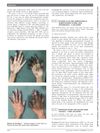
January 2014 in “JOURNAL OF CLINICAL AND DIAGNOSTIC RESEARCH” This article details various skin and oral lesions through illustrative figures but does not present new research results.
 47 citations
,
June 2014 in “Journal of Dermatological Treatment”
47 citations
,
June 2014 in “Journal of Dermatological Treatment” This retrospective review found that while intralesional corticosteroids provided symptomatic improvement for lichen planopilaris, hydroxychloroquine with topical corticosteroids led to higher remission rates but did not result in visible hair regrowth.
April 2011 in “www.virtualization.info” This report describes a case of trachyonychia with associated various types of lichen planus in a young male, highlighting the importance of accurate diagnosis for effective treatment.
253 citations
,
April 2009 in “Journal of Biological Chemistry” This study found that p2y5 functions as a novel LPA receptor involved in the G13-Rho signaling pathway, with implications for human hair growth, and proposes renaming it to LPA6.
 September 2023 in “Bulletin of the Medical Institute of Continuing Education”
 This study discusses clinical cases of Lichen Planopilaris in men that were initially misdiagnosed and inadequately treated, resulting in significant irreversible hair loss.
 5 citations
,
November 2024 in “Journal of Clinical Immunology”
5 citations
,
November 2024 in “Journal of Clinical Immunology” This study reports that a 9-week-old infant with Netherton syndrome showed rapid and sustained symptom improvement, including skin microbiome normalization and developmental progress, after off-label dupilumab treatment, without adverse reactions.
 17 citations
,
April 2021 in “Biointerface Research in Applied Chemistry”
17 citations
,
April 2021 in “Biointerface Research in Applied Chemistry” This review discusses nanostructured lipid carriers and their potential applications in pharmaceuticals and food, offering no new clinical findings but highlighting recent advancements and patents.
8 citations
,
January 2019 in “Journal of cosmetic dermatology” This study found that six sessions of a modified phenol peel effectively reduced hyperpigmentation in patients with Lichen Planus Pigmentosus, with 76% of treated individuals experiencing at least a 25% improvement, and no serious side effects reported.
 February 2010 in “Journal of The American Academy of Dermatology”
 This study found that NB-002 demonstrated clear antifungal activity and clinically significant nail clearing in subjects with distal subungual onychomycosis and ≤50% nail involvement, compared to a vehicle treatment.
 October 2025 in “International journal of research and scientific innovation”
 This case report highlights the importance of considering lupus pneumonitis as a differential diagnosis for respiratory symptoms in systemic lupus erythematosus, especially in areas endemic to tuberculosis.
November 2022 in “Pakistan Armed Forces Medical Journal” This study found that topical liquid nitrogen improved pain tolerance during intradermal platelet-rich plasma therapy in androgenic alopecia compared to normal saline, although patient satisfaction did not significantly differ between groups.
In this case report, a 19-year-old woman with systemic lupus erythematosus experienced significant improvement in neuropsychiatric symptoms, including psychosis and seizures, following treatment with high-dose corticosteroids, immunosuppressants, and antidepressants.
 13 citations
,
May 2019 in “Cancer Prevention Research”
13 citations
,
May 2019 in “Cancer Prevention Research” This study found that a three-month regimen of leucoselect phytosome, a grape seed extract complex, was well tolerated and significantly reduced bronchial proliferation markers in heavy active and former smokers.
18 citations
,
September 2021 in “Colloids and surfaces. B, Biointerfaces” This study explored the development of polymeric nanoparticles for topical spironolactone delivery, finding that larger nanoparticles (180 nm) enhanced drug targeting to hair follicles significantly more than smaller ones or non-nanoparticle formulations, offering promise for safer acne and alopecia treatments.
559 citations
,
October 2020 in “Frontiers in Molecular Biosciences” This review reports on the current state and potential of solid lipid nanoparticles for drug delivery, emphasizing their safety, biocompatibility, and ease of production, and highlights challenges in translating them to clinical practice, including active clinical trials.
 August 2015 in “Advances in Small Animal Medicine and Surgery”
 Low-level laser therapy may help regrow hair in dogs with non-inflammatory hair loss.
2 citations
,
June 2016 in “Oral Surgery Oral Medicine Oral Pathology and Oral Radiology” This study reports the first known case of oral lichen planus preceding lichen planopilaris in a patient, highlighting a possible sequential relationship between the conditions.
46 citations
,
March 2009 in “Die Pharmazie” This study describes the development of nanostructured lipid carriers for minoxidil as a potential alternative to conventional topical solutions, showing promise for use in topical formulations.
 January 2020 in “International Journal of PharmTech Research”
 This case report describes a patient with untreated lepromatous leprosy developing Lucio's phenomenon, highlighting difficulties in distinguishing it from erythema nodosum leprosum with vasculonecrotic lesions.
1 citations
,
March 2013 in “Journal of Dermatological Case Reports” This case report describes an atypical presentation of lichen planopilaris affecting only facial vellus hair, without scalp involvement, in a 46-year-old man.
 1 citations
,
January 2022 in “Open Access Macedonian Journal of Medical Sciences”
1 citations
,
January 2022 in “Open Access Macedonian Journal of Medical Sciences” This study observed that PRP treatment resulted in greater improvement in hair thickness and density in alopecia areata patients compared to LLLT, with benefits sustained over 12 weeks.
 July 2023 in “Journal of exploratory research in pharmacology”
 In this case report, a 47-year-old man with extensive psoriasis saw significant improvement in scaling and itching after using a new lotion containing clobetasol and other ingredients for one week, but further research is needed to confirm these findings.