 January 2023 in “Czech Journal of Animal Science”
 This study found that down and guard hairs of Inner Mongolia Cashmere Goats have distinct protein compositions and physical properties, with keratin-related proteins potentially influencing these differences.
 5 citations
,
July 2014 in “Actas dermo-sifiliográficas/Actas dermo-sifiliográficas”
5 citations
,
July 2014 in “Actas dermo-sifiliográficas/Actas dermo-sifiliográficas” Latanoprost eye drops caused excessive hair growth and eyelash whitening in a woman.
31 citations
,
July 2012 in “Journal of Lipid Research” This study found that the acyl-CoA binding protein is essential for the production of very long chain free fatty acids in the stratum corneum and maintaining normal epidermal barrier function in mice.
 1 citations
,
January 2015 in “Actas dermo-sifiliográficas/Actas dermo-sifiliográficas”
1 citations
,
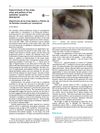
January 2015 in “Actas dermo-sifiliográficas/Actas dermo-sifiliográficas” Latanoprost eye drops caused excessive cheek hair growth and eyelash whitening in a woman.
2 citations
,
December 1954 in “Experimental Biology and Medicine” This study found that fluid loss through rat skin increases with heightened skin activity and hair growth, while linoleic acid penetration during inactive conditions enhances water loss.
 July 2023 in “Frontiers in veterinary science”
 In this study, researchers analyzed skin samples from Dorper sheep to identify 395 differentially expressed long non-coding RNAs (lncRNAs) linked to hair follicle growth phases, suggesting these lncRNAs may play a role in the regulation of hair shedding through pathways like estrogen and PI3K-Akt signaling.
April 2023 in “Journal of Investigative Dermatology” In this study, a mouse model of scarring alopecia demonstrated significantly reduced CD200R expression in affected skin, which may contribute to immune attacks on hair follicles.
24 citations
,
May 2022 in “BMC Veterinary Research” This study identified key mRNAs and lncRNAs, along with related pathways, that play potentially important roles in hair follicle development and cycling in cashmere goats.
16 citations
,
January 2021 in “BMC Genomics” This study found that high wool-producing Wan Strain Angora rabbits had higher hair follicle density and identified potential regulatory long noncoding RNAs that may influence this trait.
 15 citations
,
September 2005 in “The Journal of the American Animal Hospital Association/Journal of the American Animal Hospital Association”
15 citations
,
September 2005 in “The Journal of the American Animal Hospital Association/Journal of the American Animal Hospital Association” This study found that trilostane treatment led to complete hair regrowth in three Alaskan malamutes with ACTH-stimulated elevated 17-hydroxyprogesterone levels within 6 months without any recognized adverse effects.
 36 citations
,
November 2005 in “Journal of The American Academy of Dermatology”
36 citations
,
November 2005 in “Journal of The American Academy of Dermatology” This article discusses the potential of latanoprost for treating alopecia areata, but notes that well-controlled studies are still needed to confirm its effectiveness.
 3 citations
,
March 2014 in “Veterinary dermatology”
3 citations
,
March 2014 in “Veterinary dermatology” This study reports the first documentation of mural, mucinotic, isthmus folliculitis alopecia in Norwegian puffin dogs, noting that ciclosporin treatment led to remission while other treatments were less effective.
 January 2025 in “Cellular and Molecular Biology”
 This study found that in Liaoning cashmere goats, overexpression of the PIP5K1A gene enhances skin fibroblast proliferation, while interference with this gene reverses melatonin-induced proliferation, and PIP5K1A regulates certain miRNA expressions, suggesting a role in improving cashmere yield and quality.
7 citations
,
January 1992 in “Acta Histochemica” This study found that the distribution of carbohydrates and proteins in porcine hair follicles and sebaceous glands showed minor differences compared to humans.
 December 2023 in “Biological & pharmaceutical bulletin”
 This study found that combining lecithin reverse wormlike micelles with isopropyl myristate enhanced the skin permeability of a model hydrophilic drug, facilitated by interactions with sebum in hair follicles.
 26 citations
,
April 2019 in “Genes”
26 citations
,
April 2019 in “Genes” In this study, researchers identified novel long non-coding RNAs related to cashmere fineness in goats, highlighting a potential regulatory network involving lncRNA XLOC_008679 and its target gene KRT35.
 November 2025 in “BMC Genomics”
 This study identified genetic differences between Australian White Sheep and Hu Sheep that may explain their distinct pelage types, with a focus on subcutaneous adiposity and immunoregulation. The findings suggest potential targets for breeding climate-resilient sheep, enhancing our understanding of heat tolerance in these breeds.
 2 citations
,
February 2016 in “British Journal of Dermatology”
2 citations
,
February 2016 in “British Journal of Dermatology” This study found that topical bimatoprost significantly improved eyelash growth in individuals with idiopathic and chemotherapy-induced eyelash hypotrichosis compared to a vehicle treatment.
5 citations
,
January 1979 in “Archives of Dermatological Research”  January 2020 in “Veterinary world/Veterinary World”
 This study found that a topical solution of essential oils, plant-extracted polyunsaturated fatty acids, and Vitamin E improved hair shine, reduced flaking and hair loss, and enhanced skin hydration in rabbits with skin issues.
9 citations
,
July 2021 in “Frontiers in genetics” This study found that continuous implantation of melatonin in cashmere goats advanced the growth cycle of cashmere by inducing secondary hair follicle development and altering gene expression.
7 citations
,
September 2022 in “International journal of molecular sciences” This study identified and analyzed numerous lncRNAs, miRNAs, and mRNAs involved in hair follicle development in cashmere goats, highlighting key regulatory pathways and suggesting roles for specific RNAs in enhancing hair follicle cell proliferation.
March 1994 in “Proceedings of the British Society of Animal Production” This study investigated hair fibre growth in Angora and Cashmere goats, finding differences in growth rates and seasonal dependencies, and examined the effects of prolactin and melatonin on protein deposition in hair follicles.
9 citations
,
April 2018 in “Canadian Journal of Animal Science” This study found that LEF-1 expression influences dermal papilla cells' proliferation through Wnt signaling, impacting the potential for cashmere yield improvement.
 3 citations
,
September 2022 in “Animal biotechnology”
3 citations
,
September 2022 in “Animal biotechnology” This study found that knocking down lncRNA MTC in Liaoning Cashmere goat skin fibroblasts inhibited cell proliferation and increased apoptosis, suggesting its role in facilitating cell growth by regulating specific proteins.
 4 citations
,
July 2013 in “Journal of Dermatological Science”
4 citations
,
July 2013 in “Journal of Dermatological Science” This study found that interleukin-10 deficiency in B6 mice led to inflammatory milk production due to maternal stress, causing alopecia and hepatocyte steatosis in pups.
14 citations
,
August 2021 in “Journal of Pharmaceutical Sciences” This study found that cholesterol- and phospholipid-free multilamellar niosomes improved skin deposition and targeted deeper hair follicles better than hydrophobic PLGA nanoparticles for transdermal drug delivery.
297 citations
,
December 2005 in “Journal of controlled release” This study found that POD-loaded solid lipid nanoparticles using 0.5% poloxamer 188 and 1.5% soybean lecithin (P-SLN) improved epidermal targeting and POD accumulation in porcine skin compared to traditional tincture.
 April 2012 in “Informa Healthcare eBooks”
 Lichen planopilaris is a rare, chronic condition causing hair loss, mainly in middle-aged women, and early treatment is important to prevent permanent baldness.
 15 citations
,
February 2013 in “Journal of Clinical Medicine and Research”
15 citations
,
February 2013 in “Journal of Clinical Medicine and Research” The researchers reported that both cryotherapy and betamethasone lotion yielded similar improvement rates for alopecia areata patches, without complete recovery observed in any patient.