 July 2022 in “JEADV Clinical Practice”
 This review discusses the classification of lichen planopilaris and its subtypes under the proposed term "lichenoid alopecias," suggesting they exist along a clinical and histological spectrum.
5 citations
,
August 2001 in “International Journal of Dermatology” This case study reports a 20-year-old laborer's progressive hair loss with scalp and body lesions, diagnosed as lichen planopilaris, leading to scarring alopecia resembling male-pattern baldness.
5 citations
,
November 2024 in “Frontiers in Nutrition” In this randomized controlled trial, oral intake of the probiotic Latilactobacillus curvatus LB-P9 significantly improved hair luster, elasticity, and participant satisfaction in individuals with mild to moderate hair damage compared to placebo, without significant adverse effects reported.
February 2026 in “Indian Dermatology Online Journal” This study reports that oral tofacitinib treatment in a patient with refractory lichen planus pigmentosus and frontal fibrosing alopecia resulted in near-complete resolution of hyperpigmentation and cessation of hairline recession over 18 months, and suggests it may be a promising therapy for these challenging conditions.
 April 2016 in “Journal of Investigative Dermatology”
 This study reported that the absence of Lsh in skin led to significant epidermal hyperplasia and altered gene expression, suggesting its crucial role in regulating epidermal proliferation, differentiation, and wound healing.
This article discusses the effects of ablative carbon dioxide laser treatment for skin rejuvenation, noting it requires only a single treatment but involves more complex postoperative management, without reporting new clinical outcomes.
 94 citations
,
October 2017 in “International Journal of Dermatology”
94 citations
,
October 2017 in “International Journal of Dermatology” This narrative review discusses lichen planus pigmentosus, including its variations, associated triggers, and management strategies, but reports no new clinical results.
 1 citations
,
January 2024 in “Journal of Cutaneous and Aesthetic Surgery”
1 citations
,
January 2024 in “Journal of Cutaneous and Aesthetic Surgery” This study found that treating patchy alopecia areata with fractional CO2 laser and topical triamcinolone acetonide was more effective and safer than intralesional triamcinolone, despite higher initial discomfort, as it resulted in greater patient satisfaction and fewer adverse effects like skin atrophy.
 May 2025 in “Cermin Dunia Kedokteran”
 This study highlights that early detection and tailored treatment based on kidney biopsy classification are crucial in managing lupus nephritis to prevent progression to end-stage kidney disease, with a focus on saving nephron cells.
7 citations
,
February 2011 in “Journal of dermatology” This study identified a specific LIPH gene mutation (736T>A) as common in Japanese patients with autosomal recessive woolly hair/hypotrichosis, potentially indicating its role in the condition's manifestation within this population.
 January 2024 in “Al-Azhar International Medical Journal /Al-Azhar International Medical Journal”
 This study concluded that topical betamethasone valerate lotion is more effective than 15% lactic acid solution for managing multiple patchy alopecia areata over a 12-week period in a sample of 50 patients.
 April 2019 in “Journal of Investigative Dermatology”
 This study found that lichen planopilaris is associated with three core molecular pathways, which may inform new therapeutic strategies for scarring alopecia, including unique pathways like ABC transporters specific to LPP.
 March 2026 in “SKIN The Journal of Cutaneous Medicine”
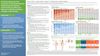
 This study demonstrated that litifilimab significantly reduced disease activity in cutaneous lupus erythematosus by Week 16, with improvements most notable in sunlight-exposed skin areas.
 November 2021 in “Research Square (Research Square)”
 This study found that a 532 nm laser at 15 J/cm² enhanced the proliferation and differentiation of tendon-derived stem cells in rats, potentially accelerating tendon healing through the up-regulation of Nr4a1.
 August 2023 in “Journal of Investigative Dermatology”
 In this study, researchers found that Ganoderma Lucidum extract and Ganoderic acid A significantly improved hair follicle growth and delayed hair loss progression, based on in vitro, ex vivo, and 24-week human clinical trials, suggesting potential as a therapeutic for androgenetic alopecia.
 January 2020 in “International Journal of PharmTech Research”
 This case report describes a patient with untreated lepromatous leprosy developing Lucio's phenomenon, highlighting difficulties in distinguishing it from erythema nodosum leprosum with vasculonecrotic lesions.
December 2020 in “Forum Dermatologicum” In this case report, a combination treatment of intralesional triamcinolone acetonide, oral acitretin, and topical clobetasol propionate showed effectiveness in reducing symptoms of Graham-Little-Piccardi-Lasseur syndrome in one patient over two months, with no new areas of hair loss observed.
 79 citations
,
September 2018 in “Dermatologic therapy”
79 citations
,
September 2018 in “Dermatologic therapy” This study found that treatment with oral tofacitinib, alone or with other therapies, was associated with clinical improvement in most patients with recalcitrant lichen planopilaris.
 11 citations
,
December 2010 in “Archives of Dermatology”
11 citations
,
December 2010 in “Archives of Dermatology” This abstract provides no research results, focusing instead on navigation and subscription details for JAMA Dermatology content access.
 1 citations
,
January 2022 in “Open Access Macedonian Journal of Medical Sciences”
1 citations
,
January 2022 in “Open Access Macedonian Journal of Medical Sciences” This study observed that PRP treatment resulted in greater improvement in hair thickness and density in alopecia areata patients compared to LLLT, with benefits sustained over 12 weeks.
January 2026 in “Plant Communications” This study found that overexpressing the CLE peptide SlCLE10 in tomatoes increased root hair length and improved drought tolerance, suggesting its potential for enhancing crop resilience to osmotic stress.
113 citations
,
May 2007 in “Journal of the American Academy of Dermatology” This study suggests that tetracycline may be more effective for treating lichen planopilaris than previously thought, alongside topical high-potency and intralesional corticosteroids.
 September 2016 in “Journal of Dermatological Science”
 This study identified that in Japanese patients with autosomal recessive woolly hair/hypotrichosis, the c.736T > A LIPH mutation is associated with a mild phenotype, while the c.742C > A mutation may lead to severe baldness.
 12 citations
,
March 2018 in “Anais brasileiros de dermatologia/Anais Brasileiros de Dermatologia”
12 citations
,
March 2018 in “Anais brasileiros de dermatologia/Anais Brasileiros de Dermatologia” This article describes a case of frontal fibrosing alopecia in a patient with chronic lichenoid lupus erythematosus and notes the lack of similar documented cases in existing literature.
48 citations
,
November 2018 in “Journal of dermatological treatment” In a study reviewing 291 patients with lichen planopilaris, findings revealed that women were more commonly affected than men, cyclosporine and methotrexate were most effective in achieving remission, and 5-alpha reductase inhibitors and systemic retinoids were particularly beneficial for frontal fibrosing alopecia.
2 citations
,
June 1953 in “Journal of the American Medical Association” This article explores the correlation between alopecia leprotica and Buddhist customs, presenting evidence that leprosy is contracted during infancy or childhood rather than in maturity; it reports no new clinical findings.
 January 2018 in “Skin appendage disorders”
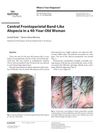
 A woman's hair loss was correctly diagnosed as Lichen planopilaris after initial misdiagnosis, highlighting the usefulness of trichoscopy in diagnosing hair disorders.
 June 2022 in “Authorea (Authorea)”
 This case report describes a 59-year-old Afro-American woman diagnosed with lipedematous alopecia, a rare scalp condition of unknown cause.
5 citations
,
May 2001 in “Proceedings of SPIE, the International Society for Optical Engineering/Proceedings of SPIE” This study developed a double-wavelength laser scanning microphotometer to measure hair shaft and follicle absorbance, improving spatial resolution and reducing light scattering effects in vitro.
19 citations
,
January 2015 in “Skin appendage disorders” This study identified a new variety of central centrifugal cicatricial alopecia that includes patchy hair loss on the lateral and posterior scalp in African-American women, which could be misdiagnosed as traction alopecia without dermatoscopy and pathology.