 1 citations
,
January 2016 in “Medicinski glasnik Specijalne bolnice za bolesti štitaste žlezde i bolesti metabolizma”
1 citations
,
January 2016 in “Medicinski glasnik Specijalne bolnice za bolesti štitaste žlezde i bolesti metabolizma” This article discusses congenital adrenal hyperplasia due to 21 hydroxylase deficiency as a cause of ambiguous genitals in 46XX individuals and reports no new research findings.
 11 citations
,
November 2022 in “Journal of Endocrinological Investigation”
11 citations
,
November 2022 in “Journal of Endocrinological Investigation” In this study, gender-affirming hormonal treatment was associated with increased hair growth, acne, and alopecia prevalence in transgender individuals assigned female at birth, while opposite dermatological changes were observed in those assigned male at birth.
April 2021 in “Medical Science and Discovery” This study found that men with early androgenetic alopecia had higher levels of free testosterone, DHEAS, and LH, along with insulin resistance and higher homocysteine levels, suggesting they share risk profiles similar to PCOS in women.
This study found that in female androgenetic alopecia, androgen receptors are highly positive in affected areas, supporting their role as regulators of genetically predisposed hair follicles despite normal serum hormone levels.
 12 citations
,
March 2018 in “Medicine”
12 citations
,
March 2018 in “Medicine” This case report describes a 60-year-old woman with an ovarian Leydig cell tumor leading to elevated testosterone levels and hirsutism, highlighting the need to consider androgen-secreting tumors in similar postmenopausal cases.
 135 citations
,
August 1994 in “Clinical Endocrinology”
135 citations
,
August 1994 in “Clinical Endocrinology” In this study of women with hirsutism or androgenic alopecia, diverse underlying endocrine disorders including polycystic ovaries and various enzyme deficiencies were detected, often associated with elevated testosterone levels.
 40 citations
,
October 2020 in “Diabetes and Metabolic Syndrome: Clinical Research and Reviews”
40 citations
,
October 2020 in “Diabetes and Metabolic Syndrome: Clinical Research and Reviews” This review discusses the potential role of androgens in increasing susceptibility to severe COVID-19 complications in men but presents no new clinical findings.
 42 citations
,
September 2007 in “The Journal of Clinical Endocrinology and Metabolism”
42 citations
,
September 2007 in “The Journal of Clinical Endocrinology and Metabolism” This study found that women with PCOS who have an exaggerated 17-hydroxyprogesterone response to buserelin exhibit more severe hyperandrogenemia, increased insulin secretion, and reduced insulin sensitivity.
In this report, a 22-year-old woman with congenital adrenal hyperplasia due to 21-hydroxylase deficiency underwent treatment with hydrocortisone and spironolactone, followed by feminization surgery, which subsequently led to the development of secondary sexual characteristics and regular menstruation.
1 citations
,
November 2020 in “Cureus” This study found that severity of female pattern hair loss in premenopausal women was related to other clinical signs of hyperandrogenism like hirsutism and acne, but not to biochemical measures of hyperandrogenism.
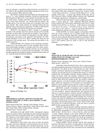 March 2010 in “The Journal of Urology”
 This study found that men with early-onset androgenetic alopecia had larger prostate volumes and lower urinary flow rates compared to those without the condition, suggesting a potential link between AGA and urinary symptoms.
 123 citations
,
May 2020 in “Drug Development Research”
123 citations
,
May 2020 in “Drug Development Research” This article argues that androgen sensitivity could be a key factor in the severity of COVID-19, suggesting that trials with anti-androgen agents may be warranted.
 7 citations
,
December 2014 in “Gynecological Endocrinology”
7 citations
,
December 2014 in “Gynecological Endocrinology” This study found that LC-MS/MS is a more reliable method than immunoassays for measuring serum 17OHP and androgen levels in women with hyperandrogenism.
 29 citations
,
October 1988 in “Journal of Steroid Biochemistry”
29 citations
,
October 1988 in “Journal of Steroid Biochemistry” This review discusses the use of antiandrogens for various conditions like prostate cancer and highlights their potential benefits in remission rates and symptom improvement, but it reports no new clinical results.
 31 citations
,
January 2018 in “Pediatric annals”
31 citations
,
January 2018 in “Pediatric annals” This article reviews the characteristics, diagnosis, and management of premature adrenarche and suggests it may predict future ovarian hyperandrogenism in some adolescents; no new clinical results are reported.
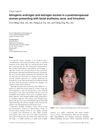 August 2009 in “International Journal of Dermatology”
 This case report describes a postmenopausal woman who experienced facial erythema, acne, and hirsutism due to excess androgen and estrogen levels.
3 citations
,
February 2002 in “The American journal of psychiatry” This report describes a potential association between HAIR-AN syndrome and the onset of manic symptoms in a patient after discontinuing oral contraceptives, though this relationship requires further investigation.
 4 citations
,
April 2020 in “Journal of Cosmetic Dermatology”
4 citations
,
April 2020 in “Journal of Cosmetic Dermatology” This study found that men with early androgenetic alopecia have a higher prevalence of hyperuricemia compared to those without the condition.
June 2015 in “Obstetrics, gynaecology and reproductive medicine” This article reviews the causes, physiology, and treatment strategies for hirsutism in women, highlighting that effective management often requires addressing underlying conditions and may involve lifestyle changes and pharmacological interventions.
 September 2022 in “Curēus”
 This case report describes a 61-year-old female with hyperandrogenic symptoms, where an ovarian hemangioma with stromal luteinization was identified and surgically removed, resulting in improved symptoms.
 29 citations
,
February 2017 in “International Journal of Women's Dermatology”
29 citations
,
February 2017 in “International Journal of Women's Dermatology” This article provides an endocrine perspective on evaluating and managing hirsutism but reports no new research findings.
 96 citations
,
February 2007 in “The Journal of Clinical Endocrinology & Metabolism”
96 citations
,
February 2007 in “The Journal of Clinical Endocrinology & Metabolism” This review discusses the high prevalence of androgen excess and PCOS in women with type 1 diabetes but reports no new clinical findings; the authors highlight the underdiagnosis of hyperandrogenism in these patients.
 April 1999 in “Therapeutische Umschau”
 This review discusses androgenic alopecia and related hair disorders, focusing on their pathogenesis and treatment strategies, and reports no new clinical findings.
 January 1987 in “Journal of steroid biochemistry/Journal of Steroid Biochemistry”
 This review discusses hormonal therapies for acne related to endocrine disorders and provides practical guidelines for managing hormonally influenced acne in clinical practice, but reports no new clinical results.
 April 2016 in “Journal of The American Academy of Dermatology”
 This study found that dermatology consultations in a tertiary care center led to treatment changes in most cases, especially for complex conditions potentially linked to systemic disease.
 9 citations
,
March 2022 in “Journal of the Endocrine Society”
9 citations
,
March 2022 in “Journal of the Endocrine Society” This study found that testosterone more accurately predicts PCOS diagnosis than 11-oxyandrogens, which were linked with hirsutism severity and showed varying responses to contraceptive and metformin treatments.
 5 citations
,
January 2014 in “Postepy Dermatologii I Alergologii”
5 citations
,
January 2014 in “Postepy Dermatologii I Alergologii” Among women with hirsutism studied, this research found a high prevalence of acne, particularly associated with polycystic ovarian syndrome and endocrine changes.
 5 citations
,
October 2018 in “Journal of Clinical Laboratory Analysis”
5 citations
,
October 2018 in “Journal of Clinical Laboratory Analysis” This study found that improved testosterone measurement using LC-MS/MS in women with PCOS revealed a stronger correlation between hyperandrogenism and insulin resistance than previously detected.
January 2013 in “Obstetrical & gynecological survey” This review discusses diagnostic and management approaches for hirsutism, emphasizing that most cases are due to polycystic ovary syndrome or obesity-related disorders, with idiopathic hirsutism often treated cosmetically.
 14 citations
,
September 2017 in “Clinics in Dermatology”
14 citations
,
September 2017 in “Clinics in Dermatology” This study highlights that lower testosterone in men and higher testosterone in women are linked to increased risks of metabolic syndrome and type 2 diabetes, with associated skin diseases indicating potential cardiovascular complications.