 1 citations
,
June 2023 in “International Journal of Scientific Research in Science and Technology”
1 citations
,
June 2023 in “International Journal of Scientific Research in Science and Technology” The researchers highlighted the nutritional benefits of kiwifruit, noting its high vitamin C content, dietary fiber, and potassium, as well as its wealth of phytochemicals and antioxidants, which may aid immune function, digestion, and potentially reduce chronic disease risk.
 September 2023 in “Cumhuriyet science journal”
 This study investigated the antioxidant capacities of essential oils from myrtle and orange commonly used in the Adana region and found that myrtle essential oil exhibited a higher antioxidant activity than orange essential oil when tested with the DPPH assay.
 7 citations
,
December 2022 in “Plants”
7 citations
,
December 2022 in “Plants” This study suggests that guava leaf extract may inhibit hair loss by downregulating genes involved in androgen synthesis, potentially offering a natural alternative for treating androgenetic alopecia.
 July 2024 in “Jurnal PKM Manajemen Bisnis”
 This article describes community efforts to increase awareness and effective utilization of guava plant resources in Pamulang, aiming to improve local economic welfare through better cultivation practices and innovative processing of guava for health benefits.
 1 citations
,
January 2020 in “Research Square (Research Square)”
1 citations
,
January 2020 in “Research Square (Research Square)” This study found that ethyl acetate extract of Musa × pardisiaca L. leaves showed anticancer activity against cervical carcinoma and malignant melanoma in vitro.
 July 2026 in “Journal of Medicinal Plants Studies”
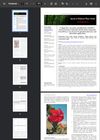
 In this study, methanolic extracts of Hibiscus rosa-sinensis showed higher phenolic and flavonoid content, as well as greater concentrations of gallic acid and quercetin, than aqueous extracts, despite the latter yielding more extract, highlighting the effectiveness of methanol for extracting bioactive phytochemicals.
 January 2023 in “Acta medica Philippina”
 This study found that ethyl acetate extract of Carica papaya flowers exhibited the highest antioxidant and 5α-reductase inhibitory activities, suggesting potential hair growth-promoting properties.

This study found that the ethanolic extract of Guazuma ulmifolia, or mutamba, showed only intermediate levels of phenolic compounds and low antioxidant activity in laboratory tests, suggesting limited potential in alleviating oxidative stress conditions like cancer or cardiovascular diseases.
 1 citations
,
February 2021 in “Cosmetics”
1 citations
,
February 2021 in “Cosmetics” This study found that the ethyl acetate extract of Fagraea berteroana fruits and its fraction FEAE-F0 promoted cell proliferation and modulated gene expression in hair follicle cells, suggesting potential for hair growth stimulation.
 May 2020 in “Research, Society and Development”
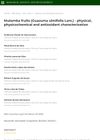
 This study suggests that mutamba fruit, regardless of maturation stage, could be valuable in the food industry due to its high soluble solids, vitamin C, and mineral content.
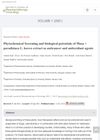 December 2021 in “Asia-Pacific journal of pharmacotherapy & toxicology”
 This study reports that the ethyl acetate extract of Musa × paradisiaca L. leaves demonstrated in vitro anticancer and antioxidant activity, with concentration-dependent inhibition of HeLa and A375 cancer cell lines.
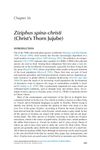 January 2017 in “Elsevier eBooks”
 This review discusses the potential of Ziziphus species and its extracted oil as new therapeutic agents in drug development and highlights the need for further studies to fully exploit this species for human health benefits.
January 2013 in “วารสารเภสัชศาสตร์อีสาน (Isan Journal of Pharmaceutical Sciences, IJPS)” This study found that ethyl acetate extract from mangosteen pericarp exhibited the strongest antibacterial effect against Propionibacterium acnes compared to other extraction solvents.
 May 2026 in “Zenodo (CERN European Organization for Nuclear Research)”
 This review explores the significant potential of guava leaves as a source of natural therapeutic agents, noting their rich phytochemical content and diverse pharmacological properties, such as antioxidant and anti-inflammatory effects, which may support their application in pharmaceutical, nutraceutical, and cosmeceutical industries.
December 2025 in “Sustainable Chemistry One World” In this study, researchers found that mangosteen pericarp extract, combined with FeSO₄ as a mordant, effectively produced a stable reddish hair dye on bleached hair, with good color persistence and enhanced tensile strength, indicating its potential as an eco-friendly and safer alternative to synthetic dyes.
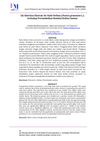
In this study, applying a 5% concentration of pomegranate peel extract significantly enhanced hair growth on male rabbits, showing results comparable to the positive control using 2% Minoxidil, but higher concentrations or lower concentrations did not perform as well.
 4 citations
,
December 2009 in “Elsevier eBooks”
4 citations
,
December 2009 in “Elsevier eBooks” This review discusses the nutritional and medicinal benefits of breadfruit and highlights challenges in promoting its consumption, but reports no new empirical findings.
1 citations
,
January 2022 in “Food & Function” This study found that fruit extracts from certain Egyptian Sabal species demonstrated significant anti-androgenic activity and potential therapeutic effects against benign prostatic hyperplasia in rat models and cell lines.
3 citations
,
May 2021 in “Genetics and Biodiversity Journal” In this study, the ethanolic extract of Citrullus colocynthis demonstrated strong antioxidant activity and reduced cancer cell numbers in vitro, suggesting potential for pharmacological use.
2 citations
,
February 2020 in “International Journal of Research in Pharmaceutical Sciences” This review compiles evidence on the health benefits of Ziziphus mauritiana, covering its traditional uses and pharmacological effects, but reports no new experimental results.
3 citations
,
February 2024 in “International journal of molecular sciences” This review highlights the potential of valorizing citrus by-products, particularly hesperidin from orange peels, as sustainable ingredients in skincare for antiaging, pigmentation, wound healing, and UV damage protection, emphasizing hesperidin's role in a circular economy approach.
September 2025 in “Journal of Applied Biological Chemistry” In a laboratory study, Grateloupia elata extract demonstrated antioxidant and anti-aging effects by scavenging free radicals, inhibiting collagenase and elastase, increasing procollagen production, and reducing MMP-1 secretion, suggesting its potential use in functional cosmetics.
 May 2026 in “Zenodo (CERN European Organization for Nuclear Research)”
 This review highlights the diverse pharmacological properties and applications of guava leaves, attributing their effectiveness to a rich phytochemical composition and modern extraction techniques, suggesting their potential as natural therapeutic agents across pharmaceutical, nutraceutical, and cosmeceutical fields.
January 2026 in “Chemistry & Biodiversity” This study found that the chemical composition and biological activity of Platycladus orientalis fruit extracts varied with the extraction method, revealing potent antioxidant and enzyme inhibitory properties, particularly in the n-hexane extract, which suggests potential applications for managing dysregulated enzyme conditions.
 January 2024 in “International journal of pharmaceutical sciences review and research”
 This review paper critically evaluates the pharmacological and toxicological effects of Ziziphus mauritiana, a plant with traditional medicinal use, highlighting its anxiolytic, antioxidant, antimicrobial, anti-cancer, anti-diabetic, and anti-ulcer properties attributed to its rich phytochemical composition.
This article lists the clinically important interactions and skin reactions of several drugs and substances, including THA, FK506, tamoxifen, tamsulosin, tartrazine, tea tree oil, temazepam, and temozolomide, but provides no new clinical results.
 10 citations
,
November 2015 in “Plant Foods for Human Nutrition”
10 citations
,
November 2015 in “Plant Foods for Human Nutrition” This study found that the ethyl acetate fraction of Hibiscus rosa sinensis petals significantly reduced serum glucose and glycated hemoglobin levels in diabetic rats, showing effects comparable to the standard drug metformin.
 13 citations
,
October 2012 in “Free Radicals and Antioxidants”
13 citations
,
October 2012 in “Free Radicals and Antioxidants” This study found that red-flowered cultivars of Hibiscus rosa-sinensis displayed the highest antioxidant activity, phenolic, and flavonoid content compared to other colored cultivars.
 2 citations
,
December 2018 in “Natural Product Research”
2 citations
,
December 2018 in “Natural Product Research” This study identified a new compound from fermented Carica papaya L. with moderate antioxidant and potent hair growth-stimulating activities in vitro.
August 2026 in “Journal of Ayurveda and Integrated Medical Sciences” In this study, dried Gambhari fruit extract was found to increase cell viability and growth of human follicle dermal papilla cells in vitro, showing potential hair growth-promoting activity comparable to Minoxidil 5% at selected concentrations.