 14 citations
,
January 2020 in “Biomaterials Science”
14 citations
,
January 2020 in “Biomaterials Science” Created microspheres show potential for safe and effective use in prostate artery embolization.
 14 citations
,
January 2020 in “International Journal of Biological Sciences”
14 citations
,
January 2020 in “International Journal of Biological Sciences” This study found that ranitidine and finasteride may have cardiovascular and renal protective effects in mice by inhibiting TMAO synthesis and improving gut microbiota composition.
 14 citations
,
January 2019 in “Skin appendage disorders”
14 citations
,
January 2019 in “Skin appendage disorders” This paper discusses the first reported case of post-finasteride syndrome in a long-term dermatotrichology setting, occurring in a 25-year-old male after dutasteride treatment, and highlights possible links to mental health disorders.
 14 citations
,
March 2018 in “Translational Stroke Research”
14 citations
,
March 2018 in “Translational Stroke Research” In this animal study, researchers found that finasteride may offer neuroprotective benefits as a post-ischemic treatment for strokes in aged male rats, suggesting its potential as a therapeutic agent in this context.
14 citations
,
March 2018 in “Current Drug Delivery” In this study, researchers reviewed literature on topical delivery of finasteride for androgenetic alopecia, finding that liposomal gels with specific additives showed the highest skin permeation rates, suggesting potential for reducing systemic side effects compared to oral formulations.
 14 citations
,
December 2016 in “Sexual Medicine”
14 citations
,
December 2016 in “Sexual Medicine” This study identified differences in adverse symptoms among patients with post-finasteride syndrome based on short and long androgen receptor gene polymorphisms.
 14 citations
,
October 2016 in “Psychoneuroendocrinology”
14 citations
,
October 2016 in “Psychoneuroendocrinology” This study identified significant changes in the expression of nine proteins in the nucleus accumbens of rats treated with finasteride, suggesting potential novel targets for its neuropsychiatric effects.
14 citations
,
May 2016 in “Therapeutic advances in urology” This review examines the use of tadalafil and finasteride as a combined therapy for BPH, suggesting it may effectively reduce treatment-related sexual adverse events and improve symptom relief.
 14 citations
,
June 2014 in “Journal of Pharmaceutical Sciences”
14 citations
,
June 2014 in “Journal of Pharmaceutical Sciences” This study validated the differential stripping technique on hairless rat skin and found that the P-08–016 formulation delivered more finasteride to the epidermis and appendages compared to P-10–008.
 14 citations
,
February 2011 in “Drug Metabolism and Disposition”
14 citations
,
February 2011 in “Drug Metabolism and Disposition” This study examined the pharmacokinetics of finasteride in pigs and found that ketoconazole coadministration affected its distribution across various plasma compartments, bile, and urine.
 14 citations
,
January 2011 in “Journal of analytical & bioanalytical techniques”
14 citations
,
January 2011 in “Journal of analytical & bioanalytical techniques” This research discusses a validated HPTLC method for simultaneously determining Tamsulosin Hydrochloride and Finasteride in bulk and pharmaceutical dosage forms but reports no new clinical results.
 14 citations
,
January 2011 in “Urologia Internationalis”
14 citations
,
January 2011 in “Urologia Internationalis” In this animal study, researchers found that finasteride reduced bacterial infection and inflammation in chronic bacterial prostatitis, with the greatest effect when combined with ciprofloxacin.
 14 citations
,
November 2008 in “Expert opinion on drug metabolism & toxicology”
14 citations
,
November 2008 in “Expert opinion on drug metabolism & toxicology” This article reviews the use of finasteride for treating benign prostatic hyperplasia and its chemopreventive potential for prostate cancer, but it calls for further discussion on its preventive use in high-risk groups.
 14 citations
,
December 2003 in “BJUI”
14 citations
,
December 2003 in “BJUI” Finasteride can treat prostatic haematuria, but its use is controversial.
 14 citations
,
September 2003 in “Archives of Dermatology”
14 citations
,
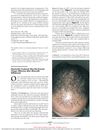
September 2003 in “Archives of Dermatology” This abstract provides no new data or findings as it is a placeholder text rather than a research summary.
14 citations
,
January 2003 in “Actas Urológicas Españolas” This review found strong evidence supporting Finasteride's effectiveness in reducing symptoms and improving quality of life in patients with larger prostate volumes, earning it a grade A recommendation for clinical use.
 14 citations
,
April 2002 in “Brain Research Protocols”
14 citations
,
April 2002 in “Brain Research Protocols” Quickly get finasteride from tablets using easy methods.
 14 citations
,
August 1997 in “The Journal of Urology”
14 citations
,
August 1997 in “The Journal of Urology” Finasteride can cause enlarged breasts.
 13 citations
,
February 2007 in “British Journal of Dermatology”
13 citations
,
February 2007 in “British Journal of Dermatology” EF and PXE not closely related.
 13 citations
,
January 2020 in “Nanoscale”
13 citations
,
January 2020 in “Nanoscale” Finasteride and baicalin in phospholipid vesicles effectively promote hair growth and increase follicle count.
 13 citations
,
March 2019 in “Journal of Dermatological Treatment”
13 citations
,
March 2019 in “Journal of Dermatological Treatment” This review explores the inconsistent therapeutic effects and side effects of finasteride for androgenic alopecia, highlighting the need for further research to better predict individual patient responses.
 13 citations
,
September 2018 in “Dermatologic Therapy”
13 citations
,
September 2018 in “Dermatologic Therapy” This study reports that while topical minoxidil treatment showed a response in less than 40% of men after 24 weeks, oral finasteride stopped hair loss in over 80% of patients at 12 months; perceived sexual side effects of the latter may limit its use.
 13 citations
,
August 2018 in “Journal of Molecular and Cellular Cardiology”
13 citations
,
August 2018 in “Journal of Molecular and Cellular Cardiology” This study demonstrated that finasteride treatment reduced cardiac dysfunction and hypertrophic remodeling in mice after myocardial infarction, suggesting potential as a therapeutic strategy for heart failure.
 13 citations
,
May 2018 in “Urologic Oncology: Seminars and Original Investigations”
13 citations
,
May 2018 in “Urologic Oncology: Seminars and Original Investigations” In this study, researchers found no significant difference in bladder cancer incidence between men treated with finasteride and those given a placebo, suggesting that reduced dihydrotestosterone levels may not impact bladder cancer risk.
 13 citations
,
February 2018 in “Dermatologic Therapy”
13 citations
,
February 2018 in “Dermatologic Therapy” This study found that 65.2% of female pattern hair loss patients showed significant hair growth improvement with a daily dosage of 2.5 mg finasteride, with better outcomes in patients with lower initial Ludwig scores and older age at onset.
 13 citations
,
December 2017 in “CNS Neuroscience & Therapeutics”
13 citations
,
December 2017 in “CNS Neuroscience & Therapeutics” In this study, finasteride was found to inhibit the dopaminergic system and reduce open-field behaviors in adolescent male rats by decreasing dopamine levels and related proteins.
 13 citations
,
January 2016 in “Journal of cosmetology & trichology”
13 citations
,
January 2016 in “Journal of cosmetology & trichology” This review discusses the emerging pathophysiological factors and potential new therapies for androgenetic alopecia beyond traditional treatments, but reports no new results.
 13 citations
,
April 2015 in “Journal of Dermatology”
13 citations
,
April 2015 in “Journal of Dermatology” In this study, long-term finasteride treatment improved androgenetic alopecia in Japanese men, with younger age and less advanced disease at treatment start predicting better efficacy.
 13 citations
,
February 2015 in “Journal of Pharmaceutical Sciences”
13 citations
,
February 2015 in “Journal of Pharmaceutical Sciences” This study found that the polymorphic forms I, II, and III of finasteride can be prepared purely, with form III being identical to what was previously referred to as form X.
 13 citations
,
November 2014 in “Toxicology Letters”
13 citations
,
November 2014 in “Toxicology Letters” This study found that finasteride selectively inhibited UGT1A4 in vitro but is unlikely to cause clinically significant drug interactions mediated through hepatic UGT enzymes in vivo.