 2 citations
,
November 2018 in “Cell Stem Cell”
2 citations
,
November 2018 in “Cell Stem Cell” This study reported that wound-resident mesenchymal cells can be reprogrammed to generate epithelial tissues, aiding in the closure of large, non-healing ulcers without signs of malignant transformation.
 83 citations
,
May 2013 in “International Journal of Molecular Sciences”
83 citations
,
May 2013 in “International Journal of Molecular Sciences” This review explores embryonic epidermal development and discusses key molecular regulators and roles of the sub-epidermal mesenchyme, but reports no new experimental results.
 28 citations
,
July 2007 in “Development”
28 citations
,
July 2007 in “Development” In this study, inactivating the TAF4 subunit of transcription factor TFIID in mouse epidermis disrupted gene expression linked to skin and hair function, and increased tumor risk.
 403 citations
,
December 2018 in “Cell stem cell”
403 citations
,
December 2018 in “Cell stem cell” This study suggests that phenotypic plasticity, including processes like dedifferentiation and transdifferentiation, plays a crucial role in cancer initiation, progression, and therapy resistance, broadening our understanding of cancer dynamics and potential treatment strategies.
 56 citations
,
February 2010 in “PLOS ONE”
56 citations
,
February 2010 in “PLOS ONE” This study demonstrates that canonical Wnt signaling is crucial for maintaining thymic epithelial microenvironments in postnatal thymus, possibly by affecting TEC progenitor cells.
 10 citations
,
September 2018 in “Regenerative Medicine”
10 citations
,
September 2018 in “Regenerative Medicine” This review explores the mechanism and potential applications of wound-induced hair follicle neogenesis but reports no new clinical results, highlighting the need for further research in hair regeneration therapies.
63 citations
,
November 2012 in “Journal of Cellular Biochemistry” This paper discusses the role of Runx1 in epithelial biology and pathology, highlighting its dual function as a tumor promoter and suppressor in different contexts, and reports no new experimental findings.
14 citations
,
November 2024 in “International Journal of Molecular Sciences” This review summarizes existing evidence on how YAP and TAZ proteins are activated in epidermal keratinocytes and their role in coordinating with other signaling molecules to control transcription and influence epidermal cell fate, highlighting their importance beyond the Hippo pathway.
 1 citations
,
November 2023 in “BMC chemistry”
1 citations
,
November 2023 in “BMC chemistry” In this study, researchers used computational modeling and virtual screening to identify two FDA-approved drugs, Tadalafil and Finasteride, that may effectively inhibit key proteins involved in melanoma progression, suggesting potential for new therapeutic strategies against aggressive melanoma.
8 citations
,
July 2022 in “International Journal of Molecular Sciences” This study found that in estrogen receptor-positive breast cancer cells, 17β-estradiol repressed polyamine oxidase transcription by interacting with AP-1 sites on its promoter.
7 citations
,
January 2024 in “Cancer Research Communications” This study found that TAp63 and ΔNp63 isoforms in the p63 family interact with different transcription factors to regulate distinct transcriptional programs, affecting various biological functions like metabolic pathways, oxidative stress response, and epithelial morphogenesis in mouse epidermal cells.
 November 2022 in “The journal of investigative dermatology/Journal of investigative dermatology”
 This study found that cPPARγ and dnPPARγ isoforms are differentially expressed in healthy human skin, suggesting that PPARγ modulators may have compartment-specific effects depending on isoform presence.
 March 2026 in “Cell Death Discovery”
 In this comprehensive review, researchers examine the p63 gene's crucial role in skin development and pathology, highlighting its regulation of cell processes and its potential therapeutic implications for disorders like ectodermal dysplasia.
 54 citations
,
October 2023 in “Oncogene”
54 citations
,
October 2023 in “Oncogene” In this review, the researchers detailed how the p63 transcription factor influences epithelial stem cell activities such as self-renewal, differentiation, and proliferation, highlighting the role of TAp63 and ΔNp63 isoforms in both normal tissue development and cancer pathogenesis.
2 citations
,
October 2023 in “Philosophical Transactions of the Royal Society B Biological Sciences” This study identified novel isoforms of the PADI2 and PADI3 proteins, showing that PADI2β inhibits oligodendrocyte differentiation, possibly by opposing the effect of canonical PADI2, while PADI3β modulates the activity of PADI3α, suggesting new regulatory mechanisms of citrullination in tissue development.
 29 citations
,
October 2016 in “Cell death and differentiation”
29 citations
,
October 2016 in “Cell death and differentiation” This study found that in squamous cell carcinomas, the inhibition of the tumor-suppressor function of TAp73β by ΔNp63α occurs through promoter squelching, not direct protein interaction.
 34 citations
,
July 2009 in “Journal of Cell Science”
34 citations
,
July 2009 in “Journal of Cell Science” This study found that ΔNp63α directly regulates VDR expression, which in turn may reduce invasiveness in an epidermoid cancer cell line.
 93 citations
,
June 2011 in “Journal of Neuroscience”
93 citations
,
June 2011 in “Journal of Neuroscience” This study found that the transcription factor p63 is crucial for horizontal basal cell differentiation in the olfactory epithelium, suggesting a p63-dependent mechanism activates reserve stem cells after injury.
January 2009 in “OhioLink ETD Center (Ohio Library and Information Network)” This study found that p63 and p73 regulate the vitamin D receptor (VDR), with p63 influencing cancer cell behaviors and p73 playing a role in vitamin D-mediated differentiation.
75 citations
,
October 1999 in “Differentiation” This study suggests that mouse keratin 6 isoforms, K6a and K6b, have overlapping but distinct expression profiles, differing notably in their expression in suprabasal cells and response to phorbol esters.
41 citations
,
July 2016 in “Journal of Investigative Dermatology” This study identified molecular differences between dysplastic nevi and common melanocytic nevi, including altered keratinocyte differentiation, increased hair follicle-related molecule expression, and distinct immune microenvironment characteristics in dysplastic nevi.
57 citations
,
January 1987 in “Journal of Biological Chemistry” This study identified and sequenced several keratin cDNA clones showing distinct expression patterns in mouse epithelia, with in situ hybridization highlighting differences in keratin distribution between normal and hyperproliferative tissues.
29 citations
,
October 2004 in “Differentiation” Multiple mouse desmoglein 1 isoforms have distinct roles in skin and hair development.
 April 2018 in “Journal of Investigative Dermatology”
 This study found that the protein p63 requires morphogenetic signals to regulate gene expression effectively during skin cell differentiation, highlighting its complex role in therapeutic reprogramming for conditions like epidermolysis bullosa.
January 2025 in “Fìzìologìčnij žurnal” This study found that in patients with elevated fibrinogen levels undergoing revision rhinoplasty, PDRN decreased M1 cytokines and increased M2 cytokines, potentially offering a new therapeutic approach, but further research is needed to understand its mechanisms and effects fully.
 5 citations
,
July 2014 in “Acta Crystallographica Section D-biological Crystallography”
5 citations
,
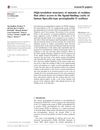
July 2014 in “Acta Crystallographica Section D-biological Crystallography” This study reports that mutations in human L-PGDS affect the entrance and exit of ligands in its binding cavity, suggesting these residues play a role in ligand interaction processes.
 11 citations
,
November 2015 in “Experimental Dermatology”
11 citations
,
November 2015 in “Experimental Dermatology” This study reported that IL-6/STAT3 signaling influences p63 isoform expression in keratinocytes and is involved in wound-induced hair follicle neogenesis, highlighting the interplay between immune and developmental pathways.
22 citations
,
October 2018 in “Molecular Medicine Reports” In this study, classic PDRN (50-1,500 kDa) was observed to improve wound healing quality in a mouse model by enhancing collagen composition and cell migration.
 23 citations
,
August 2018 in “Biochimica and biophysica acta. Molecular and cell biology of lipids”
23 citations
,
August 2018 in “Biochimica and biophysica acta. Molecular and cell biology of lipids” This article reviews the roles of lesser-known secreted phospholipase A2 isoforms in various biological processes, such as immune suppression, metabolic regulation, epidermal hyperplasia, and male reproduction, without reporting new clinical findings.
 11 citations
,
August 2010 in “Developmental neurobiology”
11 citations
,
August 2010 in “Developmental neurobiology” This study suggests that Ptprq in the hair bundles may exist as multiple isoforms that are differentially expressed throughout development and affect the organization of stereocilia in the chick inner ear.