September 2002 in “Research Repository (Kingston University London)” This review discusses strategies for treating hormone-dependent prostate diseases and synthesizes a range of potential 5α-reductase inhibitors, but experimental evaluation of these compounds was not completed.
 February 2024 in “Scientific Reports”
 In this study, cinnamic acid was found to enhance hair growth in human dermal papilla cells and hair follicle organoids by activating oxytocin signaling, suggesting its potential for developing hair growth-promoting products.
 28 citations
,
September 2013 in “Expert Opinion on Therapeutic Patents”
28 citations
,
September 2013 in “Expert Opinion on Therapeutic Patents” This review discusses various resveratrol derivative patents for therapeutic, nutraceutical, and cosmetic use, but reports no clinical results and notes that claims of improved efficacy lack trial evidence.
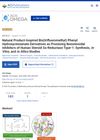 August 2025 in “ACS Omega”
 This study synthesized and evaluated hydroxycinnamate derivatives for their ability to inhibit human SRD5A1, finding that three compounds showed significant inhibitory activity and low cytotoxicity. Compound 10a notably reduced SRD5A1 protein expression in cells, suggesting potential for nonsteroidal treatment of androgen-related conditions.
 January 2023 in “Side effects of drugs annual”
 This chapter reviews emerging side effects of various nutritional supplements and alternative medicine practices, highlighting potential toxicities and stressing the need for careful identification and management by healthcare professionals.
 September 2022 in “Research Square (Research Square)”
 This study found that caffeic acid treatment mitigated the negative effects of acrylamide toxicity in Wistar rats by normalizing tissue and serological indices.
 9 citations
,
April 2019 in “International Journal of Molecular Sciences”
9 citations
,
April 2019 in “International Journal of Molecular Sciences” This research indicates that KCED-1 and KCED-2 effectively induce adiponectin production in human subcutaneous fat, which may promote hair growth on the scalp.
 431 citations
,
October 2008 in “Current Medicinal Chemistry”
431 citations
,
October 2008 in “Current Medicinal Chemistry” This review focuses on coumarin analogs with potential antibreast cancer activities but reports no new clinical results, highlighting their mechanisms of action and structure-activity relationships.
 67 citations
,
February 2020 in “Journal of Ginseng Research”
67 citations
,
February 2020 in “Journal of Ginseng Research” This review evaluates and classifies the non-saponin components of Korean Red Ginseng, emphasizing their combined role with saponins in the plant's bioactivity, but reports no new clinical results.
 6 citations
,
October 2016 in “Food Science and Biotechnology”
6 citations
,
October 2016 in “Food Science and Biotechnology” This study found that the water extract of Bituminaria bituminosa demonstrated the highest antioxidant activity and α-glucosidase inhibition among tested extracts, but no cholinesterase or tyrosinase inhibition.
 March 2025 in “Jurnal Farmamedika (Pharmamedica Journal)”
 In this study, Indonesian spices were screened in silico for their potential to inhibit MMP9 and TNFα, which are involved in chronic diabetic wounds, and procyanidin was identified as the most promising therapeutic candidate due to its low binding energy to both proteins.
 February 2026 in “Molecules”
 This study reported that a novel nanomedicine combining berberine and sinapic acid significantly inhibited the growth of mouse mammary carcinoma cells and demonstrated an anti-tumor effect in vivo, without significant systemic toxicity after 28 days, suggesting a promising, low-toxicity therapeutic strategy for breast cancer.
42 citations
,
June 2019 in “Aging” This study found that treatment with the polyphenolic compound TCQA activated β-catenin, promoting hair regrowth and the initiation of the anagen phase in mice and human dermal papilla cells.
 9 citations
,
March 2022 in “Antioxidants”
9 citations
,
March 2022 in “Antioxidants” This review summarized and classified 32 approved synthetic and natural-identical antioxidants, examining their regulatory status, safety, pharmacological properties, and effectiveness on human health, aiming to clarify their antioxidant actions and encourage further research in the field.
 21 citations
,
June 2022 in “Molecules”
21 citations
,
June 2022 in “Molecules” This review discusses the phytochemistry and pharmacological activities of Perilla frutescens, detailing its bioactive compounds and their potential health benefits, but reports no new clinical results.
21 citations
,
February 2023 in “Pharmaceuticals” This study reports that extracts from pomegranate leaves contain bioactive compounds with antioxidant, antimicrobial, and skin-beneficial properties, suggesting their potential use in nutraceutical and cosmeceutical applications.
5 citations
,
December 2023 in “Materials” This review paper highlights the development and application of organic and biogenic nanocarriers for delivering bioactives, focusing on eco-friendly and sustainable nanotechnology strategies while addressing challenges like toxicity and paving the way for future innovations in green solution approaches.
 4 citations
,
October 2025 in “International Journal of Medical Sciences”
4 citations
,
October 2025 in “International Journal of Medical Sciences” This review reported that tripeptides, such as GHK and KdPT, show promise in enhancing wound healing through multiple mechanisms, including promoting cell migration, collagen deposition, and angiogenesis, while offering antimicrobial and anti-inflammatory benefits for both acute and chronic wounds.
 February 2023 in “Asian journal of pharmaceutical research and development”
 This survey reports on the types and extraction factors of flavonoids in three aquatic plants from Iraqi marshlands but notes limited information on individual flavonoid profiles and their biological impacts.
 15 citations
,
January 2021 in “Cellular and Molecular Biology”
15 citations
,
January 2021 in “Cellular and Molecular Biology” This study found that Prosopis farcta is a rich source of phenolic compounds with strong antioxidant activity, suggesting its potential for use in food, beverage, feed, and pharmaceutical applications.
 April 2026 in “The Open Biotechnology Journal”
 This review reports that resveratrol could benefit the management of chronic illnesses such as diabetes and cardiovascular disease, but challenges with bioavailability and regulatory issues persist.
July 2025 in “Food Safety and Health” This study used metabolomics to identify distinctive metabolic and phenolic profiles in American ginseng (Panax quinquefolius) from various regions, revealing specific biomarkers that can help differentiate between ginseng from Northeast China, Shandong, and the United States.
 October 2001 in “WORLD SCIENTIFIC eBooks”
 This compilation on contact and occupational dermatology in the Asia-Pacific region discusses various allergens and irritants without reporting new clinical findings.
 11 citations
,
November 2015 in “Journal of Functional Foods”
11 citations
,
November 2015 in “Journal of Functional Foods” This study found that the ethyl acetate fraction of Hibiscus rosa sinensis petals significantly reduced serum glucose and glycated hemoglobin levels in diabetic rats, with effects comparable to metformin.
 January 1993 in “Side effects of drugs annual”
 This chapter covers various dermatological drugs, cosmetics, and topical agents, focusing on the properties and uses of propolis, but does not present new clinical findings.
 60 citations
,
June 2017 in “IOSR Journal of Pharmacy (IOSRPHR)”
60 citations
,
June 2017 in “IOSR Journal of Pharmacy (IOSRPHR)” This review highlights the chemical components and various potential health effects of Daucus carota but reports no new experimental results.
 112 citations
,
May 2019 in “Pharmacological Research”
112 citations
,
May 2019 in “Pharmacological Research” This review discusses the isolation, structure, and bioactivity of lignans and neolignans from 2016 to mid-2018, reporting no new clinical results but highlighting their potential protective properties against diseases such as cancer and neurodegeneration.
 18 citations
,
November 2014 in “Journal of Agricultural and Food Chemistry”
18 citations
,
November 2014 in “Journal of Agricultural and Food Chemistry” This study found that ethanol-extracted propolis stimulated hair growth in mice by promoting the proliferation of hair keratinocytes.
 11 citations
,
February 2021 in “Trends in Food Science and Technology”
11 citations
,
February 2021 in “Trends in Food Science and Technology” This review explores the potential of edible flowers, particularly the genus Impatiens, for their chemical, nutritional, and bioactive properties but does not report new clinical findings.
 8 citations
,
July 2019 in “Pure and Applied Chemistry”
8 citations
,
July 2019 in “Pure and Applied Chemistry” This study identified natural compounds from Iris plants that showed potential as inhibitors of urease and carbonic anhydrase-II enzymes, suggesting their possible use in treating related disorders.