 May 2026 in “BMC Medicine”
 This study found that ACOD1 deficiency in dermal papilla cells promotes mitochondrial dysfunction and contributes to cellular senescence in androgenetic alopecia, suggesting ACOD1 as a potential therapeutic target and 4-octyl itaconate as a promising treatment option for AGA.
In this study, Sox13 was identified as a novel marker for early hair follicle development and differentiation in mice, though it appears to be dispensable for overall epidermal and adnexal development.
 4 citations
,
July 2012 in “Genesis”
4 citations
,
July 2012 in “Genesis” This study reported that a Megsin-Cre transgene enables genetic manipulation primarily in skin, forestomach, and esophagus tissues, offering a new tool for studying development and diseases in these areas.
 January 2018 in “Stem cell biology and regenerative medicine”
 This paper reviews the role of ATP-dependent chromatin remodeling complexes in epidermal homeostasis, hair regeneration, and skin repair, noting contributions to 3D-genomic organization and suppression of UV-induced hyper-proliferation, without presenting new results.
1 citations
,
December 2019 in “World rabbit science” This study found that high concentrations of supplemental cobalt inhibited hair follicle development in rabbits, potentially involving the mTOR-BMP signaling pathway.
 April 2010 in “The Journal of Urology”
 Human prostate cells produce more WISP1/CCN4 when there's not enough oxygen.
3 citations
,
April 2022 in “Research Square (Research Square)” In this study, the researchers identified a PBX1-SIRT1-PARP1 axis that plays a crucial role in reducing senescence and apoptosis in hair follicle-derived mesenchymal stem cells.
49 citations
,
July 2000 in “Journal of Histochemistry & Cytochemistry” This study found cell-specific variations in POMC mRNA and peptide expression in murine skin, suggesting that PC1 and PC2 convertases contribute to differential POMC processing.
 May 2015 in “Actas Dermo-Sifiliográficas”
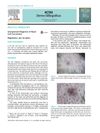
 A young man was unexpectedly diagnosed with basal cell carcinoma after a scalp examination and confocal microscopy.
 April 2026 in “Tissue Engineering and Regenerative Medicine”
 This study found that the GPRC6A-Duox1 signaling pathway influences hair cycle progression and testosterone-mediated hair loss in mice, suggesting that disruption of this pathway leads to resistance against testosterone-induced hair loss and longer anagen phase duration.
4 citations
,
November 2024 in “Journal of Advanced Research” In this study, the researchers reported that NMMHC IIA dissociates from PAR1 and activates the CREB3/ARF4 pathway, worsening thrombin-induced blood-brain barrier damage, suggesting it as a potential therapeutic target for blood-brain barrier-related diseases.
 November 2022 in “Journal of Investigative Dermatology”
 This study developed a novel method to analyze the effects of COL7A1 mutations using mRNA from peripheral blood mononuclear cells, aiding genetic diagnosis and potential therapies for dystrophic epidermolysis bullosa.
21 citations
,
February 2006 in “Clinical Cancer Research” This commentary discusses how microphthalmic-associated transcription factor levels in circulating tumor cells correlate with melanoma progression and suggests the factor may be up-regulated in vivo, but it reports no new clinical results.
25 citations
,
November 2020 in “Proceedings of the National Academy of Sciences” This study found that the HoxC gene cluster plays a critical role in the development of ectodermal organs, including hair and nails, with mammalian-specific enhancers increasing transcription levels during development.
May 2025 in “Acta Dermato Venereologica” The Paxbp1 gene is crucial for healthy hair follicles.
 101 citations
,
November 2011 in “Nature Communications”
101 citations
,
November 2011 in “Nature Communications” Wnt/β-catenin signaling is crucial for cell fusion in placental development.
3 citations
,
April 2019 in “Stem cells international” This study found that CRABP1, Nestin, and Ephrin B2 are expressed in both the tumor stroma and invasive front of skin adnexal tumors and basal cell carcinomas.
24 citations
,
January 2023 in “Cancer Research” This study suggests that activating AMPK to phosphorylate ZDHHC13 may enhance MC1R function and reduce melanoma risk in individuals with red hair.
41 citations
,
December 2011 in “The journal of investigative dermatology/Journal of investigative dermatology” This study reported that deleting the MED1 subunit from the MED complex in keratinocytes resulted in disrupted hair differentiation and cycling, leading to hair loss in mice.
 97 citations
,
March 2002 in “Molecular and cellular biology”
97 citations
,
March 2002 in “Molecular and cellular biology” This study found that mice with a mutant CDP/Cux protein lacking the homeodomain showed severely impaired growth, high postnatal mortality, and reduced fertility, highlighting CDP/Cux's role in developmental regulation.
 October 2023 in “The American Journal of Gastroenterology”
 This case report describes chronic iron deficiency anemia in a patient with Cronkhite-Canada syndrome, highlighting the need for more data to guide treatment and cancer surveillance due to its rarity and mortality risk.
 11 citations
,
April 2019 in “Bioscience Reports”
11 citations
,
April 2019 in “Bioscience Reports” In this study, single nucleotide polymorphisms in the RAB5B gene were linked to an increased risk of polycystic ovary syndrome and associated with specific microRNA binding sites.
July 2019 in “Tumor Biology” In this study, researchers found that bone marrow-derived epithelial cells significantly contribute to the development of cutaneous tumors and dysplastic ulcers in mice, indicating a potential systemic role in skin cancer development.
57 citations
,
April 2009 in “Differentiation” This study demonstrates that SDF-1/CXCL12 and CXCR4 signaling play a crucial role in directing the migration and positioning of melanoblasts in mouse hair follicle formation.
 April 2017 in “Journal of Investigative Dermatology”
 This study demonstrated that mitochondrial function in keratinocytes is crucial for maintaining skin homeostasis and hair follicle development, as its impairment led to disrupted hair morphogenesis and early death in mice.
 1 citations
,
December 2018 in “Journal of cutaneous pathology”
1 citations
,
December 2018 in “Journal of cutaneous pathology” This study found that 11% of cutaneous focal mucinosis lesions demonstrated follicular induction, which can mimic basal cell carcinoma histologically and complicate diagnosis.
 April 2026 in “Zenodo (CERN European Organization for Nuclear Research)”
 In this study, Dodatek A operationalizes the Functional Androgen Axis framework by defining three system-level indices and an efficiency metric to describe androgen function, incorporating key methodological improvements and acknowledging significant limitations for future empirical validation.
 13 citations
,
September 2021 in “Communications Biology”
13 citations
,
September 2021 in “Communications Biology” This study introduces a five-modal microscopy technique that allows label-free, in vivo observation and quantitative analysis of various wound healing processes.
July 2019 in “Cancer Research” This study found that bone marrow-derived epithelial cells were abundantly recruited to some skin tumors in mice, indicating a systemic contribution to cutaneous neoplasms.