Identification of a Link Between Wnt/β-Catenin Signaling and the Cell Fusion Pathway

    November 2011 in “ Nature Communications
    Ken Matsuura, Takafumi Jigami, Kenzui Taniue, Yasuyuki Morishita, Shungo Adachi, Takao Senda, Aya Nonaka, Hiroyuki Aburatani, Tsutomu Nakamura, Tetsu Akiyama
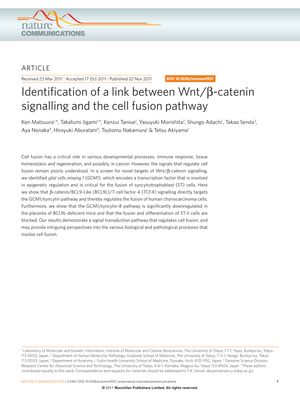
    Image of study
    TLDR Wnt/β-catenin signaling is crucial for cell fusion in placental development.
    The study identified a link between Wnt/β-catenin signaling and the cell fusion pathway, specifically targeting the GCM1/syncytin pathway, which was crucial for the fusion of human choriocarcinoma cells. It demonstrated that β-catenin/BCL9L/TCF4 signaling directly regulated this pathway, and its downregulation in BCL9L-deficient mice led to blocked fusion and differentiation of syncytiotrophoblast cells. The research used BeWo cells and found that knockdown of BCL9L, β-catenin, or TCF4 significantly reduced the expression of GCM1, syncytin-1, and syncytin-2, as well as the number of cell fusion events. The study suggested that Wnt/β-catenin signaling played a significant role in placental development and potentially in tissue regeneration and cancer development.
    Discuss this study in the Community →

    Research cited in this study

    1 / 1 results

    Related Research

    1 / 1 results