 66 citations
,
February 2010 in “CrystEngComm”
66 citations
,
February 2010 in “CrystEngComm” Made 8 minoxidil samples; 1 cocrystal, 7 salts formed.
 December 2025 in “INDONESIAN JOURNAL OF PHARMACY”
 This study found that clove oil nanoemulsion hair serum effectively promoted hair growth, suggesting it may be a potential treatment for alopecia areata.
November 2025 in “Contact Dermatitis” This study reported a case of acute kidney injury and toxic contact dermatitis in a 25-year-old woman following exposure to a glyoxylic acid-containing hair straightening product, highlighting glyoxylic acid's potential role in cutaneous and renal complications and underscoring the need for stronger regulation and awareness.
 September 2018 in “University of the Arts London Research Online (University of the Arts London)”
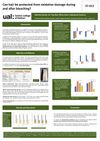
 This study assessed three materials—L-arginine, hydrolysed keratin, and cystine-silanol copolymer—ex vivo for their potential to reduce undesirable effects of hair bleaching, such as damage to hair proteins.
33 citations
,
April 2020 in “Dermatitis” This study found that 9% of tested patients had positive patch test reactions linked to hair care products, with most reactions clinically relevant and commonly involving allergens like p-phenylenediamine.
61 citations
,
September 2011 in “Pain” This study observed that N-palmitoylethanolamine (PEA) may relieve pain by enhancing de novo neurosteroid synthesis, evidenced by increased allopregnanolone levels and protein expression in pain models, dependent on PPAR-α.
 August 2022 in “International Journal of Health Sciences (IJHS) (En línea)”
 This study observed that patients with alopecia areata had significantly different levels of oxidative stress markers SOD and MDA compared to controls.
 October 2025 in “Journal of Molecular Structure”
 Hyaluronic acid microneedles help deliver minoxidil derivatives effectively for hair regrowth.
 50 citations
,
May 2019 in “BioFactors”
50 citations
,
May 2019 in “BioFactors” This review discusses the impact of air pollution on skin health and suggests that targeting oxidative stress products like HNE could be a new strategy for treating related skin conditions.
 1 citations
,
January 1997 in “Skin research”
1 citations
,
January 1997 in “Skin research” Hinokitiol and pantothenylethylether in hair products can cause strong allergic reactions.
August 2025 in “Anais Brasileiros de Dermatologia” This review details phenol's dermatological uses and underscores its potent skin rejuvenation effects but emphasizes the need for caution due to risks of serious complications, including cardiac arrhythmias and organ failure, particularly with improper use or large-area applications.
 February 2023 in “Ankara Üniversitesi Veteriner Fakültesi dergisi”
 This case report is the first to document ethylene glycol toxicity in livestock calves in Türkiye, providing insights into clinical signs and pathological findings associated with this type of poisoning.
September 2024 in “Colloids and Surfaces B Biointerfaces” This study found that cedrol nanoemulsions significantly promote hair follicle regeneration and reduce DHT levels in an androgenic alopecia mouse model, suggesting potential efficacy in AGA treatment.
 24 citations
,
October 1994 in “Fertility and Sterility”
24 citations
,
October 1994 in “Fertility and Sterility” This study suggests that in women with androgenic alopecia and men with premature balding, enhanced 5α-reductase activity and altered androgen conjugation, favoring sulfurylation, may be involved in scalp hair loss.
14 citations
,
June 2011 in “Steroids” This study found that several dehydroepiandrosterone ester derivatives effectively reduced prostate and seminal vesicle weight in gonadectomized hamsters treated with testosterone, demonstrating potential antiandrogen effects comparable to Finasteride.
 November 2022 in “Journal of Investigative Dermatology”
 This study developed a chalcone-based molecule that significantly increased tyrosinase inhibition and solubility, showing potential as a safe and effective skin depigmenting and antiaging agent, with supportive epigenetic and antioxidant properties observed in vitro.
 7 citations
,
May 2018 in “Indian Journal of Pharmacology”
7 citations
,
May 2018 in “Indian Journal of Pharmacology” This study found that the methanolic extract of Carthamus caeruleus roots significantly reduced inflammation, promoted wound healing, and enhanced hair growth in experimental models, supporting its traditional use in Northern Algeria as a skincare remedy.
12 citations
,
July 2017 in “International Journal of Cosmetic Science” This study found that N‐AOHPA was particularly effective as a silicone emulsifier for improving the condition of damaged hair by preventing amino acid dissolution from bleached hair.
 9 citations
,
June 1947 in “Analytical Chemistry”
9 citations
,
June 1947 in “Analytical Chemistry” Cold waving solutions quickly reduce cystine to cysteine in hair.
 June 2025 in “Jurnal Mandala Pharmacon Indonesia”
 In this study, researchers found that methanol extract from E. alba stem reduced the expression of the apoptosis marker gene Caspase-3 in T47D breast cancer cells, particularly at 100 ppm, achieving 1.859 times suppression compared to DMSO 2%.
35 citations
,
December 2014 in “Clinical and experimental dermatology” This study found that patients with alopecia areata had reduced erythrocyte SOD and GSH-Px activities and elevated plasma MDA levels, suggesting a potential role of oxidative stress in the disease's pathogenesis.
 32 citations
,
January 1990 in “Clinical Endocrinology”
32 citations
,
January 1990 in “Clinical Endocrinology” This study found that women with female pattern androgenic alopecia have significantly higher levels of certain androgens and androgen sulfates compared to normal premenopausal women, suggesting markers for diagnosis and treatment efficacy.
 7 citations
,
January 1990 in “Eisei kagaku”
7 citations
,
January 1990 in “Eisei kagaku” This study suggests that analyzing hair care product components left on hair using GC and GC-MS may provide a more objective forensic comparison than morphological examination.
April 2016 in “The journal of investigative dermatology/Journal of investigative dermatology” This study demonstrated that the Alopecia Areata Disease Activity Index (ALADIN), a new biomarker, strongly correlates with treatment response in patients using JAK inhibitors for alopecia areata.
January 2026 in “International Journal of Biological Macromolecules” The hydrogel improves hair growth treatment by enhancing drug delivery and promoting follicle repair.
15 citations
,
April 2023 in “Biology” This review discusses the characteristics, extraction strategies, and potential applications of plant and algal lipid droplets but reports no new empirical findings.
2 citations
,
March 2025 in “Journal of Translational Autoimmunity” This study reports that AhR pathway expression is significantly reduced in lymphocytes of alopecia areata patients, suggesting its potential as a diagnostic marker and therapeutic target.
 4 citations
,
March 2020 in “Cutaneous and ocular toxicology”
4 citations
,
March 2020 in “Cutaneous and ocular toxicology” In this double-blind, randomized controlled study, researchers found that Wen by Chaz Dean Sweet Almond Mint Cleansing Conditioner was similarly tolerated compared to three other hair cleansing conditioners and was significantly better tolerated than salicylic acid shampoo or baby shampoo in terms of skin reactions.
51 citations
,
November 1988 in “The Journal of Clinical Endocrinology & Metabolism” This study found that serum 3 alpha-Adiol-G levels in men are significantly associated with chest hair density and acne, indicating its role in reflecting androgen activity in peripheral tissues.
115 citations
,
March 2001 in “Baillière's best practice and research in clinical endocrinology and metabolism/Baillière's best practice & research. Clinical endocrinology & metabolism” This article reviews how different 5alpha-reductase and 3alpha-HSD enzymes impact androgen levels and highlights their potential as drug targets for androgen-related diseases, but provides no new experimental findings.