37 citations
,
June 2011 in “Journal of The American Academy of Dermatology”
37 citations
,
June 2011 in “Journal of The American Academy of Dermatology” This study demonstrates that sebaceous gland loss is a common early feature in primary scarring alopecia and suggests that inflammation of sebaceous glands or ducts may contribute to follicular damage.
283 citations
,
February 2011 in “Cell stem cell” COL17A1 is crucial for preventing hair graying and loss by supporting hair and pigment stem cells.
 44 citations
,
January 2011 in “Journal of Cutaneous Pathology”
44 citations
,
January 2011 in “Journal of Cutaneous Pathology” This study introduces the "HoVert" technique, which generates both vertical and horizontal sections from a single biopsy to effectively differentiate lichen planopilaris from discoid lupus erythematosus in alopecia cases.
 89 citations
,
December 2010 in “The Journal of Dermatology”
89 citations
,
December 2010 in “The Journal of Dermatology” This study describes characteristic trichoscopic features of various hair loss diseases and proposes an algorithmic method for diagnosing them, but reports no new clinical results.
 76 citations
,
November 2010 in “Journal of The American Academy of Dermatology”
76 citations
,
November 2010 in “Journal of The American Academy of Dermatology” In this study, a photographic scale and questionnaire revealed that extensive central scalp hair loss was observed in 5.6% of African American women, with an association to a history of tinea capitis.
 150 citations
,
October 2010 in “The American Journal of Pathology”
150 citations
,
October 2010 in “The American Journal of Pathology” This review discusses the pathogenesis and challenges in treating primary cicatricial alopecia, highlighting the need to understand immune protection collapse in hair follicle stem cells; it reports no new clinical results.
36 citations
,
April 2010 in “The journal of investigative dermatology/Journal of investigative dermatology” This study found that canine bulge-derived keratinocytes are highly proliferative and can reconstitute pilosebaceous structures, indicating their potential utility in studying human stem cell biology and hair disorders.
29 citations
,
February 2010 in “British Journal of Dermatology” This study explores the expression of Snail1 in the fibrotic dermis of postmenopausal women with frontal fibrosing alopecia, suggesting a possible link to epithelial-mesenchymal transition.
 105 citations
,
December 2009 in “Archives of dermatology”
105 citations
,
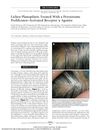
December 2009 in “Archives of dermatology” This overview discusses primary cicatricial alopecias, focusing on lichen planopilaris, and highlights the challenges in treatment and the progressive nature of hair loss despite symptom management, without providing new clinical results.
39 citations
,
November 2009 in “Clinical and Experimental Dermatology” This study reports that in primary cicatricial alopecias, increased expression of certain immune markers in the hair-follicle bulge suggests a collapse of immune privilege, which may contribute to follicle destruction.
 11 citations
,
August 2009 in “Dermatologic Surgery”
11 citations
,
August 2009 in “Dermatologic Surgery” A man developed a rare scalp disorder, Folliculitis Decalvans, 20 years after hair restoration surgery, and it required long-term antibiotic treatment.
503 citations
,
May 2009 in “Cell stem cell” This study suggests that Lrig1-positive cells form a previously unknown reservoir of interfollicular epidermal stem cells in adult mouse skin, influencing epidermal proliferation and hair follicle development.
 835 citations
,
October 2008 in “Nature Genetics”
835 citations
,
October 2008 in “Nature Genetics” Lgr5 is a marker for active, long-lasting stem cells in mouse hair follicles.
35 citations
,
July 2008 in “Dermatologic therapy” This review discusses current hypotheses about cicatricial alopecia's pathogenesis, including lymphocyte-mediated mechanisms and sebaceous gland defects, and reports no new results, emphasizing the need for systematic research.
74 citations
,
July 2008 in “Dermatologic therapy” This review discusses histopathologic findings in diagnosing primary cicatricial alopecias and emphasizes the importance of correlating histology with clinical presentation for accurate diagnosis; it reports no new results.
 98 citations
,
May 2008 in “British Journal of Dermatology”
98 citations
,
May 2008 in “British Journal of Dermatology” This review discusses evidence-based guidance for managing primary cicatricial alopecias but reports no new clinical results, highlighting significant gaps in knowledge and the need for more quality trials.
207 citations
,
July 2006 in “Development” This study identified a novel MTS24-positive murine keratinocyte population with increased colony-forming ability, suggesting these cells may serve as a new reservoir of proliferative progenitor or stem cells in hair follicles.
15 citations
,
February 2006 in “Journal of Investigative Dermatology” More research is needed to understand and treat cicatricial alopecias.
550 citations
,
December 2005 in “The Journal of clinical investigation/The journal of clinical investigation” This study found that bulge cells marked by CD200+ in human hair follicles show high colony-forming efficiency, suggesting successful enrichment of keratinocyte stem cells.
 127 citations
,
December 2005 in “Experimental Dermatology”
127 citations
,
December 2005 in “Experimental Dermatology” This study provides evidence that psychoemotional stress inhibits hair growth in mice by affecting the brain-hair follicle axis, with specific neuropeptides and treatments modulating this effect.
1279 citations
,
November 2005 in “Nature Medicine”  30 citations
,
October 2005 in “Journal of Investigative Dermatology Symposium Proceedings”
30 citations
,
October 2005 in “Journal of Investigative Dermatology Symposium Proceedings” This article reviews modern hair transplantation techniques, noting that while many innovations have improved natural-looking results and expanded candidate eligibility, some may have hidden drawbacks, and it reports no new results.
 291 citations
,
October 2005 in “Proceedings of the National Academy of Sciences of the United States of America”
291 citations
,
October 2005 in “Proceedings of the National Academy of Sciences of the United States of America” This study found that rat whisker follicle stem cells can be expanded in culture and transplanted to form functional hair follicles, demonstrating their multipotency and potential for regenerative medicine.
 33 citations
,
August 2005 in “The American Journal of Dermatopathology”
33 citations
,
August 2005 in “The American Journal of Dermatopathology” This article provides departmental contact information for Dr. Dirk M. Elston at the Geisinger Medical Center and reports no research findings.
 56 citations
,
July 2005 in “Experimental Dermatology”
56 citations
,
July 2005 in “Experimental Dermatology” This study demonstrated that hair follicle-derived cells can induce hair follicle formation in an in vitro skin organ culture system using human retroauricular skin specimens.
53 citations
,
July 2002 in “Journal of Investigative Dermatology” The Dfl mutation in mice causes poor sebaceous gland function and complete hair loss.
 125 citations
,
September 2001 in “The FASEB Journal”
125 citations
,
September 2001 in “The FASEB Journal” This study demonstrated that stress inhibited hair growth in mice, likely through substance P-dependent activation of immune cells, highlighting a brain-hair follicle connection.
112 citations
,
February 2001 in “Journal of Investigative Dermatology” This study found that substance P and calcitonin-gene-related peptide have different roles in regulating hair growth in mice, with substance P promoting anagen progression and calcitonin-gene-related peptide inhibiting it.
949 citations
,
January 2001 in “Cell” This study demonstrated that multipotent stem cells in adult mice whisker follicles migrate to produce whisker growth, and that this process requires precise control of stem cell trafficking.
1010 citations
,
August 2000 in “Cell” In this study, researchers found that hair follicle stem cells in mice can generate both hair follicle and epidermis cells, highlighting their potential bipotency.
39 citations
,
July 2000 in “British Journal of Dermatology” This report on identical female twins with folliculitis decalvans suggests a possible genetic component to the disease, marking the first such case in twins.
179 citations
,
June 2000 in “The American journal of pathology” This study reports that the asebia-2J mutation in mice affects sebaceous gland function and leads to hair follicle destruction, offering a model for human scarring alopecias.
 80 citations
,
March 2000 in “Journal of cutaneous pathology”
80 citations
,
March 2000 in “Journal of cutaneous pathology” This study found that the Verhoeff-Van Gieson stain effectively distinguishes scarred from non-scarred dermis and aids in classifying types of permanent alopecia based on elastic tissue patterns.
 37 citations
,
May 1999 in “Australasian Journal of Dermatology”
37 citations
,
May 1999 in “Australasian Journal of Dermatology” This review discusses neutrophil-associated and infiltrative scarring alopecias, as well as promising new treatments, but reports no new clinical results.
19 citations
,
October 1996 in “International Journal of Dermatology” This study concluded that pseudopelade is an autosomal dominant condition, distinct from other forms of alopecia, characterized by atrophic hair follicle loss and notable familial association.
107 citations
,
September 1968 in “Archives of Dermatology” In this study, researchers identified a form of irreversible scalp alopecia in Black women using hot combs, characterized by incomplete hair loss primarily on the crown and follicular scarring.