 April 2023 in “Journal of Investigative Dermatology”
 This study demonstrated that the Epidermal Biopotential Sensing System (EBSS) can measure digital biomarkers of pain in mice, suggesting potential applications in assessing pain and screening analgesics in populations with communication difficulties.
This study found that PIXE microanalysis effectively detected and quantified trace element changes in hair shafts, revealing a marked decrease in copper after treatment for green hair syndrome.
8 citations
,
January 2014 in “PubMed” This study demonstrated that dermal papilla cells were more efficiently reprogrammed into induced pluripotent stem cells than dermal fibroblasts, suggesting their potential as a source for iPS cells.
August 2026 in “JURNAL ILMU KEFARMASIAN INDONESIA” This study found that the addition of SPACE peptide significantly enhanced the penetration of amniotic membrane stem cell metabolites in mice, with only very mild irritation observed.
 1 citations
,
November 2018 in “Dermatologic Therapy”
1 citations
,
November 2018 in “Dermatologic Therapy” This report describes the use of compounded topical preparations to treat two severe psoriasis patients and calls for further studies on their regulation, protocol, and stability evaluation.
16 citations
,
October 2013 in “Anais Brasileiros de Dermatologia” In this case report, an elderly woman with erosive pustular dermatosis of the scalp showed complete closure of eroded areas after treatment with prednisone and topical tacrolimus, resulting in stable scarring alopecia.
 November 2022 in “The journal of investigative dermatology/Journal of investigative dermatology”
 This study found that cPPARγ and dnPPARγ isoforms are differentially expressed in healthy human skin, suggesting that PPARγ modulators may have compartment-specific effects depending on isoform presence.
April 2022 in “DOAJ (DOAJ: Directory of Open Access Journals)” This study found that adipose-derived stem cell exosomes increased dermal papilla cell proliferation and elevated proteins linked to hair follicle inducibility in vitro.
11 citations
,
August 1948 in “Journal of Investigative Dermatology” In this study, oral calcium pantothenate was associated with improvement in the inflammatory phase of discoid lupus erythematosus of the scalp, with the most marked response observed in subacute cases.
 April 2023 in “The journal of investigative dermatology/Journal of investigative dermatology”
 This study provides ex vivo proof-of-principle that low-intensity ultrasound may protect human hair follicles from paclitaxel-induced damage, potentially reducing chemotherapy-related alopecia.
9 citations
,
January 2011 in “Journal of X-ray science and technology” This study found that perming and bleaching hair result in different distributions of cysteic acid, suggesting distinct damage mechanisms between the two treatments.
April 2025 in “OPAL (Open@LaTrobe) (La Trobe University)” This study investigated the impact of circulating exosomes from Xinji fine-wool and small-tailed Han sheep on hair growth in mice, finding that these exosomes influenced hair follicle development and melanin synthesis, with differences noted in hair follicle and hair diameters between different exosome treatments.
 March 2024 in “Advanced healthcare materials/Advanced Healthcare Materials”
 This study found that generating pluripotent stem cell-derived skin organoids in a 3D bioprinted hydrogel device improved keratinocyte differentiation and hair follicle formation while reducing necrosis.
 September 2023 in “Clinical, cosmetic and investigational dermatology”
 In this case report, a rare form of chronic cutaneous lupus, lupus erythematosus profundus, was treated effectively with topical and systemic therapies, leading to improvement and healing of ulcerations, though resulting in atrophic scars and macules.
 1 citations
,
February 2022 in “Clinical and Experimental Health Sciences”
1 citations
,
February 2022 in “Clinical and Experimental Health Sciences” In this study, dexpanthenol exhibited antiepileptic and antidepressant-like effects in mice without impacting their motor coordination.
 4 citations
,
July 1994 in “Clinics in Dermatology”
4 citations
,
July 1994 in “Clinics in Dermatology” This review discusses the emergence and impact of eosinophilia-myalgia syndrome related to L-tryptophan and offers insights into environmental factors affecting sclerodermatous conditions, with no new research findings presented.
29 citations
,
December 2022 in “Journal of Nanobiotechnology” In this study, IFN-γ-stimulated iPSC-derived mesenchymal stem cell extracellular vesicles improved atopic dermatitis in mice by reducing Th2 cytokine activity, suppressing inflammation, and restoring skin barrier function, as evidenced by decreased itching and inflammatory markers.
January 2013 in “프로그램북(구 초록집)” This review discusses the efficacy and safety of cyclosporine, methotrexate, and acitretin for managing psoriasis and reports no new clinical results; cyclosporine showed a rapid onset for severe psoriasis, methotrexate highlighted liver concerns, and acitretin was noted for its non-immunosuppressive benefits.
14 citations
,
November 2024 in “Pharmaceuticals” This study found that using spanlastics, a nano, surfactant-based drug delivery system, improved the bioavailability, drug release characteristics, and pharmacokinetic behavior of famotidine, a poorly soluble drug, by enhancing its dissolution and membrane permeation.
18 citations
,
June 2018 in “Journal of Dental Research” This study found that during amelogenesis in Msx2 null mice, a dysfunctional enamel organ developed due to abnormal epithelial transformation and lacked proper enamel formation.
56 citations
,
March 2003 in “Journal of Investigative Dermatology” This study found that 17β-estradiol inhibited RANTES production in human keratinocytes by suppressing nuclear factor κB activity, suggesting a potential mechanism for 17β-estradiol's modulation of psoriasis-related inflammation.
June 2026 in “Advanced Healthcare Materials” This study found that engineered extracellular vesicles (293F-EGF-EV), enriched in EGF mRNA, significantly aided skin wound healing in vitro and in a rat model by promoting fibroblast activity and improving wound recovery through processes like angiogenesis and reduced scarring.
 August 2015 in “MOJ proteomics & bioinformatics”
 This study suggests that epithelial-derived pop-up keratinocytes (ePUKs) may improve regenerative medicine applications due to their specific phenotype and increased expression of proteins involved in regulating cellular movement and wound healing.
30 citations
,
January 2014 in “Journal of Controlled Release” This study concluded that combining cyanoacrylate skin surface stripping with particle-based antigen delivery effectively targets HIV-1 p24 protein to skin cells, supporting its potential for needle-free transcutaneous vaccination.
3 citations
,
February 2021 in “Pediatric rheumatology online journal” This case study described a 16-year-old girl with systemic lupus erythematosus and trisomy X, suggesting that these patients might be at higher risk for avascular necrosis and osteoporosis.
September 2021 in “CRC Press eBooks” This review discusses erosive pustular dermatosis of the scalp, including its characteristics, potential triggers, and its classification as a neutrophilic dermatosis, but reports no new clinical findings.
 18 citations
,
August 2015 in “Biochemical and Biophysical Research Communications”
18 citations
,
August 2015 in “Biochemical and Biophysical Research Communications” This study found that the XEDAR receptor can activate the non-canonical NF-kB pathway involving p100 processing, which is regulated by interactions with TRAF proteins and specific kinases.
September 2025 in “OPAL (Open@LaTrobe) (La Trobe University)” This study developed a biobased copolymer called SELP::KP, showing improved hair strength, elasticity, and conditioning properties while being a safer alternative to conventional chemical treatments, based on application to human hair in a laboratory setting.
 8 citations
,
November 1990 in “Archives of Dermatology”
8 citations
,
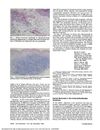
November 1990 in “Archives of Dermatology” This case report details a woman with eosinophilia-myalgia syndrome associated with L-tryptophan ingestion, highlighting skin lesions with abundant dermal mucin.
9 citations
,
July 2024 in “JAAD reviews.” This review discusses the role of extracellular vesicles in dermatology for therapeutic, diagnostic, and prognostic purposes, highlighting the lack of validated findings and the necessity for more rigorous clinical trials.