 96 citations
,
June 2017 in “Nature Communications”
96 citations
,
June 2017 in “Nature Communications” This study identified WNT10A as crucial for adult epithelial cell proliferation and differentiation, suggesting β-catenin pathway activation may help address regenerative defects in WNT10A mutation patients.
 74 citations
,
September 2006 in “Cell Cycle”
74 citations
,
September 2006 in “Cell Cycle” This review examines the role of Hairless, a nuclear receptor corepressor, in regulating Wnt signaling during hair cycling and reports no new clinical results.
 66 citations
,
July 2015 in “Organogenesis”
66 citations
,
July 2015 in “Organogenesis” This review summarizes recent findings on how Wnt signaling proteins play crucial roles in the cutaneous wound healing process but reports no new clinical results.
 59 citations
,
April 2016 in “Cell Reports”
59 citations
,
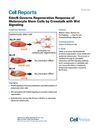
April 2016 in “Cell Reports” This study demonstrated that EdnrB signaling promotes melanocyte stem cell proliferation and differentiation, enhancing hair and epidermal melanocyte regeneration, especially under conditions of active Wnt signaling.
 47 citations
,
May 2012 in “Wiley Interdisciplinary Reviews-Developmental Biology”
47 citations
,
May 2012 in “Wiley Interdisciplinary Reviews-Developmental Biology” This article reviews the generation of complex integument patterns through genetic, chemical, and environmental influences, with applications in tissue engineering, but reports no new experimental results.
 25 citations
,
May 2016 in “Progress in Biophysics & Molecular Biology”
25 citations
,
May 2016 in “Progress in Biophysics & Molecular Biology” This article reviews the role of R-spondins and their receptors in bone development and metabolism, highlighting their potential modulatory effects and clinical implications for treating bone loss diseases, but reports no new clinical results.
24 citations
,
March 2020 in “Cells” This review provides an overview of natural product-derived small molecule modulators of the Wnt signaling pathway, exploring their potential as therapeutic agents for tissue regeneration and cancer treatment.
 23 citations
,
December 2020 in “Frontiers in Cell and Developmental Biology”
23 citations
,
December 2020 in “Frontiers in Cell and Developmental Biology” This review explores recent insights into how intrinsic gene oscillations and molecular interactions in hair follicle stem cells contribute to their regenerative potential, with potential implications for regenerative medicine, but reports no new clinical results.
 19 citations
,
January 2018 in “BioMed Research International”
19 citations
,
January 2018 in “BioMed Research International” This study suggests that miRNAs, particularly miR-195-5p, may regulate the loss of hair follicle inductivity in cultured dermal papilla cells by suppressing the Wnt/β-catenin pathway.
 14 citations
,
May 2019 in “Experimental Dermatology”
14 citations
,
May 2019 in “Experimental Dermatology” In this study, adipose tissue secretome was shown to enhance oxidative stress resistance and promote cell proliferation in vitiligo cells, suggesting a potential natural treatment approach.
 9 citations
,
November 2018 in “Drug Discovery Today”
9 citations
,
November 2018 in “Drug Discovery Today” This review discusses insights from scar-free animal models and cellular factors in skin regeneration, suggesting potential strategies for developing scar-free treatments in clinical and cosmetic practices, but reports no new clinical results.
8 citations
,
November 2025 in “Journal of Translational Medicine” This review highlights challenges in developing drugs targeting the Wnt/β-Catenin signaling pathway for cancer due to its complexity and essential roles in normal tissue. It explores targeted protein degradation technology as a promising strategy to overcome these challenges, suggesting potential new avenues for drug development.
 8 citations
,
January 2017 in “Stem Cells International”
8 citations
,
January 2017 in “Stem Cells International” This study found that overexpression of sFRP4 in skin cells reduces Wnt signaling activation, leading to decreased melanocyte differentiation in regenerating hair follicles.
 5 citations
,
October 2024 in “International Journal of Biological Sciences”
5 citations
,
October 2024 in “International Journal of Biological Sciences” This study found that a specific fragment of AIMP1, secreted by hair follicle stem cells, activated dermal papilla cells, leading to enhanced hair regrowth and maintenance in mice.
 4 citations
,
January 2020 in “Frontiers in Physiology”
4 citations
,
January 2020 in “Frontiers in Physiology” This review discusses molecular signaling pathways and nutritional factors influencing feather growth and regeneration in poultry and offers no new results; the authors suggest these insights may guide strategies for producing superior plumage.
2 citations
,
November 2023 in “Biomolecules” This review article analyzes the role of the WNT signaling pathway in skin development, wound healing, and mechanical stretching, emphasizing its importance in understanding and potentially advancing treatments for skin-related diseases.
 August 2023 in “bioRxiv (Cold Spring Harbor Laboratory)”
 This study found that maintaining a low level of Wnt/β-catenin activity is crucial for mammary gland development, as excessive activity inhibits branching and promotes characteristics of hair follicles instead, highlighting its role in skin appendage identity decisions.
This review discusses the roles and characteristics of skin stem cells, their niches, and signaling pathways in skin maintenance, aging, and cancer, highlighting their potential in therapeutic applications but presenting no new clinical findings.
 January 2016 in “Elsevier eBooks”
 This review discusses three aspects of cell fate specification across Metazoa and reports no new experimental results, highlighting the formation of nematode equivalence groups, evolution of echinoderm skeletogenic mesoderm, and adult cell fate regulation.
105 citations
,
October 2017 in “Stem cells” This review discusses Wnt signaling pathways in skin development and stem cell regulation, highlighting potential interactions with other pathways but reports no new findings.
 77 citations
,
July 2012 in “Journal of Investigative Dermatology”
77 citations
,
July 2012 in “Journal of Investigative Dermatology” The researchers observed that overexpression of Wnt10b in a mouse model can induce hair follicle regeneration by switching follicles from the resting phase to the growth phase via the Wnt-β-catenin signaling pathway.
 55 citations
,
January 2016 in “Annals of Dermatology”
55 citations
,
January 2016 in “Annals of Dermatology” This study found that repeated microneedle stimulation in mice promoted hair growth and increased the expression of hair-growth-related genes, suggesting potential therapeutic uses for alopecia.
31 citations
,
June 2021 in “Biomedicine & Pharmacotherapy” This study found that liposomal honokiol promoted hair growth in mice by activating the Wnt/β-catenin pathway and accelerating the transition from the telogen to anagen stage.
21 citations
,
October 2022 in “International Journal of Molecular Sciences” This study found that quercitrin, a natural compound, enhances Wnt/β-catenin signaling and may help mitigate synapse loss and memory impairment in Alzheimer's models.
 18 citations
,
November 2020 in “Frontiers in Cell and Developmental Biology”
18 citations
,
November 2020 in “Frontiers in Cell and Developmental Biology” This review discusses how inflammation influences hair follicle stem cell activities like wound healing and follicle cycling and suggests a potential link between inflammation, stem cell activation, and programmed cell death.
 16 citations
,
January 2023 in “Molecular Biomedicine”
16 citations
,
January 2023 in “Molecular Biomedicine” This study demonstrated that customized microneedle arrays can precisely induce targeted hair regeneration and improve hair quality in mice, potentially offering a personalized treatment approach for hair loss.
 15 citations
,
May 2017 in “Lasers in Medical Science”
15 citations
,
May 2017 in “Lasers in Medical Science” This study found that low-level laser treatment may promote hair regrowth in mice by activating the Wnt10b/ß-catenin pathway and inducing the anagen phase of hair follicles.
 9 citations
,
December 2002 in “Novartis Foundation Symposium”
9 citations
,
December 2002 in “Novartis Foundation Symposium” In this research, LEF1 was identified as a crucial transcription factor for submucosal gland development in mouse and ferret tracheas, though it requires other factors to induce gland formation.
 8 citations
,
January 2016 in “Evidence-based Complementary and Alternative Medicine”
8 citations
,
January 2016 in “Evidence-based Complementary and Alternative Medicine” This study found that Rumex japonicus Houtt. root extract promoted hair growth by enhancing cell proliferation and preventing apoptosis in human dermal papilla cells and HaCaT cells, as well as in a mouse model.
4 citations
,
May 2022 in “PeerJ” This study suggests that melatonin promotes hair growth-related properties in DP cells by activating the AKT/GSK3β/β-catenin signaling pathway through melatonin receptors in a 3D spheroid culture system.