 170 citations
,
July 2012 in “Journal of Investigative Dermatology”
170 citations
,
July 2012 in “Journal of Investigative Dermatology” In this study, researchers showed that Wnt ligands secreted by hair follicle epithelium are crucial for hair follicle regeneration and may be significant for treating hair disorders like alopecia.
This study identified ISX9 as a novel agonist of the Wnt/β‐catenin pathway, which promoted hair regrowth in mice and may offer a therapeutic approach for alopecia.
 113 citations
,
June 2015 in “Stem Cell Research & Therapy”
113 citations
,
June 2015 in “Stem Cell Research & Therapy” This study found that activation or inhibition of Wnt/β-catenin and Notch signaling pathways in rats can alter wound healing, possibly by affecting epidermal stem cell activity and keratinocyte behavior.
26 citations
,
February 1998 in “DNA and Cell Biology” This research identified that the constitutive and inducible expression of the Keratin 6 gene in transgenic mice skin is controlled by multiple regulatory elements spread throughout its 5' flanking region.
July 2024 in “Journal of Investigative Dermatology” Wnt and SHH signals together influence hair follicle cell development, offering insights for hair loss treatment.
 479 citations
,
January 2005 in “BioEssays”
479 citations
,
January 2005 in “BioEssays” This review introduces the morphological and molecular principles of hair follicle development but reports no new experimental results, focusing on recent insights and forming a working hypothesis.
 207 citations
,
March 2012 in “Development”
207 citations
,
March 2012 in “Development” In this mouse study, researchers found that dermal Wnt signaling/β-catenin activity is essential for fibroblast proliferation and initiating hair follicle formation by interacting with epidermal Wnt ligands.
 176 citations
,
April 2011 in “Science”
176 citations
,
April 2011 in “Science” This study found that in a population of hair follicles, regenerative cycling stages are regulated by both intrinsic and extrinsic signals, with WNT/BMP signaling mediating interactions among follicles for adaptability.
 116 citations
,
September 2020 in “Nature Communications”
116 citations
,
September 2020 in “Nature Communications” This study reports previously unrecognized cellular complexity in growing mouse incisors, suggesting species-specific differences in cell dynamics between mouse and human teeth related to growth and differentiation.
 94 citations
,
June 2016 in “The FASEB Journal”
94 citations
,
June 2016 in “The FASEB Journal” This review discusses the dual role of the Wnt/β-catenin pathway in mammalian tissue injury, highlighting its potential for both promoting regeneration and contributing to fibrosis, but presents no new findings.
 92 citations
,
September 2015 in “Journal of Lipid Research”
92 citations
,
September 2015 in “Journal of Lipid Research” This review discusses the roles of dermal white adipose tissue (dWAT) as an insulator, antibiotic, and regenerative tissue, highlighting its importance in systemic metabolism and immune function, but reports no new clinical results.
 89 citations
,
November 2017 in “Journal of Cellular Physiology”
89 citations
,
November 2017 in “Journal of Cellular Physiology” This review discusses the role of Wnt/β‐catenin signaling in stem and cancer stem cell maintenance and its involvement in the development and regeneration of various organs, but reports no new experimental results.
 75 citations
,
March 2014 in “Journal of Investigative Dermatology”
75 citations
,
March 2014 in “Journal of Investigative Dermatology” This study found that aging mice experience slower and more fragmented hair cycle waves, but transplanting aged skin to a young host can partially restore hair cycling, implicating extracellular factors.
 74 citations
,
January 2013 in “Journal of Investigative Dermatology”
74 citations
,
January 2013 in “Journal of Investigative Dermatology” Four genetic risk spots found for hair loss, with WNT signaling involved and a link to curly hair.
 42 citations
,
February 2017 in “Scientific Reports”
42 citations
,
February 2017 in “Scientific Reports” In this study, researchers differentiated induced pluripotent stem cells into cells with dermal papilla-like properties, demonstrating their potential role in hair follicle bioengineering and drug testing for hair growth.
 41 citations
,
December 2019 in “Stem Cell Reviews and Reports”
41 citations
,
December 2019 in “Stem Cell Reviews and Reports” This review discusses the progress in tooth regeneration research and highlights the potential of spatial-temporal release of developmental factors, but it reports no new clinical findings.
 41 citations
,
June 2013 in “PLOS ONE”
41 citations
,
June 2013 in “PLOS ONE” This study demonstrated that engineered skin substitutes using human keratinocytes and murine dermal papilla cells can develop pigmented hairs without sebaceous glands, suggesting separate pathways for hair development and eruption.
 39 citations
,
October 2013 in “Plastic and Reconstructive Surgery”
39 citations
,
October 2013 in “Plastic and Reconstructive Surgery” In this study, researchers found that intestine-derived human alpha defensin 5 enhances wound healing, reduces bacterial load, and promotes hair growth in murine burn wound beds by increasing LGR stem cell migration.
 32 citations
,
April 2016 in “Journal of Investigative Dermatology”
32 citations
,
April 2016 in “Journal of Investigative Dermatology” This study found that STAT5 activation in the dermal papilla acts as a key switch to trigger anagen entry in postdevelopmental hair follicle cycling.
 31 citations
,
July 2015 in “Clinical, Cosmetic and Investigational Dermatology”
31 citations
,
July 2015 in “Clinical, Cosmetic and Investigational Dermatology” This article discusses the challenges and possible solutions in hair restoration surgery, focusing on donor hair availability, hair survival, and concealing surgical evidence, and reports no new clinical results.
 30 citations
,
June 2021 in “British Journal of Dermatology”
30 citations
,
June 2021 in “British Journal of Dermatology” This review discusses the association between WNT10A gene variants and various ectodermal disorders, highlighting their clinical relevance in dermatology and dentistry, but reports no new findings.
 25 citations
,
June 2021 in “Developmental Cell”
25 citations
,
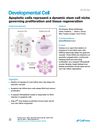
June 2021 in “Developmental Cell” In this study, researchers found that deleting Caspase-9 in hair follicle stem cells delayed apoptosis, leading to accelerated wound repair and new hair follicle regeneration by maintaining apoptotic cells as signaling centers.
 25 citations
,
September 2018 in “Molecular Biology of the Cell”
25 citations
,
September 2018 in “Molecular Biology of the Cell” This study found that in mice lacking EGFR, elevated Wnt signaling disrupts hair follicle development by affecting cell proliferation and differentiation, revealing a critical role for EGFR in regulating these processes.
 21 citations
,
December 2013 in “Archives of Dermatological Research”
21 citations
,
December 2013 in “Archives of Dermatological Research” No link found between new male baldness genes and female hair loss.
 14 citations
,
July 2021 in “Biomolecules”
14 citations
,
July 2021 in “Biomolecules” This study found that Centipeda minima extract promotes hair growth by activating Wnt/β-catenin, ERK, and JNK signaling pathways in human hair follicle dermal papilla cells.
 12 citations
,
October 2020 in “Scientific Reports”
12 citations
,
October 2020 in “Scientific Reports” In this study, Nec-1s was found to promote hair growth and may target necroptosis and the Wnt/β-catenin pathway for potential treatment of hair loss.
 10 citations
,
May 2020 in “Journal of Dermatological Treatment”
10 citations
,
May 2020 in “Journal of Dermatological Treatment” This study found that combining microneedling with 5% minoxidil improved hair growth in Chinese men with androgenetic alopecia, possibly through activating the Wnt/β-catenin signaling pathway.
 6 citations
,
May 2022 in “Frontiers in physiology”
6 citations
,
May 2022 in “Frontiers in physiology” This study suggests that an in ovo injection of CHIR-99021 promoted feather growth and follicle development in goose embryos by activating the Wnt signaling pathway.
 5 citations
,
October 2020 in “Frontiers in Cell and Developmental Biology”
5 citations
,
October 2020 in “Frontiers in Cell and Developmental Biology” This study found that the trichogenicity of cultured human outer root sheath follicular keratinocytes decreased with longer cultivation periods and was significantly influenced by the expression of the transcription factor FOXA2.
 4 citations
,
January 2020 in “Frontiers in Physiology”
4 citations
,
January 2020 in “Frontiers in Physiology” This review discusses molecular signaling pathways and nutritional factors influencing feather growth and regeneration in poultry and offers no new results; the authors suggest these insights may guide strategies for producing superior plumage.