 February 2024 in “Journal of the American Academy of Dermatology”
 Vascular patterns in dermoscopy help tell apart malignant and benign skin tumors.
9 citations
,
April 2022 in “Cell Communication and Signaling” This study found that the S100A4/NMIIA axis contributes to glioblastoma progression by recruiting and promoting migration of GBM cells along blood vessels, correlating with worse patient outcomes.
 December 2021 in “Research Square (Research Square)”
 In this study, high expression of S100A4 in glioblastoma was associated with worse patient survival and promoted tumor progression by enhancing pro-tumorigenic vascular functions.
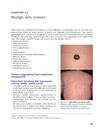
This chapter classifies various benign skin tumors and discusses their characteristics, treatment indications, and potential for recurrence, but reports no new clinical findings.
 January 2023 in “Skin Pharmacology and Physiology”
 This study found that microneedling-induced microinjury in mice promoted hair growth by stimulating the TNF-α/Wnt/VEGF pathway, and blocking TNF-α inhibited this process.
January 2023 in “Figshare” This study observed that microneedling-induced microinjury promotes hair growth via a TNF-α, Wnt, and VEGF pathway, while blocking TNF-α inhibits this process.
December 2025 in “Biomedicines” This source reviews the common skin-related side effects of tyrosine kinase inhibitors in treating endocrine cancers and emphasizes that proactive, multidisciplinary management can effectively control these adverse events without compromising cancer treatment efficacy.
 September 2020 in “Acta Scientific Cancer Biology”
 This case report describes how personalized treatment based on Encyclopedic Tumor Analysis successfully led to durable regression in a woman with advanced pilomatrical carcinoma, unresponsive to standard care.
 April 2018 in “Journal of Investigative Dermatology”
 This study found that NDRG1 expression increases during the proliferation of infantile hemangioma and may positively regulate its growth, while FOXO1 downregulation plays a role in its pathogenesis.
April 2025 in “Acta Dermato Venereologica” Topical minoxidil may cause cherry hemangiomas in some users.
 16 citations
,
April 2017 in “Journal of Cosmetic Dermatology”
16 citations
,
April 2017 in “Journal of Cosmetic Dermatology” This study found that fig leaf extract significantly downregulated inflammatory and androgenic gene expression in vitro, suggesting potential topical benefits for certain skin disorders.
 79 citations
,
January 2018 in “Wiley Interdisciplinary Reviews-Developmental Biology”
79 citations
,
January 2018 in “Wiley Interdisciplinary Reviews-Developmental Biology” This review discusses the experimental targets of fetal wound healing and evaluates existing therapies for scarless healing in adult skin, but reports no new research findings.
45 citations
,
July 2022 in “Frontiers in Pharmacology” This review discusses the mechanisms and targets of natural products for treating nonhealing wounds and reports no new experimental results, highlighting potential pathways and cytokines involved.
 25 citations
,
December 2018 in “Human Molecular Genetics”
25 citations
,
December 2018 in “Human Molecular Genetics” This study found that the PSEN1-P242LfsX11 mutation in hidradenitis suppurativa influences cytokine and chemokine expression in macrophages, potentially affecting inflammatory responses.
 11 citations
,
July 2022 in “Journal of Materials Science: Materials in Medicine”
11 citations
,
July 2022 in “Journal of Materials Science: Materials in Medicine” This study found that an optimized hydrogel combined with human umbilical cord-mesenchymal stem cells accelerated wound healing in diabetic mice by improving cell adhesion and reducing inflammation.
 10 citations
,
December 2015 in “Clinics in Dermatology”
10 citations
,
December 2015 in “Clinics in Dermatology” This review highlights the eye and skin manifestations of endocrine-related metabolic diseases but provides no new clinical results.
 5 citations
,
January 2022 in “Molecular Medicine Reports”
5 citations
,
January 2022 in “Molecular Medicine Reports” In this study, topical application of Korean maritime pine bark extract at 2% concentration significantly promoted hair growth in mice, suggesting its potential use for hair loss prevention or treatment.
5 citations
,
February 2021 in “Gels” In this study, HYDRO DELUXE BIO was reported to show promise for scalp mesotherapy by enhancing angiogenesis and reducing inflammation in an in vitro model.
 5 citations
,
June 2018 in “Records of Natural Products”
5 citations
,
June 2018 in “Records of Natural Products” This study found that Lepidium sativum leaf extract significantly downregulated VEGF, TNF-α, and SRD5A2 gene expressions in HaCaT cells, suggesting potential benefits for inflammatory and androgen-dependent skin disorders.
 2 citations
,
August 2023 in “Marine drugs”
2 citations
,
August 2023 in “Marine drugs” In this study, fish-derived collagen hydrolysate from tilapia scales improved hair growth and skin health in both cellular and mouse models, reducing oxidative stress and inflammation while enhancing hair quality and promoting beneficial gene expression.
 2 citations
,
October 2016
2 citations
,
October 2016 This article discusses the range of skin-related side effects caused by chemotherapy and radiotherapy, including novel patterns emerging with targeted therapies, but does not report new clinical results.
 1 citations
,
March 2022 in “Daehanhanuihakoeji”
1 citations
,
March 2022 in “Daehanhanuihakoeji” In this study, Artemisia sieversiana extract was found to safely promote hair follicle dermal papilla cell growth and inhibit hair loss through anti-androgen, anti-inflammatory, and antioxidant effects at a cellular level.

This review synthesizes findings from 15 animal studies on alopecia, identifying key biomarkers like TNF-α and IL-6 that suggest inflammation and follicular damage, offering insights into potential targeted therapies to balance degenerative and regenerative pathways for more effective treatment strategies.
 November 2025 in “Molecular and Cellular Biomedical Sciences”
 This study evaluated the effects of exosome therapy from hypoxia-treated mesenchymal stem cells on a fluconazole-induced alopecia model in rats and found that it significantly reduced TNF-α and increased VEGF levels, suggesting potential as a novel regenerative treatment for alopecia.
 August 2025 in “Frontiers in Pharmacology”
 In this study, PA-011, a traditional Chinese medicine extract, was shown to improve hair growth in alopecia areata model mice by reducing skin inflammation and altering skin microbiota, indicating its potential therapeutic role for this condition.
This study found that the Nap-F3K-CA hydrogel, when used on burn wounds, demonstrated effective antibacterial and anti-inflammatory properties, promoting accelerated skin repair, decreased wound infections, and improved healing processes, highlighting its potential as a clinical burn wound dressing.
 January 2023 in “European journal of gynaecological oncology”
 This study found that depletion of KRT17 in endometrial cancer reduced cell growth, motility, and angiogenesis, suggesting KRT17 as a potential therapeutic target.
October 2022 in “Faculty of 1000 Research Ltd” This review discusses the roles of various growth factors and cytokines in skin regeneration, highlighting their potential for future therapeutic development, and reports no new experimental findings.
 April 2012 in “Journal of the American Academy of Dermatology”
 This study found that psoriasis patients had a significantly higher prevalence of autoimmune diseases and other comorbidities compared to those without psoriasis.
This study found that patients with psoriasis had a significantly higher prevalence of autoimmune diseases and other comorbidities compared to individuals without psoriasis.