 July 2025 in “Advanced Science”
 In this study, researchers discovered two new signaling pathways that regulate how melanocytes establish pigment patterns in reconstituted hair-bearing skin, offering insights that could inform strategies to prevent hair greying.
October 2025 in “Journal of the Endocrine Society” This research review observed that topical hormone replacement therapy, particularly estradiol and estradiol-testosterone combinations, significantly increased Type I and III collagen synthesis in the skin of postmenopausal women, suggesting benefits against collagen loss-related skin aging effects such as reduced elasticity and increased dryness.
8 citations
,
November 2019 in “Clinical Science” This study found that higher levels of DHA from omega-3 fatty acids delayed inflammation resolution and impaired wound healing quality in both transgenic mice and wild-type mice supplemented with DHA.
5 citations
,
September 2023 in “Journal of Cosmetic Dermatology” This study found that c-Maf positive M2 macrophages may promote hypertrophic scar formation by enhancing the proliferation, migration, and extracellular matrix deposition of hypertrophic scar fibroblasts through increased TGF-β1 expression.
1 citations
,
December 2025 in “International Journal of Molecular Sciences” This study reported that atelocollagen enhances collagen synthesis and reduces oxidative stress in aged skin by increasing glycine uptake through GlyT1, resulting in improved skin elasticity and collagen density in aged mice, with effects superior to glycine alone.
 April 2023 in “Journal of Investigative Dermatology”
 The study identified increased IL-24 expression in keratinocytes and fibroblasts exposed to particulate matter, contributing to skin aging by promoting conditions similar to age-related changes such as increased MMP1 expression and decreased type I collagen production.
 June 2020 in “The journal of investigative dermatology/Journal of investigative dermatology”
 This study found that low-level pulsed wave red light stimulated collagen and ATP production in human fibroblasts with significantly shorter treatment time than continuous wave light, suggesting enhanced consumer compliance for skin treatments.
 21 citations
,
July 2020 in “Stem Cell Research & Therapy”
21 citations
,
July 2020 in “Stem Cell Research & Therapy” This study found that adipose-derived mesenchymal stem cells from type 2 diabetes mice were slightly less effective, yet had comparable therapeutic effects on wound healing compared to non-diabetic controls.
59 citations
,
September 2011 in “Lasers in Medical Science” This study concluded that the 800-nm diode laser is effective in enhancing skin structure and collagen expression via the TGF-β/Smad pathway, suggesting potential for non-ablative rejuvenation.
July 2021 in “Plastic and reconstructive surgery. Global open” This study found that treating wounds in mice with the drug verteporfin, which inhibits mechanical signaling, leads to skin regeneration associated with the activation of Wnt pathway proteins.
1 citations
,
December 1989 in “PubMed” This study found that dispersed hair follicle cells can be cultured successfully on collagen type IV, potentially offering an alternative to cultured epidermal keratinocytes for skin treatment.
 13 citations
,
February 2018 in “Plastic and Reconstructive Surgery”
13 citations
,
February 2018 in “Plastic and Reconstructive Surgery” The study found that a specific signaling pathway helps skin wounds heal faster but may lead to larger scars.
This study found that selective adhesion to type IV collagen successfully enriched human hair follicle stem cells based on distinct adhesion properties and marker expressions.
December 2025 in “Pharmaceutics” In this study, araliadiol, a plant-derived compound, exhibited senomorphic effects in three dermal fibroblast senescence models, suggesting its potential as a topical treatment to mitigate skin aging by reducing certain senescence-related markers and increasing procollagen type I content.
 13 citations
,
February 2007 in “British Journal of Dermatology”
13 citations
,
February 2007 in “British Journal of Dermatology” EF and PXE not closely related.
 4 citations
,
October 2024 in “Aesthetic Plastic Surgery”
4 citations
,
October 2024 in “Aesthetic Plastic Surgery” In this study, combining microneedle and sublative fractional radiofrequency treatments significantly improved skin tightening, texture, collagen organization, and satisfaction in individuals with moderate photoaging, while reducing abnormal elastin after three months.
April 2017 in “Plastic & Reconstructive Surgery Global Open” This study suggests that while hyaluronan production by Has2 is not necessary for reepithelization, it plays a crucial role in collagen matrix reorganization during wound healing.
 September 2016 in “Journal of Dermatological Science”
 This study found that P. cornucopiae extract showed antioxidant and protective effects on human skin fibroblasts, suggesting its potential as an antiaging agent by preventing oxidative stress-induced collagen breakdown.
 6 citations
,
January 2023 in “npj regenerative medicine”
6 citations
,
January 2023 in “npj regenerative medicine” This study found that transplanting hair follicles into human scars may remodel fibrotic tissue and reduce scarring by altering collagen structure and decreasing pro-fibrotic factors.
4 citations
,
January 2014 in “Indian journal of paediatric dermatology” This review discusses the use of methotrexate for pediatric dermatoses and reports increased use in certain conditions like psoriasis, but mainly isolated case reports for others.
May 2024 in “International journal of medicine and psychology.” In this study, combining transcranial electrical stimulation with bisphosphonate therapy in patients with postmenopausal osteoporosis resulted in a protective effect on bone collagen synthesis, as indicated by higher P1NP levels over 12 months, compared to bisphosphonates alone.
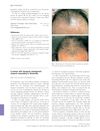
Collagen CLR and placenta extract may help treat diffuse hair loss.
 238 citations
,
March 2013 in “Development”
238 citations
,
March 2013 in “Development” This study found that adipocytes play a crucial role in skin wound healing by facilitating fibroblast recruitment and dermal reconstruction during the healing process.
 22 citations
,
December 2017 in “Dermatologic Surgery”
22 citations
,
December 2017 in “Dermatologic Surgery” This study found that both intralesional PRP and topical tretinoin were effective and safe for treating striae distensae, with PRP being more effective and yielding higher patient satisfaction.
1 citations
,
December 2024 in “Journal of Orthopaedic Research®” In this study, researchers developed a novel method combining in silico and in vitro techniques to discover Aromoline, a potential osteoarthritis treatment that increases type II collagen expression in chondrocytes by targeting the dopamine receptor D4.
5 citations
,
April 2017 in “The journal of investigative dermatology/Journal of investigative dermatology” This study reports on an ongoing Phase I/IIa clinical trial of ex vivo gene therapy for treating severe Recessive Dystrophic Epidermolysis Bullosa, involving six adult participants with COL7A1 mutations resulting in deficient type VII collagen production.
This study found that the RN-Lip co-delivery system enhanced the stability and skin permeation of retinol and niacinamide, leading to improved anti-aging and skin-brightening effects in vitro.
 December 2022 in “Research Square (Research Square)”
 This study found that an extract from the herbal medicine Ophioglossum vulgatum Linn. showed potential hair growth promotion and increased ATP and catalase activity in cell assays, suggesting its use in treating alopecia.
January 2026 in “eKNUTSHIR” This study systematically analyzed the molecular and cellular mechanisms of wound healing and assessed the market potential for wound healing products based on natural proteins, projecting significant growth by 2033.
 June 2021 in “Journal of Cosmetic Dermatology”
 Laser treatment shows promise for hair growth, but needs further research.