 8 citations
,
January 2012 in “International journal of polymer analysis and characterization/IJPAC. International journal of polymer analysis and characterization/IJPAC. International journal of analysis and characterization”
8 citations
,
January 2012 in “International journal of polymer analysis and characterization/IJPAC. International journal of polymer analysis and characterization/IJPAC. International journal of analysis and characterization” This study found that hydrogenated palm oil effectively conditions damaged hair by preventing water-induced swelling, with TOF-SIMS analysis showing that its component tripalmitin penetrates the hair's cuticle and outer cortex.
 49 citations
,
September 2008 in “International journal of pharmaceutics”
49 citations
,
September 2008 in “International journal of pharmaceutics” This study suggests that artificial sebum L may serve as an effective substitute for human sebum in drug transport studies, due to its similar physicochemical properties.
 47 citations
,
April 2017 in “European Journal of Pharmaceutics and Biopharmaceutics”
47 citations
,
April 2017 in “European Journal of Pharmaceutics and Biopharmaceutics” This study found that dutasteride-loaded nanostructured lipid carriers coated with a stearic acid-chitosan oligomer are stable, less cytotoxic, and suitable for topical delivery to promote hair growth.
 17 citations
,
April 2021 in “Biointerface Research in Applied Chemistry”
17 citations
,
April 2021 in “Biointerface Research in Applied Chemistry” This review discusses nanostructured lipid carriers and their potential applications in pharmaceuticals and food, offering no new clinical findings but highlighting recent advancements and patents.
 12 citations
,
February 2006 in “Lipids”
12 citations
,
February 2006 in “Lipids” This study found that in Japanese, German, and American females, changes in hair lipid patterns with age may reflect alterations in sebum excretion and affect hair texture.
 7 citations
,
October 2024 in “AAPS PharmSciTech”
7 citations
,
October 2024 in “AAPS PharmSciTech” This study developed a caffeine-loaded solid lipid nanoparticle gel, observing significant reduction in subcutaneous fat tissue thickness in histological tests compared to an untreated group, suggesting it could effectively treat cellulite as a promising nanocosmeceutical gel.
 2 citations
,
March 2025 in “International Journal of Advanced Science and Engineering”
2 citations
,
March 2025 in “International Journal of Advanced Science and Engineering” This review highlights that nanoemulsions, especially those with droplet sizes under 200 nm, show promise in pharmaceuticals and cosmetics by improving drug stability, bioavailability, and reducing side effects, with potential applications in CNS diseases, cancer treatments, and skincare products.
 May 2026 in “Repository of the University of Ljubljana (University of Ljubljana)”
 This study analyzed the composition and cost of 50 cosmetic body scrubs for keratosis pilaris, finding that chemical exfoliants with glycolic acid may reduce symptoms by enhancing skin shedding and reducing water loss, but further clinical studies are needed to confirm their effectiveness.
 February 2024 in “Digital Library of Theses and Dissertations (Universidade de São Paulo)”
 This study demonstrated that using a mass spectrometry imaging technique, researchers were able to visualize the incorporation of argan, avocado, and coconut oils into hair fibers, suggesting their potential in cosmetic and alopecia treatments by confirming oil absorption and fiber modification.
 43 citations
,
February 2020 in “Clinica chimica acta”
43 citations
,
February 2020 in “Clinica chimica acta” This review discusses the role of phytochemical nanoparticles in cervical cancer therapy and reports no new clinical results; the authors highlight their potential advantages over conventional chemotherapy.
 34 citations
,
October 2014 in “European journal of pharmaceutics and biopharmaceutics”
34 citations
,
October 2014 in “European journal of pharmaceutics and biopharmaceutics” This study found that adapalene-loaded solid lipid microparticles may enhance targeted drug delivery into sebum due to their similarity to sebum components, although both this formulation and a standard cream showed equivalent follicular penetration.
 20 citations
,
March 2023 in “Drug Delivery and Translational Research”
20 citations
,
March 2023 in “Drug Delivery and Translational Research” This study found that a lacticin 3147 solid lipid nanoparticle gel demonstrated potent and sustained antimicrobial activity against S. aureus, including MRSA, in ex vivo S. aureus-infected pig skin.
 10 citations
,
March 2022 in “Communications biology”
10 citations
,
March 2022 in “Communications biology” In this study, researchers found that non-invasive analysis of skin surface lipid RNAs revealed alterations in gene expression patterns associated with atopic dermatitis, suggesting its potential for understanding skin disease pathophysiology.
 4 citations
,
July 2025 in “International Journal of Nanomedicine”
4 citations
,
July 2025 in “International Journal of Nanomedicine” This review explores nano-quercetin formulations to enhance the solubility, stability, and targeted delivery of quercetin, highlighting its potential efficacy in treating cancer, inflammation, metabolic diseases, and tissue regeneration, though challenges in biocompatibility, toxicity, and production remain, per this source.
 2 citations
,
April 2021 in “bioRxiv (Cold Spring Harbor Laboratory)”
2 citations
,
April 2021 in “bioRxiv (Cold Spring Harbor Laboratory)” This study found that skin surface lipids contain measurable mRNAs, providing a non-invasive way to study skin diseases, with specific gene expression changes observed in atopic dermatitis patients.
March 2026 in “International Journal of Cosmetic Science” This research reports that KCV and its palmitoylated derivatives show strong effectiveness in strengthening hair proteins, indicating their potential for use in advanced hair care products.
10 citations
,
February 2021 in “Pharmaceutics” In this study, the novel fatty acid-conjugated tetrapeptide Palmitoyl-GDPH enhanced wound healing in rats by improving re-epithelialization and collagen deposition with minimal toxicity observed at the used dosage.
 April 2017 in “Journal of Investigative Dermatology”
 This study found that a single dose of TRP significantly reduced the number of UV-B-induced actinic keratosis lesions in a mouse model and was associated with improved skin histology and minimal side effects.
July 2025 in “Journal of Investigative Dermatology” TRIV-509 quickly improves skin barrier and cell health in atopic dermatitis.
 December 2023 in “Journal of ethnopharmacology”
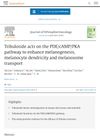
 This study found that tribuloside, a flavonoid from Tribulus terrestris L., enhances melanin production in human melanocytes, zebrafish, and human skin samples without causing toxicity, potentially through inhibiting PDE to increase cAMP levels and promote the melanin biosynthesis pathway.
 74 citations
,
March 1963 in “Archives of Dermatology”
74 citations
,
March 1963 in “Archives of Dermatology” This article reviews historical reports of skin changes, such as pseudoacanthosis nigricans, associated with cholesterol-lowering drugs like triparanol and nicotinic acid, but presents no new clinical findings.
July 2021 in “Journal of dermatology & dermatologic surgery” In this study, two patients with severe alopecia areata who did not respond well to oral tofacitinib showed more than 50% hair regrowth after a single dose of intramuscular triamcinolone acetonide.
 2 citations
,
May 2023 in “Life”
2 citations
,
May 2023 in “Life” This review summarizes the mechanisms by which Plumbagin, a naphthoquinone derived from plants, may impact inflammation and explores its potential biological effects, highlighting areas that require further comprehensive research before considering it for therapeutic use.
 4 citations
,
November 2023 in “Biological and Pharmaceutical Bulletin”
4 citations
,
November 2023 in “Biological and Pharmaceutical Bulletin” This study found that the BP-3 extract from Boesenbergia rotunda, rich in panduratin A, demonstrated strong anti-adipogenesis and lipolysis effects on preadipocyte cells at non-toxic concentrations, and when formulated into a serum reduced thigh circumference and improved skin firmness in a human trial.
January 2015 in “International Journal of Pharma and Bio Sciences” This review discusses the traditional medicinal uses of Tridax procumbens, attributing its therapeutic properties to various active phytochemicals, but reports no new clinical findings.
 October 2025 in “Quantum Journal of Medical and Health Sciences”
 This review outlines the phytochemical composition and pharmacological potential of Tridax procumbens, a plant traditionally used in various regions for its purported medical benefits, including antioxidant, antimicrobial, and anti-inflammatory effects, among others.
1 citations
,
January 2024 in “Pharmaceuticals” The researchers reported that dPGS-PCL as a carrier improved the penetration of tofacitinib in an ex-vivo human skin model compared to free tofacitinib, but did not show significant differences in inhibiting IL-6 and IL-8 during short incubation.
10 citations
,
April 1964 in “Journal of the American Geriatrics Society” This article reviews triamcinolone acetonide as an intramuscular long-acting steroid therapy for dermatologic disorders but reports no new clinical results.
January 2026 in “International Journal of Cosmetic Science” This study observed that eco-friendly PALF forms a protective physical barrier on the skin, helping limit the impact of environmental pollutants and offering additional benefits for skin and hair in various cosmetic formulations.
 2 citations
,
December 2020 in “American Journal of Dermatological Research and Reviews”
2 citations
,
December 2020 in “American Journal of Dermatological Research and Reviews” This study found that combining 308-excimer phototherapy with intramuscular triamcinolone acetonide was effective and well tolerated for treating resistant alopecia totalis, showing a 90% overall response rate in the ten patients studied, with the best results observed in younger patients.