 42 citations
,
February 2021 in “Signal Transduction and Targeted Therapy”
42 citations
,
February 2021 in “Signal Transduction and Targeted Therapy” This review discusses potential cell sources and bioengineering strategies for regenerating hair follicles with functional cycling, reporting no new results.
 34 citations
,
August 2016 in “Scientific Reports”
34 citations
,
August 2016 in “Scientific Reports” This study validated a protocol for inducing surface ectoderm differentiation from human induced pluripotent stem cells and highlighted the role of TGFβ signaling pathways in this process.
 29 citations
,
January 2010 in “Methods in Enzymology”
29 citations
,
January 2010 in “Methods in Enzymology” This review discusses five genetic fate mapping methods used to study cell behaviors during development and regeneration, detailing the necessary tools and considerations without reporting new experimental results.
 27 citations
,
September 2018 in “Nanomedicine: Nanotechnology, Biology and Medicine”
27 citations
,
September 2018 in “Nanomedicine: Nanotechnology, Biology and Medicine” This review discusses recent advances in hair regeneration therapies, highlighting the potential of nanotechnology and pluripotent stem cells, and reports no new results, emphasizing the need for further research.
 25 citations
,
June 2021 in “Developmental Cell”
25 citations
,
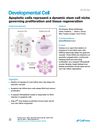
June 2021 in “Developmental Cell” In this study, researchers found that deleting Caspase-9 in hair follicle stem cells delayed apoptosis, leading to accelerated wound repair and new hair follicle regeneration by maintaining apoptotic cells as signaling centers.
 25 citations
,
June 2018 in “Journal of The American Academy of Dermatology”
25 citations
,
June 2018 in “Journal of The American Academy of Dermatology” This study identified upregulation of genes linked to fibroproliferative disorders, such as platelet-derived growth factor and collagen genes, in patients with central centrifugal cicatricial alopecia, suggesting potential therapeutic targets.
 17 citations
,
May 2021 in “Journal of Assisted Reproduction and Genetics”
17 citations
,
May 2021 in “Journal of Assisted Reproduction and Genetics” This study reviews the mechanisms by which SARS-CoV-2 may impact male fertility, noting potential disruptions in spermatogenesis and hormone secretion, and underscores the need for follow-up in recovered men.
 17 citations
,
June 2019 in “The journal of immunology/The Journal of immunology”
17 citations
,
June 2019 in “The journal of immunology/The Journal of immunology” This study identified a regulatory element necessary for Foxn1 expression specifically in mouse thymic epithelial cells, crucial for thymus development but not affecting hair follicles.
 17 citations
,
December 2013 in “PLoS ONE”
17 citations
,
December 2013 in “PLoS ONE” This study found that the postnatal thymus contains a population of mesenchymal stem cells that may help maintain functional thymic microenvironments.
 9 citations
,
May 2021 in “Immunological Reviews”
9 citations
,
May 2021 in “Immunological Reviews” This review discusses the role of fibroblast heterogeneity in kidney pathology, particularly their contribution to tertiary lymphoid tissue formation, and reports no new results.
 6 citations
,
July 2013 in “Molecular Imaging”
6 citations
,
July 2013 in “Molecular Imaging” This study successfully used noninvasive bioluminescence imaging to monitor hair generation in vivo after transplanting hair follicle stem cells in mice.
 5 citations
,
June 2022 in “Frontiers in immunology”
5 citations
,
June 2022 in “Frontiers in immunology” This study observed that expanding regulatory T cells in the skin of mice with alopecia areata did not reverse the condition, indicating that additional immunotherapy may be necessary.
 3 citations
,
July 2021 in “Life science alliance”
3 citations
,
July 2021 in “Life science alliance” This study observed that disrupting the Pnkp gene in adult mice resulted in a premature aging-like phenotype, suggesting PNKP's vital role in maintaining normal growth and survival of certain progenitor cell populations.
 3 citations
,
July 2020 in “Frontiers in Cell and Developmental Biology”
3 citations
,
July 2020 in “Frontiers in Cell and Developmental Biology” This study found that the purified compound VB1 from Vitex negundo seeds may reduce UVA-induced skin aging by targeting MAPK1 and demonstrated its potential in mice.
 2 citations
,
May 2019 in “Advances in wound care”
2 citations
,
May 2019 in “Advances in wound care” In this study, nondermal-derived CD34+ cells from adult peripheral blood were found to enhance wound healing and contribute to hair follicle neogenesis and skin regeneration.
 2 citations
,
April 2021 in “bioRxiv (Cold Spring Harbor Laboratory)”
2 citations
,
April 2021 in “bioRxiv (Cold Spring Harbor Laboratory)” This study found that skin surface lipids contain measurable mRNAs, providing a non-invasive way to study skin diseases, with specific gene expression changes observed in atopic dermatitis patients.
 1 citations
,
May 2026 in “Nature Communications”
1 citations
,
May 2026 in “Nature Communications” This study demonstrated that CD19-CAR T cell therapy may promote structural regeneration in the skin of systemic sclerosis patients, as evidenced by histological improvements and fibroblast population changes, suggesting its potential for tissue remodeling in fibrotic diseases.

This study found that γδ T cells play a role in regulating stromal behavior, influencing the composition and vascularity of fibrotic tissues during the foreign body response.
 1 citations
,
February 2025 in “Scientific Reports”
1 citations
,
February 2025 in “Scientific Reports” In this study, researchers found that CD4 is expressed on murine K5+ keratinocytes, and its expression is crucial for maintaining epidermal stem cell balance and wound repair capacity, particularly during aging.
 1 citations
,
November 2020 in “Biochemical Society transactions”
1 citations
,
November 2020 in “Biochemical Society transactions” This narrative review discusses the discovery of plasticity in epidermal stem cells using single-cell transcriptomics, but reports no new results; it highlights the potential implications for regenerative medicine.

In this clinical trial, patients with lichen planopilaris treated with the oral TYK2 inhibitor deucravacitinib showed significant improvement in PGA, LPPAI, and Skindex-16 scores over 24 weeks, with transcriptomic analyses indicating decreased inflammatory and immune pathway activity post-treatment.
 January 2026 in “Inflammation and Regeneration”
 This review highlights that two-photon excitation microscopy is a valuable tool for visualizing live skin structures and immune responses at high resolution, though its clinical use is hindered by safety and cost issues.

This study presents a two-photon imaging method to visualize low-threshold mechanoreceptor axon terminals in live mouse forepaw skin, enabling repeated high-resolution imaging to study sensory circuits during development and adulthood.

This study investigated dual TCR Treg cells in mouse tissues, revealing a high proportion and diverse pairing patterns compared to single TCR Tregs, providing insights into their origins and characteristics across different tissue locations.

In this study, researchers analyzed over 5,000 T cells per sample using scRNA+TCR-seq technology and found that dual TCR Tregs are present in high proportions across various mouse tissues, showing unique TCR pairing patterns, V(D)J usage, and mRNA expression compared to single TCR Tregs.
 March 2024 in “Frontiers in genetics”
 This review discusses the insights gained from single-cell RNA sequencing of fibroblasts in various cancers and wound healing, highlighting differences in gene expression and novel interactions.

This study examined the molecular communication in psoriasis cells, highlighting unique immune cell interactions and identifying new features of the hair follicle cell-psoriasis axis. It suggests the potential for targeted therapies at the single-cell level to improve psoriasis treatment.
 December 2023 in “bioRxiv (Cold Spring Harbor Laboratory)”
 This research examined the transcriptional landscape of quiescent melanocyte stem cells (qMcSCs) in adult female mice, revealing significant heterogeneity within this cell population and identifying novel subpopulations that vary in immune privilege regulation, melanocyte differentiation potential, and neural crest potential.
 October 2023 in “bioRxiv (Cold Spring Harbor Laboratory)”
 This study constructed a comprehensive atlas of prenatal human skin, revealing that innate immune cells, such as macrophages, play a crucial role in skin morphogenesis by interacting with non-immune cells, influencing hair follicle formation and angiogenesis beyond their traditional immune functions.
 September 2023 in “Research Square (Research Square)”
 This study found that TNC + fibroblasts are crucial in neuro-immune interactions in various skin diseases, particularly inflammation and tumors, by engaging extensively with immune cells and overexpressing inflammatory genes, suggesting their significant role in skin abnormalities.