 5 citations
,
October 2014 in “Gynecological Endocrinology”
5 citations
,
October 2014 in “Gynecological Endocrinology” This case study describes a 15-year-old girl with a Sertoli–Leydig cell tumor who showed high androgen levels and steroidogenic responses similar to patients with polycystic ovary syndrome before surgery.
 July 2021 in “International Journal of Community Medicine and Public Health”
 This study found that testosterone levels are commonly low among men with type 2 diabetes, and most of these men exhibit symptoms of hypogonadism, with BMI being a significant risk factor.
 October 2024 in “Journal of the Endocrine Society”
 This study examined a case of postmenopausal virilization in a woman and found that despite normal imaging, bilateral salpingo-oophorectomy revealed rare ovarian Leydig cell and Brenner tumors as the source of hyperandrogenism, with symptoms resolving post-surgery.
 8 citations
,
March 2012 in “The Journal of Steroid Biochemistry and Molecular Biology”
8 citations
,
March 2012 in “The Journal of Steroid Biochemistry and Molecular Biology” In this study of healthy men, low levels of testosterone and dihydrotestosterone were associated with higher body mass index, fat content, and insulin resistance, but their effects on lipid and glucose metabolism were similar in quality.
 16 citations
,
February 2018 in “European Journal of Endocrinology”
16 citations
,
February 2018 in “European Journal of Endocrinology” This review discusses the challenges in measuring testosterone for assessing androgen excess in women and emphasizes the importance of quality control in laboratory methods, but it reports no new clinical results.
 November 2022 in “Journal of the Endocrine Society”
 This case report highlights a rare ovarian steroid cell tumor as the cause of androgen excess in a 36-year-old woman and underscores the importance of thorough preoperative workup to avoid unnecessary surgery.
32 citations
,
May 1987 in “The Journal of Clinical Endocrinology & Metabolism” This study found that salivary testosterone concentrations correlated better with hirsutism in women compared to serum testosterone measures, suggesting it may be an effective method for assessing bioavailable testosterone.
 77 citations
,
June 2006 in “Best Practice & Research Clinical Endocrinology & Metabolism”
77 citations
,
June 2006 in “Best Practice & Research Clinical Endocrinology & Metabolism” This review discusses the importance of androgen production and metabolism in hyperandrogenism, the use of specific serum markers for diagnosis, and the need for improved assays for clinical testing, but reports no new results.
 September 2024 in “Journal of the American Academy of Dermatology”
 This study aims to evaluate the prevalence of androgenetic alopecia in transgender men undergoing testosterone therapy, noting that such hormone treatment can lead to dermatological issues that significantly affect their quality of life. Results are not reported in the abstract.
 2 citations
,
September 2020
2 citations
,
September 2020 This Mendelian randomization study reports that lifelong increased free testosterone in males was associated with improved bone mineral density and body composition but increased risks of prostate cancer, hypertension, and several other conditions.
42 citations
,
May 2007 in “Endocrinology and metabolism/American journal of physiology: endocrinology and metabolism” In this animal study, administering testosterone alongside a 5α-reductase inhibitor counteracted testosterone's effects on prostate enlargement while preserving its beneficial effects on muscle and bone.
July 2025 in “AACE Endocrinology and Diabetes” Ovarian hyperthecosis caused high testosterone and virilization symptoms in a 60-year-old woman, which improved after surgery.
 3 citations
,
July 2019 in “Case Reports in Obstetrics and Gynecology”
3 citations
,
July 2019 in “Case Reports in Obstetrics and Gynecology” This case report and literature review describes a 27-year-old woman with a Sertoli Leydig cell tumor causing testosterone-related symptoms and highlights normalization of hormone levels after surgical treatment.
 20 citations
,
October 2017 in “Clinical Endocrinology”
20 citations
,
October 2017 in “Clinical Endocrinology” This article reviews existing knowledge on postmenopausal hyperandrogenism and highlights diagnostic challenges, reporting no new clinical results.
 12 citations
,
January 2016 in “Endocrinology, diabetes & metabolism case reports”
12 citations
,
January 2016 in “Endocrinology, diabetes & metabolism case reports” This report describes a 19-year-old male with 49,XXXXY syndrome receiving testosterone replacement therapy, which led to improvements in reproductive development, metabolism, and social interaction after a year of treatment.
129 citations
,
February 2006 in “Andrology” This article reviews considerations and guidelines for testosterone therapy in older men with low testosterone levels but does not provide new clinical results, emphasizing the need for ongoing evaluation and careful management, particularly regarding risks related to prostate and cardiovascular health.
2 citations
,
March 2003 in “Endocrine Practice” The woman's symptoms and tests suggest her adrenal glands are producing too many male hormones.
 February 2026 in “Frontiers in Endocrinology”
 In this case study, a woman with congenital adrenal hyperplasia experienced substantial improvement in musculoskeletal and neurobehavioral symptoms after low-dose testosterone therapy, highlighting its potential role in managing chronic glucocorticoid overtreatment effects.
 77 citations
,
May 2012 in “Expert Opinion on Emerging Drugs”
77 citations
,
May 2012 in “Expert Opinion on Emerging Drugs” New treatments for male hypogonadism are effective and should be personalized.
 17 citations
,
August 2015 in “Journal of steroid biochemistry and molecular biology/The Journal of steroid biochemistry and molecular biology”
17 citations
,
August 2015 in “Journal of steroid biochemistry and molecular biology/The Journal of steroid biochemistry and molecular biology” This study concluded that the best approach for detecting Androsta-1,4,6-triene-3,17-dione administration in horses is monitoring the metabolites M1b or M4 in urine, detectable up to 77 hours post-administration.
November 2011 in “InTech eBooks” This study found no association between circulating androgens and prostate cancer risk, underscoring the complex role of androgen metabolism in the prostate.
6 citations
,
October 2011 in “ISRN Ophthalmology” This study found that increased serum testosterone and dehydroepiandrosterone sulphate levels may serve as diagnostic markers for seborrheic meibomian gland dysfunction in both genders.
 May 2013 in “Journal of the ASEAN Federation of Endocrine Societies”
 This case study reports that a 61-year-old woman with high testosterone levels due to stromal luteoma of the left ovary experienced rapid normalization of testosterone levels after surgical removal of the tumor.
 55 citations
,
March 1990 in “The Journal of Clinical Endocrinology and Metabolism”
55 citations
,
March 1990 in “The Journal of Clinical Endocrinology and Metabolism” This study found that finasteride decreased plasma dihydrotestosterone levels and altered steroid metabolism, similar to the profile of male pseudohermaphrodites with inherited 5a-reductase deficiency.
November 2023 in “PubMed” This study found significant gender differences in total testosterone and dehydroepiandrosterone sulfate levels among noncritical COVID-19 patients, which were associated with severity markers in males.
1 citations
,
October 2023 in “Journal of the Endocrine Society” In this study, researchers found that transgender men exhibited impaired autonomic modulation during sympathetic stimulation compared to cisgender women, potentially due to testosterone treatment affecting cardiac autonomic modulation.
 11 citations
,
December 2010 in “The Journal of Urology”
11 citations
,
December 2010 in “The Journal of Urology” This study found that combining oral testosterone with dutasteride increased testosterone bioavailability in hypogonadal men while suppressing dihydrotestosterone levels over a 28-day period.
 9 citations
,
January 2007 in “Endocrine Practice”
9 citations
,
January 2007 in “Endocrine Practice” This case report describes a 60-year-old postmenopausal woman with virilization and hirsutism caused by hilus-cell hyperplasia, which was confirmed following bilateral salpingo-oophorectomy.
 September 2024 in “Brazilian Journal of Case Reports”
 In this case study, a 62-year-old woman with severe hyperandrogenism underwent a clomiphene test, which suggested an ovarian origin for her condition, leading to the discovery of a Leydig cell tumor after a bilateral oophorectomy.
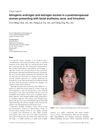 August 2009 in “International Journal of Dermatology”
 This case report describes a postmenopausal woman who experienced facial erythema, acne, and hirsutism due to excess androgen and estrogen levels.