Postmenopausal Hyperandrogenism Due to Rare Ovarian Tumor
October 2024
in “
Journal of the Endocrine Society
”
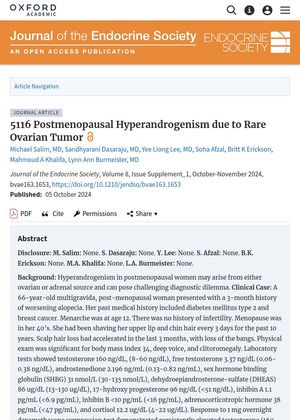
Studysummary This study examined a case of postmenopausal virilization in a woman and found that despite normal imaging, bilateral salpingo-oophorectomy revealed rare ovarian Leydig cell and Brenner tumors as the source of hyperandrogenism, with symptoms resolving post-surgery. Our plain-language summary of this paper — not a Tressless recommendation.
A 66-year-old postmenopausal woman with a history of diabetes and breast cancer presented with worsening alopecia and other signs of hyperandrogenism. Laboratory tests revealed elevated testosterone and androstenedione levels. Imaging showed a stable left adrenal nodule, but no ovarian abnormalities. Adrenal and ovarian vein sampling indicated the ovaries as the testosterone source. A bilateral salpingo-oophorectomy (BSO) was performed, revealing bilateral Leydig cell tumors and a left ovarian Brenner tumor. Post-surgery, the patient's alopecia resolved, and testosterone levels normalized. This case highlights the diagnostic challenge of postmenopausal hyperandrogenism due to rare ovarian tumors.