September 2019 in “Journal of Investigative Dermatology” This study found that in chronic alopecia areata, increased IL-17 expression and CD8+CD49a-Trm cell infiltration in hair follicles were associated with more severe histopathologic gradings, while Foxp3+mTreg infiltration decreased.
November 2025 in “Journal of Investigative Dermatology” Certain immune cells in atopic dermatitis skin could be targeted for treatment.
July 2026 in “Frontiers in Immunology” This review highlights the role of epidermal tissue-resident memory T (T RM) cells in human skin, showing their involvement in immune surveillance and regulation within the epidermis, and suggesting their importance in understanding skin diseases like HIV infection and vitiligo.
245 citations
,
October 2015 in “Nature medicine” The research found that hair follicle–derived cytokines, particularly IL-15 and IL-7, regulate skin-resident memory T cells and their role in both immune homeostasis and lymphoma in the skin.
April 2023 in “Journal of Investigative Dermatology” This research explored the roles of various T cell types in chronic alopecia areata, finding that increased severity of lesions and hair loss may be linked to decreased lesional Foxp3+ Tregs, with a notable role for IL-17 and Th17 lymphocytes in the pathological process.
September 2016 in “Journal of Dermatological Science” This research suggests that hair follicle-derived cytokines IL-7 and IL-15 are crucial for maintaining resident memory T cells in the skin, which may be relevant for diseases like cutaneous T cell lymphoma.
 67 citations
,
January 2020 in “Cellular & Molecular Immunology/Cellular & molecular immunology”
67 citations
,
January 2020 in “Cellular & Molecular Immunology/Cellular & molecular immunology” This review discusses the dual role of tissue-resident memory T cells in providing immune protection against infections and cancer and contributing to autoimmune skin disease pathology, without presenting new experimental results.
January 2026 in “Experimental Dermatology” The study suggests that refractory chronic alopecia areata cases have more infiltrating skin resident memory T cells, and using a JAK inhibitor may be an effective treatment option.
November 2025 in “Journal of Investigative Dermatology” Chronic refractory alopecia areata has more skin-resident memory T cells, and JAK inhibitors may help reduce them.
 1 citations
,
April 2023 in “Frontiers in Immunology”
1 citations
,
April 2023 in “Frontiers in Immunology” This review explored recent research on the immune mechanisms and potential therapeutic targets for alopecia areata, highlighting the roles of immune-related cells, autocrine and paracrine signaling, as well as factors like adipose-derived stem cells and gut microbiota in disease pathogenesis.
July 2025 in “Journal of Investigative Dermatology” Resident memory T cells and necroptosis may drive fibrosis in eosinophilic fasciitis and morphea.
 53 citations
,
August 2019 in “American journal of human genetics”
53 citations
,
August 2019 in “American journal of human genetics” This study found that FOXN1 haploinsufficiency is a significant genetic factor causing T cell lymphopenia at birth, linked to reduced thymic function in both humans and mice.

This study found that γδ T cells play a role in regulating stromal behavior, influencing the composition and vascularity of fibrotic tissues during the foreign body response.
 April 2024 in “The Journal of experimental medicine/The journal of experimental medicine”
 This review discusses how regulatory T cells, known for their immunosuppressive role, also produce repair mediators critical for tissue repair and regeneration, acting on non-immune cells in tissue-specific contexts, and highlights areas for future research in tissue repair, fibrosis, and cancer.
 155 citations
,
May 2016 in “Nature communications”
155 citations
,
May 2016 in “Nature communications” This study found that mouse skin CD4(+) memory T cells are in equilibrium with the circulation under steady state but increase in specific clusters in response to infection or inflammation.
 83 citations
,
June 2018 in “Frontiers in immunology”
83 citations
,
June 2018 in “Frontiers in immunology” This review discusses the roles of αβ and γδ T cells in skin health and disease and reports no new clinical results; the authors highlight potential therapeutic developments.
 66 citations
,
March 2018 in “British journal of dermatology/British journal of dermatology, Supplement”
66 citations
,
March 2018 in “British journal of dermatology/British journal of dermatology, Supplement” This article reviews the role of perifollicular regulatory T cells in maintaining hair follicle integrity in the context of hidradenitis suppurativa and calls attention to inflammatory mechanisms without reporting new clinical results.
 30 citations
,
July 2019 in “PloS one”
30 citations
,
July 2019 in “PloS one” This study found that T-regulatory cells, specifically the FOXP3 CD39 subset, were significantly reduced in both circulation and hair follicles of alopecia areata patients compared to healthy subjects, suggesting potential therapeutic targets.
 7 citations
,
January 2013 in “The journal of investigative dermatology/Journal of investigative dermatology”
7 citations
,
January 2013 in “The journal of investigative dermatology/Journal of investigative dermatology” This study found that thymus transplantation in athymic mice resulted in T-cell-driven hair follicle depigmentation and loss, without multiorgan autoimmune disease, highlighting mechanisms of tissue-specific tolerance.
 6 citations
,
July 2015 in “European Journal of Dermatology”
6 citations
,
July 2015 in “European Journal of Dermatology” Stopping methotrexate might reverse lymphoma-like conditions in some patients.
 4 citations
,
November 2023 in “Frontiers in immunology”
4 citations
,
November 2023 in “Frontiers in immunology” In this narrative review, researchers outlined the role of T cells in the autoimmune pathogenesis of alopecia areata and highlighted ongoing research into therapeutic pathways, beyond current JAK inhibitors, aimed at developing new treatments for the disease.
 1 citations
,
September 2025 in “Frontiers in Immunology”
1 citations
,
September 2025 in “Frontiers in Immunology” In this study, researchers using a Treg-specific HuR-deficient mouse model found that the RNA-binding protein HuR is crucial for stabilizing Foxp3 mRNA, affecting Treg function and immune regulation, with HuR disruption leading to impaired Foxp3 expression and potential autoimmune dysfunction.
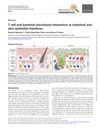 January 2023 in “Discovery immunology”
 T cells and bacteria in the gut and skin help maintain health and protect against disease.
 6 citations
,
April 2017 in “Experimental dermatology”
6 citations
,
April 2017 in “Experimental dermatology” This study found that B6.CD80CD86−/− mice developed autoimmune-like alopecia with nearly 100% incidence by 40 weeks, making them a promising model for studying human alopecia areata.
 209 citations
,
March 1989 in “Journal of The American Academy of Dermatology”
209 citations
,
March 1989 in “Journal of The American Academy of Dermatology” This study found that recombinant human leukocyte interferon alfa-2a achieved a 64% overall antitumor response rate in patients with early and advanced cutaneous T cell lymphoma and was generally well-tolerated.
 188 citations
,
March 2018 in “Frontiers in Immunology”
188 citations
,
March 2018 in “Frontiers in Immunology” This review discusses the role of regulatory T-cells in tissue repair and regeneration across various organs and reports no new clinical results.
 125 citations
,
September 2019 in “Journal of Clinical Immunology”
125 citations
,
September 2019 in “Journal of Clinical Immunology” This review summarizes recent advances in Treg cell biology, focusing on Foxp3's role in immune regulation and therapeutic reprogramming for immune dysregulatory disorders, but reports no new clinical results.
 110 citations
,
July 2017 in “Immunology”
110 citations
,
July 2017 in “Immunology” This review discusses the role of regulatory T cells in skin, including their impact on hair follicle regeneration, wound healing, and immune tolerance, without presenting new clinical findings.
 13 citations
,
August 2020 in “Frontiers in Immunology”
13 citations
,
August 2020 in “Frontiers in Immunology” This review explores the expression of Perforin by gamma delta T cells in human skin and its role in cytotoxicity but reports no new experimental results.
 11 citations
,
October 2001 in “Dermatologic Clinics”
11 citations
,
October 2001 in “Dermatologic Clinics” In this study, subcutaneous recombinant human IL-12 showed a 43% partial response rate in early-stage mycosis fungoides patients refractory to previous treatments, with generally mild to moderate adverse events reported.