 2 citations
,
October 2001 in “Analytical Sciences”
2 citations
,
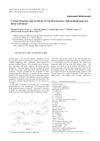
October 2001 in “Analytical Sciences” A new compound that could treat various androgen-related conditions was created and analyzed.
 January 2017 in “Rasayan journal of Chemistry”
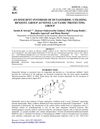
 This paper describes a new scalable synthesis method for Dutasteride, highlighting its potential for large-scale commercial production.
 22 citations
,
January 2001 in “Chemical & Pharmaceutical Bulletin”
22 citations
,
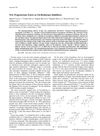
January 2001 in “Chemical & Pharmaceutical Bulletin” This study found that two new progesterone derivatives showed higher antiandrogenic effects and 5α-reductase inhibition than finasteride in hamsters, particularly reducing seminal vesicle weight and flank organ size.
 June 2022 in “Journal of Experimental Biology and Agricultural Sciences”
 This study found that steroid hormones influence the quality indicators of fresh and cryopreserved stallion sperm, with testosterone negatively correlated with motility and estradiol positively correlated with survival rate.
 11 citations
,
December 2018 in “Assay and Drug Development Technologies”
11 citations
,
December 2018 in “Assay and Drug Development Technologies” This review highlights the challenges in screening for steroid 5 alpha-reductase inhibitors and discusses significant variability in the effectiveness of finasteride and dutasteride, calling for standardized testing methods to develop safer, more specific inhibitors from herbal preparations.
 August 2023 in “Medicina-lithuania”
 This review discusses the degenerative effects of anabolic-androgenic steroids on the nervous system and reports no new experimental results, aiming to increase public awareness of their health risks.
8 citations
,
May 2020 in “Arthritis research & therapy” This study found that dutasteride affected spinal bone formation in curdlan-treated SKG mice, while DHT treatment reduced osteoblast differentiation in vitro, suggesting that DHT inhibition might unexpectedly increase spinal ankylosis progression in ankylosing spondylitis patients.
 10 citations
,
February 2008 in “International Journal of Andrology”
10 citations
,
February 2008 in “International Journal of Andrology” This study found that a 400-mg dose of oral testosterone with dutasteride increases serum testosterone levels for 8–10 hours in hypogonadal men, with the nanomilled formulation unaffected by food, suggesting a practical twice-daily therapy option.
 March 2017 in “Iraqi Journal of Pharmaceutical Sciences”
 This study found that Iraqi male bodybuilders abusing anabolic androgenic steroids experienced significant changes in sex hormones, liver and kidney function, and lipid profiles compared to non-AAS-using controls.
2 citations
,
August 2024 in “Current Developments in Nutrition” This study found that fitness coaches and registered dietitians/nutritionists were the primary sources of information for bodybuilders, who showed moderate nutrition knowledge, while gender, exercise history, and sessions impacted dietary supplement use, and reported adverse effects included skin rashes and increased liver enzymes.
 8 citations
,
June 2020 in “The Journal of Clinical Endocrinology and Metabolism”
8 citations
,
June 2020 in “The Journal of Clinical Endocrinology and Metabolism” This study found that co-administering glucocorticoids with 5α-reductase inhibitors exacerbated the adverse metabolic effects of glucocorticoids in healthy men.
May 2024 in “Reactions weekly”  39 citations
,
April 2007 in “Therapeutic Drug Monitoring”
39 citations
,
April 2007 in “Therapeutic Drug Monitoring” This study found that finasteride significantly alters urinary steroid profiles, complicating the detection of steroid abuse in doping-control analysis by potentially causing false-negative results.
52 citations
,
March 1987 in “Journal of the American Academy of Dermatology” This study found that men with rapidly progressive male pattern baldness had elevated serum dehydroepiandrosterone sulfate levels, suggesting that adrenal hyperactivity may contribute to alopecia in genetically susceptible young men.
 20 citations
,
January 2012 in “Journal of Steroids & Hormonal Science”
20 citations
,
January 2012 in “Journal of Steroids & Hormonal Science” The document concludes that there are still unknowns about the effectiveness, risks, and detection of performance-enhancing drugs, and doping remains a challenge.
January 2025 in “Digital Commons - Gardner-Webb University (Gardner–Webb University)” This review discusses the adverse effects and societal influence of anabolic-androgenic steroid abuse, emphasizing its severe long-term health risks and calling for increased awareness and regulation; it reports no new results.
 2 citations
,
March 2023 in “Experimental neurology”
2 citations
,
March 2023 in “Experimental neurology” In this study, pregnenolone was found to dose-dependently reduce L-DOPA-induced dyskinesias in a rat model of Parkinson's disease, suggesting its potential as a therapeutic target for these dyskinesias.
7 citations
,
October 1943 in “Experimental Biology and Medicine” This study observed that diethylstilbestrol administration in male dogs over several months led to significant hair loss and lack of hair regeneration.
 July 2025 in “Medical Science”
 This review discusses recent studies on the hepatotoxic effects of anabolic androgenic steroids and selective androgen receptor modulators, including liver damage, tumors, and related conditions, and reports no new primary research results.
 16 citations
,
October 2007 in “Andrologia”
16 citations
,
October 2007 in “Andrologia” This study suggests that DHT may have a less potent effect on the prostate compared to testosterone while maintaining safety and similar effects on erythropoiesis and lipids.
10 citations
,
August 2024 in “Neuroscience & Biobehavioral Reviews” This review discusses the role of neuro(active)steroids, particularly those in the 5α reductase pathway, in modulating dopamine signaling and their impact on neuropsychiatric disorders characterized by dopamine imbalances, including addiction, schizophrenia, and Parkinson's Disease.
May 2009 in “Faculty Opinions – Post-Publication Peer Review of the Biomedical Literature” DHEA therapy improved pubic hair growth and psychological well-being in young females with adrenal insufficiency.
30 citations
,
April 2011 in “Rapid communications in mass spectrometry/RCM. Rapid communications in mass spectrometry” This study found that using hair steroid profiling, dutasteride treatment led to reduced dihydrotestosterone levels and DHT/testosterone ratio in patients with male-pattern baldness.
8 citations
,
June 2017 in “Steroids” This study evaluated novel steroid compounds for their ability to inhibit 5α-reductase, showing that compound 16a significantly reduced rat prostate weight more than epristeride and exhibited excellent in vitro inhibitory potency, indicating its potential as a lead candidate for further benign prostatic hyperplasia drug research.
 1 citations
,
February 2022 in “The Journal of Urology”
1 citations
,
February 2022 in “The Journal of Urology” This article discusses the potential mechanism by which 5α-reductase inhibitors might offer protection against SARS-CoV-2, emphasizing possible roles of dehydroepiandrosterone and its impact on nitric oxide bioavailability, but reports no new experimental results.
 January 2025 in “Journal of Medicinal Food”
 This abstract mentions that while synthetic drugs like minoxidil and finasteride for androgenic alopecia have side effects, the characteristics of popular natural alternatives, such as soybean, remain largely unreported, despite consumer preference for these products.
January 2005 in “Journal of Investigative Medicine” This study found that testosterone therapy improved physical performance, strength, lean body mass, and serum cholesterol in older men with low testosterone levels, with or without the addition of finasteride.
77 citations
,
September 1983 in “Acta Paediatrica” In this study, administering dexamethasone rapidly normalized elevated steroid levels in girls with premature adrenarche.
7 citations
,
December 1971 in “European Journal of Endocrinology” Human hair follicles can process steroid hormones like DHEA.
2 citations
,
September 2025 in “Frontiers in Endocrinology” This review critically evaluates the evidence for SARMs' tissue selectivity and suggests their clinical benefits over traditional androgens are not yet well-supported by robust evidence, underscoring the need for further head-to-head trials.