Design, Synthesis, and Biological Evaluation of Novel Androst-3,5-Diene-3-Carboxylic Acid Derivatives as Inhibitors of 5α-Reductase Type 1 and 2

    June 2017 in “ Steroids ”
    Kejing Lao, Jie Sun, Chong Wang … Hua Xiang
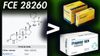
    Studysummary This study evaluated novel steroid compounds for their ability to inhibit 5α-reductase, showing that compound 16a significantly reduced rat prostate weight more than epristeride and exhibited excellent in vitro inhibitory potency, indicating its potential as a lead candidate for further benign prostatic hyperplasia drug research.
    Automatically generated from the study's abstract, not written by a person, and not a review of the full paper. Not medical advice or a treatment recommendation. Read the original study, and consult a qualified healthcare professional before changing treatment. Full disclaimer
    Read the full study on sciencedirect.com →
    Discuss this study in the Community →

    Research cited in this study 6

    1. Synthesis of 17β-N-Arylcarbamoylandrost-4-en-3-one Derivatives and Their Anti-Proliferative Effect on Human Androgen-Sensitive LNCaP Cell Line European Journal of Medicinal Chemistry · 2016
    2. Recent Advances in Drug Design and Drug Discovery for Androgen-Dependent Diseases Current Medicinal Chemistry · 2016
    3. The Dark Side of 5α-Reductase Inhibitors' Therapy: Sexual Dysfunction, High Gleason Grade Prostate Cancer, and Depression Korean Journal of Urology · 2014
    4. Synthesis and Biological Evaluation of Novel Unsaturated Carboxysteroids as Human 5α-Reductase Inhibitors: A Legitimate Approach European journal of medicinal chemistry · 2012
    5. An Overview on 5α-Reductase Inhibitors Steroids · 2009
    6. Synthesis and Evaluation of 2'-Substituted 4-(4'-Carboxy- or 4'-Carboxymethylbenzylidene)-N-Acylpiperidines: Highly Potent and In Vivo Active Steroid 5α-Reductase Type 2 Inhibitors Journal of Medicinal Chemistry · 2002

    Related research 1

    1. Establishment of Type II 5α-Reductase Over-Expressing Cell Line as an Inhibitor Screening Model Journal of steroid biochemistry and molecular biology/˜The œJournal of steroid biochemistry and molecular biology · 2007