 11 citations
,
June 2020 in “Dermatologic Therapy”
11 citations
,
June 2020 in “Dermatologic Therapy” This systematic review study found that platelet-rich plasma treatment may improve hair density and diameter in women with androgenetic alopecia, although the findings are limited by the small sample sizes and pilot nature of the included studies.
 11 citations
,
September 2019 in “Dermatologic Surgery”
11 citations
,
September 2019 in “Dermatologic Surgery” This study found that vascular endothelial growth factor may protect hair follicle stem cells from androgen-induced apoptosis in androgenic alopecia patients via the PI3K/Akt pathway.
 11 citations
,
January 2019 in “Dermatologic Therapy”
11 citations
,
January 2019 in “Dermatologic Therapy” This review found insufficient evidence to support the use of platelet rich plasma procedures for treating androgenetic alopecia.
 11 citations
,
November 2015 in “Journal of Functional Foods”
11 citations
,
November 2015 in “Journal of Functional Foods” This study found that the ethyl acetate fraction of Hibiscus rosa sinensis petals significantly reduced serum glucose and glycated hemoglobin levels in diabetic rats, with effects comparable to metformin.
11 citations
,
January 1997 in “Journal of Dermatological Science” This study identified a human sequence likely coding for a new ultra-high sulphur protein, which may aid in understanding hair differentiation and the molecular basis of human trichothiodystrophy.
 10 citations
,
September 2023 in “Cureus”
10 citations
,
September 2023 in “Cureus” This review of TMJ disorders discusses the promising potential of using a combination of platelet-rich plasma and hyaluronic acid in TMJ arthrocentesis, noting significant pain reduction and improved mobility, but calls for more extensive trials to confirm long-term efficacy and safety.
10 citations
,
March 2021 in “Annals of palliative medicine” This review explores the use of platelet-rich plasma (PRP) in musculoskeletal recovery, detailing its history, mechanism, and clinical applications, but reports no new clinical findings.
 10 citations
,
September 2020 in “Archives of Dermatological Research”
10 citations
,
September 2020 in “Archives of Dermatological Research” Both methods improve hair density and thickness; double-spin may be more effective.
 10 citations
,
August 2020 in “Journal of Bioscience and Bioengineering”
10 citations
,
August 2020 in “Journal of Bioscience and Bioengineering” This study reports that using activated platelet-rich plasma releasate in the preparation of bioengineered hair follicle germs enhanced follicular gene expression and significantly improved hair regeneration in vitro.
 10 citations
,
August 2020 in “Dermatologic Therapy”
10 citations
,
August 2020 in “Dermatologic Therapy” This study found that platelet-rich plasma significantly increased hair diameter in both men and women with androgenetic alopecia but improved hair density only in men.
 10 citations
,
June 2019 in “Aesthetic Plastic Surgery”
10 citations
,
June 2019 in “Aesthetic Plastic Surgery” This study observed that amniotic allografts provided similar aesthetic improvements with less downtime and quicker results compared to PRP treatment for midface volume enhancement.
 10 citations
,
April 2019 in “Environmental Science and Pollution Research”
10 citations
,
April 2019 in “Environmental Science and Pollution Research” In this study, selenium-rich diets enhanced antioxidant activity in aged mice, suggesting potential biological benefits, although further trials are needed to fully understand long-term risks and benefits.
 10 citations
,
January 2012 in “International Journal of Trichology”
10 citations
,
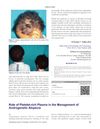
January 2012 in “International Journal of Trichology” PRP helps hair growth in common hair loss disorder.
9 citations
,
June 2025 in “Journal of Clinical Medicine” The authors concluded that while PRP is a promising and well-tolerated treatment for early to moderate knee osteoarthritis, standardizing preparation protocols, patient selection, and outcome reporting is crucial to enhance comparability and inform clinical practice.
9 citations
,
September 2024 in “Frontiers in Endocrinology” This study found that intrauterine PRP infusion is a safe and effective treatment for patients with refractory thin endometrium and implantation failures, with the improvement primarily driven by the angiogenic cytokines in PRP.
 9 citations
,
May 2024 in “Cureus”
9 citations
,
May 2024 in “Cureus” This review discusses the role of platelet-rich plasma in assisted reproductive technology for enhancing endometrial receptivity and reports promising outcomes.
9 citations
,
August 2023 in “Sexual Medicine Reviews” This review reports that while intracavernosal platelet-rich plasma is considered safe for treating erectile dysfunction, its efficacy remains unclear due to variable clinical trial protocols.
 9 citations
,
December 2020 in “Journal of The American Academy of Dermatology”
9 citations
,
December 2020 in “Journal of The American Academy of Dermatology” This study found that platelet-rich plasma had limited efficacy in treating alopecia areata but may help restore immune balance in the affected areas.
 9 citations
,
August 2020 in “Journal of The American Academy of Dermatology”
9 citations
,
August 2020 in “Journal of The American Academy of Dermatology” This article discusses the therapeutic use of platelet-rich plasma (PRP) in dermatology, specifically its challenges and potential in treating conditions like lichen planopilaris, but reports no new findings.
 9 citations
,
July 2020 in “Biomedicine & Pharmacotherapy”
9 citations
,
July 2020 in “Biomedicine & Pharmacotherapy” This study found that Pep-1-mediated mitochondrial transplantation was as effective as PRP therapy in restoring hair loss related to aging in mice, with distinct improvements in hair and skin-related measures.
 9 citations
,
September 2019 in “Journal of Cosmetic Dermatology”
9 citations
,
September 2019 in “Journal of Cosmetic Dermatology” This study found that platelet-rich plasma injections significantly increased hair density in men with androgenetic alopecia compared to placebo, but further research is needed to understand factors influencing treatment success.
9 citations
,
July 2019 in “Journal of cosmetic dermatology” This pilot study suggests that topical PRP may improve facial rejuvenation, with observed enhancements in collagen production and skin architecture over 8 weeks.
9 citations
,
January 2019 in “Dermatology Online Journal” In this study, researchers suggest that laser-assisted drug delivery could enhance the administration of platelet-rich plasma, and potentially bimatoprost or minoxidil, for patients with androgenetic alopecia by ensuring uniform placement in the dermis without injection pain.
8 citations
,
December 2023 in “International Journal of Molecular Sciences” In this study, successful treatment outcomes with platelet-rich plasma injections in patients with IC/BPS and rUTI were associated with specific cytokine concentrations, particularly lower TNF-α levels.
8 citations
,
March 2022 in “Dermatologic Therapy” This article provides information on data availability but reports no new research findings.
 8 citations
,
March 2021 in “Medicina-lithuania”
8 citations
,
March 2021 in “Medicina-lithuania” This review discusses the use of platelet-rich plasma for treating female androgenetic alopecia, reporting that it shows high patient satisfaction and improved quality of life in affected women.
 8 citations
,
August 2020 in “Experimental dermatology”
8 citations
,
August 2020 in “Experimental dermatology” This study observed that platelet-rich plasma samples from female patients show significant variability in growth factor secretion, which may influence the inconsistent clinical response in alopecia treatment.
8 citations
,
January 2020 in “Indian Dermatology Online Journal” In this study, PRP injections showed comparable effectiveness to triamcinolone for alopecia areata, with a significant decrease in SALT score at one interval, and 12.5% of patients in the PRP group experienced excellent hair regrowth compared to none in the triamcinolone group.
8 citations
,
January 2020 in “Acta dermato-venereologica” This pilot study found that platelet-rich plasma injections did not improve hair growth in men with androgenetic alopecia.
 8 citations
,
January 2016 in “European Journal of Plastic Surgery”
8 citations
,
January 2016 in “European Journal of Plastic Surgery” This study found that plasma rich in growth factors was a safe and more effective treatment for androgenetic alopecia than topical minoxidil, showing greater improvements in hair growth phases.