 December 2014 in “Bali Medical Journal”
 This study observed that estrogen receptor content was lower in white hair compared to black hair, with the lowest levels recorded in male white hair among participants aged 50-56.
9 citations
,
December 1996 in “Cell Biology and Toxicology” This study found that conditioned medium from hair dermal papilla cells stimulated fetal bovine aortic endothelial cell growth and migration, suggesting VEGF-like activity in the medium.
 277 citations
,
July 2002 in “Molecular Endocrinology”
277 citations
,
July 2002 in “Molecular Endocrinology” In this study, homozygous VDR null mutant mice exhibited nonfunctional vitamin D receptors, leading to growth abnormalities and revealing the limited physiological importance of vitamin D pathways outside the classical receptor.
 104 citations
,
May 2003 in “Endocrinology”
104 citations
,
May 2003 in “Endocrinology” This study found that the vitamin D receptor in lampreys, which lack bones and hair, binds 1,25-dihydroxyvitamin D3 and may function to induce enzymes for detoxifying substances.
 30 citations
,
June 1988 in “Journal of Steroid Biochemistry”
30 citations
,
June 1988 in “Journal of Steroid Biochemistry” This study found that combining Flutamide and an LHRH agonist in adult male rats effectively inhibited prostatic growth and reduced androgen-sensitive prostatic activity markers to levels similar to castrated rats.
 44 citations
,
December 1991 in “Annals of the New York Academy of Sciences”
44 citations
,
December 1991 in “Annals of the New York Academy of Sciences” This study observed that epidermal growth factor and fibroblast growth factor have distinct roles in sheep skin, with EGF involved in differentiation and FGF in bulb proliferation and fiber growth.
 20 citations
,
August 2019 in “Expert Opinion on Drug Safety”
20 citations
,
August 2019 in “Expert Opinion on Drug Safety” This review examines the cognitive effects of medications for lower urinary tract symptoms and indicates that muscarinic antagonists, particularly oral oxybutynin, pose the highest risk for cognitive impairment.
 11 citations
,
January 2017 in “Biochemical and biophysical research communications”
11 citations
,
January 2017 in “Biochemical and biophysical research communications” This study observed that Cyp27b1−/− mice exhibited growth and skeletal abnormalities similar to those of Vdr−/− mice, despite differences like the development of alopecia in Vdr−/− mice, suggesting that 1α,25D3 may directly influence chondrocyte proliferation and differentiation.
 January 2018 in “Springer eBooks”
 Gender affects hair and scalp characteristics, with differences in hormone responses, graying patterns, and trace metals.
1 citations
,
June 2022 in “Frontiers in Neuroanatomy” This study found that neonatal blocking of androgen and estrogen pathways in rats altered sex-specific expression of estrogen and androgen receptors in adult pituitary and adrenal glands, potentially influencing lifelong neuroendocrine function.
3 citations
,
February 2019 in “Der Urologe” This review discusses the risk of central nervous side effects, such as dementia and depression, from drugs used to treat lower urinary symptoms related to benign prostatic hyperplasia, and highlights inconsistent evidence across different medications.
 1 citations
,
May 2020 in “Beilstein Journal of Organic Chemistry”
1 citations
,
May 2020 in “Beilstein Journal of Organic Chemistry” This study developed a novel smart deoxyribozyme-based fluorescent sensor that efficiently detects androgen receptor mRNA with high selectivity and can be adapted to target various nucleic acid sequences.
 1 citations
,
May 2001 in “Journal of Labelled Compounds and Radiopharmaceuticals”
1 citations
,
May 2001 in “Journal of Labelled Compounds and Radiopharmaceuticals” Scientists at the University of Michigan Medical School successfully created a special compound that can be used to improve imaging of prostate cancer.
 18 citations
,
April 2001 in “Bioorganic & Medicinal Chemistry Letters”
18 citations
,
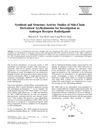
April 2001 in “Bioorganic & Medicinal Chemistry Letters” This study identified the N-(iodopropenyl) derivative 13 as a promising candidate for development as a radioiodinated androgen receptor ligand due to its binding affinity.
 6 citations
,
November 2004 in “Bioorganic & Medicinal Chemistry Letters”
6 citations
,
November 2004 in “Bioorganic & Medicinal Chemistry Letters” This study found that arylhydantoin and arylthiohydantoin derivatives with hydroxybutyl or methyl side-chains showed superior androgen receptor binding affinity and may serve as promising radioiodinated AR ligands.
November 2015 in “Journal of the Korea Academia-Industrial cooperation Society” This study established a stable cell line for CRF1 receptor screening, which can be used to develop functional cosmetics and modulators potentially affecting hair re-growth.
 24 citations
,
January 1989 in “Archives of biochemistry and biophysics”
24 citations
,
January 1989 in “Archives of biochemistry and biophysics” This study found that androgen binding in male rat livers involves specific androgen receptors, which decrease with castration and are inducible in female livers with testosterone.
 40 citations
,
October 2009 in “Journal of Biomedical Nanotechnology”
40 citations
,
October 2009 in “Journal of Biomedical Nanotechnology” This review discusses pyrene excimer nucleic acid probes for detecting biomolecules and protein-DNA interactions and reports no new experimental findings.
62 citations
,
January 2009 in “Biochemistry” This study found that both the natural ligand 1alpha,25(OH)(2)D(3) and the synthetic agonist LG190178 bind similarly to the vitamin D receptor's coregulator motifs, suggesting similar biological functions.
2 citations
,
January 1972 In this study, plucked rat hair showed greater accumulation of injected radioisotopes than shaved hair, which may have implications for measuring exposure and understanding follicle tissue processes.
41 citations
,
February 2021 in “Translational research” This review discusses the role of noncoding RNAs (ncRNAs) in radiation response and highlights their potential as biomarkers for assessing radiation damage, but reports no new clinical results.
 22 citations
,
November 2011 in “Journal of Analytical Toxicology”
22 citations
,
November 2011 in “Journal of Analytical Toxicology” This review discusses the relevance of human androgen receptor action in sports doping and examines the potential of cell-based biological assays for detecting androgenic anabolic steroid use, without presenting new research findings.
 61 citations
,
April 2014 in “Radiation Research”
61 citations
,
April 2014 in “Radiation Research” This study observed that topically applied RTA 408 reduced the severity of radiation-induced dermatitis in mice, with the highest dose significantly reducing and alleviating skin damage and associated inflammation.
23 citations
,
June 1992 in “PubMed” This study found that RAR-gamma 1 mRNA is present in multiple skin layers and structures, suggesting a role in maintaining and differentiating normal epidermis and skin appendages.
 April 2019 in “Journal of Investigative Dermatology”
 This study identifies a mechanism where dsRNA activates TLR3 to induce RA production, promoting hair follicle regeneration in mice and suggesting a potential role in human tissue regeneration.
2 citations
,
March 2025 in “PNAS Nexus” In this study, researchers used Raman spectroscopy to identify melanin-specific features in mouse hair as potential biomarkers for gamma-radiation exposure, achieving a sensitivity of 88% and specificity of 83%, with classification accuracy declining over time beyond 7 days post-irradiation.
This study found that RXR and RAR proteins were detectable in normal human skin, suggesting they may play a role in epidermal cell differentiation and hair and gland physiology.
 9 citations
,
July 2022 in “EMBO molecular medicine”
9 citations
,
July 2022 in “EMBO molecular medicine” This study found that targeting IL-6, IL-1, and CCR6 signaling pathways may effectively reduce irradiation-induced alopecia and dermatitis in radiotherapy patients.

This study developed a novel Smart DNA Biosensor for easy and efficient primary diagnosis of androgen receptors overexpression, which may aid in the rapid differential diagnosis of conditions like acne and androgenetic alopecia.
9 citations
,
March 2017 in “Journal of Visualized Experiments” This study introduced a novel in vitro murine assay using transgenic mice to identify immunomodulatory compounds, which identified 160 potential hits from 4,398 compounds screened.