
This review found that antimalarial agents were more effective than steroids for Lichen planopilaris, while finasteride and dutasteride showed favorable impacts on frontal fibrosing alopecia, despite heterogeneous study quality.
 January 2015 in “Journal of evolution of medical and dental sciences”
 In this study, topical tacrolimus 0.03% cream showed good to excellent response in treating alopecia areata in 70% of participants, with no cutaneous or systemic side effects observed.
May 2025 in “Pakistan Armed Forces Medical Journal” This study found that topical Dithranol 0.5% is more effective than topical Tacrolimus 0.1% for hair regrowth in patients with alopecia areata, with 40% of Dithranol-treated patients showing over 80% hair regrowth compared to 23.33% for Tacrolimus-treated patients.
33 citations
,
May 2001 in “Annals of pharmacotherapy/The annals of pharmacotherapy” This review reports that topical tacrolimus appears to be a safe and effective short-term treatment for inflammatory skin disorders, though further study is needed to assess long-term safety and efficacy.
22 citations
,
January 2012 in “Mediators of inflammation” This review discusses the potential benefits of nonantibiotic macrolides for treating inflammatory skin disorders and reports no new clinical results.
January 2025 in “Clinical Case Reports” This study reports a rare case of follicular porokeratosis in a diabetic woman, suggesting a potential association with diabetes mellitus in addition to its known presentation with keratotic papules and scalp alopecia.
 19 citations
,
September 2002 in “Acta dermato-venereologica”
19 citations
,
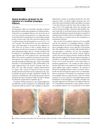
September 2002 in “Acta dermato-venereologica” In this retrospective study, anti-tuberculous agents, likely rifampicin, were effective adjunctive therapies for a chalazion, coinciding with spontaneous drainage in a patient with rosacea.
 22 citations
,
September 2004 in “Journal of The European Academy of Dermatology and Venereology”
22 citations
,
September 2004 in “Journal of The European Academy of Dermatology and Venereology” Bimatoprost can cause longer, thicker, darker eyelashes and eyebrows.
 32 citations
,
November 2011 in “International Journal of Dermatology”
32 citations
,
November 2011 in “International Journal of Dermatology” This article reviews central centrifugal cicatricial alopecia, focusing on its multifactorial etiology and challenges in clinical diagnosis, and calls for more research and better treatment options.
 5 citations
,
January 2018 in “PubMed”
5 citations
,
January 2018 in “PubMed” In this study, applying a biodegradable microneedle patch after topical steroid application significantly increased steroid penetration and improved treatment outcomes in patients with prurigo nodularis compared to the control.
 2 citations
,
January 2017 in “Journal of Pigmentary Disorders”
2 citations
,
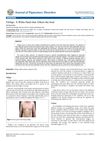
January 2017 in “Journal of Pigmentary Disorders” This article discusses vitiligo, reviewing its symptoms, possible causes, and classification, but reports no new clinical findings.
 5 citations
,
September 2002 in “Archives of Dermatology”
5 citations
,
September 2002 in “Archives of Dermatology” Dermatologists diagnose and manage melanoma more effectively than general practitioners.
 May 2004 in “Pediatric Dermatology”
 Atopic dermatitis may have genetic causes and can be treated with pharmacologic methods, glycerin creams, and controlling Staphylococcus aureus colonization.
 188 citations
,
October 2012 in “The AAPS Journal”
188 citations
,
October 2012 in “The AAPS Journal” This review discusses strategies for developing semi-solid topical generic products to match the quality of reference-listed drugs, using concepts like quality by design and reverse-engineering, but reports no new results.
 84 citations
,
April 2005 in “Dermatologic Clinics”
84 citations
,
April 2005 in “Dermatologic Clinics” Treatments for melanin disorders exist, but more effective options needed.
 64 citations
,
January 2004 in “American journal of clinical dermatology”
64 citations
,
January 2004 in “American journal of clinical dermatology” This review describes various types of folliculitis based on their causes, clinical manifestations, and treatments, but reports no new clinical results.
 33 citations
,
September 2007 in “Veterinary dermatology”
33 citations
,
September 2007 in “Veterinary dermatology” In this study, proliferative and necrotizing feline otitis externa in four domestic shorthair cats improved with topical 0.1% tacrolimus treatment, despite previous ineffective therapies.
 January 2016 in “Springer eBooks”
 This review discusses medications used in dermatology, detailing their side effects and interactions, and reports no new clinical results.
 67 citations
,
January 2022 in “Theranostics”
67 citations
,
January 2022 in “Theranostics” This review highlights how advanced nanocarrier and microneedle-based transdermal drug delivery strategies can potentially improve the treatment of skin diseases by enhancing site-specific drug delivery, increasing skin penetration, and reducing systemic toxicity compared to conventional methods.
 53 citations
,
October 1993 in “Drug Safety”
53 citations
,
October 1993 in “Drug Safety” Oral retinoids can cause side effects ranging from mild to severe, including birth defects, and require careful monitoring and contraception.
January 2025 in “SAGE Open Medical Case Reports” This case report described a patient with erosive pustular dermatosis of the scalp who was resistant to multiple treatments, suggesting that combination therapy may be more effective than monotherapy for managing refractory cases of this condition.
25 citations
,
January 2024 in “Journal of Lipids” This review reports that cubosomes, used as drug nanocarriers in topical treatments, offer potential benefits for managing skin and eye diseases by improving bioadhesion, retention, and sustained release compared to conventional formulations, but also face manufacturing and biological challenges for effective clinical outcomes.
4 citations
,
October 2024 in “International Journal of Molecular Sciences” In this study, topical naringin was found to significantly improve dermatitis severity and reduce inflammatory markers in a mouse model of atopic dermatitis, suggesting its potential as a therapeutic agent for this condition.
 4 citations
,
July 2023 in “Pharmaceutics (Basel)”
4 citations
,
July 2023 in “Pharmaceutics (Basel)” This study reviews various skin models and methodologies used to assess the follicular penetration of nanoparticle-based drugs, highlighting inconsistencies that complicate comparisons and aims to establish more uniform protocols for clearer study outcomes.
 49 citations
,
March 2014 in “Journal of Investigative Dermatology”
49 citations
,
March 2014 in “Journal of Investigative Dermatology” This study demonstrated that combining AMD3100 with low-dose tacrolimus in a stem cell mobilization approach significantly reduced wound healing time and improved scar and hair follicle regeneration in full-thickness skin wounds.
33 citations
,
March 2018 in “Italian Journal of Dermatology and Venereology” This article reviews clinical and histopathological aspects of cutaneous lupus erythematosus and its treatment, emphasizing the importance of photoprotection and outlining current therapies, but reports no new experimental results.
22 citations
,
August 2011 in “Journal of the American Academy of Dermatology” This article highlights that erosive pustular dermatosis of the scalp is often under-diagnosed in the United States, potentially leading to unnecessary surgery.
20 citations
,
May 2007 in “JDDG Journal der Deutschen Dermatologischen Gesellschaft” In this case report, etanercept was observed to effectively resolve symptoms of refractory acrodermatitis continua suppurativa Hallopeau after previous treatments had limited success.
20 citations
,
January 1995 in “Journal of Dermatological Science” This study found that topical application of cyclosporin A and FK506 induces new hair growth in mice, while ascomycin and rapamycin do not, suggesting hair induction is not due to immunosuppression.
 18 citations
,
January 2020 in “Journal of the European Academy of Dermatology and Venereology”
18 citations
,
January 2020 in “Journal of the European Academy of Dermatology and Venereology” This study identified trichoscopy as a key diagnostic tool for erosive pustular dermatosis of the scalp and suggested high-potency steroids or tacrolimus as effective first-line treatments.