 7 citations
,
May 2012 in “British Journal of Dermatology”
7 citations
,
May 2012 in “British Journal of Dermatology” This commentary explores whether chemical exposure may contribute to the rising prevalence of atopic diseases but reports no new findings.
 76 citations
,
May 2011 in “Cell death and differentiation”
76 citations
,
May 2011 in “Cell death and differentiation” This study found that the enzyme A20 helps regulate EDAR-induced NF-κB signaling in mice, preventing ectodermal abnormalities like disheveled hair and assuring proper skin and appendage development.
 37 citations
,
January 2008 in “Gynecological Endocrinology”
37 citations
,
January 2008 in “Gynecological Endocrinology” This study found that in women with polycystic ovary syndrome, shorter CAG repeat lengths in the androgen receptor gene were associated with lower dihydrotestosterone and androstenedione levels, but a higher prevalence of acne and hirsutism.
 24 citations
,
November 2015 in “Annals of Nutrition and Metabolism”
24 citations
,
November 2015 in “Annals of Nutrition and Metabolism” This study found that specific SHBG gene variants and haplotypes are associated with polycystic ovary syndrome, suggesting that SHBG may be a candidate gene for the condition.
 23 citations
,
January 2013 in “Indian Journal of Dermatology, Venereology and Leprology”
23 citations
,
January 2013 in “Indian Journal of Dermatology, Venereology and Leprology” This article reviews the pathophysiology, diagnosis, and treatment of female pattern hair loss, highlighting the importance of early medical intervention to arrest hair loss progression, but reports no new clinical results.
 13 citations
,
April 2009 in “PLOS ONE”
13 citations
,
April 2009 in “PLOS ONE” This study found no evidence that androgen receptor copy number variation is associated with androgenetic alopecia, suggesting it is unlikely to be a contributing factor.
 10 citations
,
October 2014 in “Journal of Ovarian Research”
10 citations
,
October 2014 in “Journal of Ovarian Research” This study found a significant association between the IRS-2 gene variant and an increased risk of PCOS, especially in non-obese women in the Chinese population from Taiwan.
 8 citations
,
April 2020 in “Facial Plastic Surgery Clinics of North America”
8 citations
,
April 2020 in “Facial Plastic Surgery Clinics of North America” This abstract explains that androgenetic alopecia, a common hair loss disorder influenced by genetics and hormones like dihydrotestosterone, has FDA-approved treatments including minoxidil, finasteride, and photolaser therapy, but its genetic basis and susceptibility to environmental factors remain complex.
 6 citations
,
March 2009 in “Journal of the European Academy of Dermatology and Venereology”
6 citations
,
March 2009 in “Journal of the European Academy of Dermatology and Venereology” This study found no increased frequency of the TNF2 allele in Mexican patients with adverse cutaneous drug reactions mediated by delayed hypersensitivity, suggesting its lower relevance compared to findings in Caucasian populations.
 5 citations
,
January 2016 in “Dermatology”
5 citations
,
January 2016 in “Dermatology” This study found no significant difference in CAG repeat numbers of the androgen receptor gene between Han Chinese women with female pattern hair loss and healthy controls, suggesting it may not be a genetic marker for FPHL in this population.
 1 citations
,
January 2014 in “Hair therapy & transplantation”
1 citations
,
January 2014 in “Hair therapy & transplantation” This review discusses various treatment options for Alopecia Areata, focusing on both medical and psychological approaches, and reports no new clinical results.
 19 citations
,
May 2007 in “Dermatologic therapy”
19 citations
,
May 2007 in “Dermatologic therapy” The document concludes that various treatments, including laser therapy, are effective for managing pseudofolliculitis barbae, especially in darker skin types.
 12 citations
,
January 2005 in “Journal of Cosmetic Dermatology”
12 citations
,
January 2005 in “Journal of Cosmetic Dermatology” This review discusses the natural progression of androgenetic alopecia and potential factors influencing its long-term prognosis, reporting no new clinical results.
 10 citations
,
December 2014 in “Journal of Pharmaceutical and Biomedical Analysis”
10 citations
,
December 2014 in “Journal of Pharmaceutical and Biomedical Analysis” Finasteride's polymorphic form affects capsule quality and drug effect, requiring strict control.

research Acne
4 citations
,
January 2019 This analysis examines acne vulgaris using an integrative approach, highlighting its links with psychopathology, lifestyle, and diet, but reports no new results.
 1 citations
,
September 2017
1 citations
,
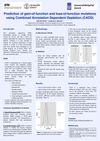
September 2017 This study found that the combination of Stemoxydine® and Resveratrol improved hair density in women with Female Pattern Hair Loss.
 1308 citations
,
March 1998 in “Journal of bone and mineral research”
1308 citations
,
March 1998 in “Journal of bone and mineral research” This review discusses the molecular role of the vitamin D receptor in regulating various biological actions such as bone mineralization and reports no new clinical results, highlighting the complexity of vitamin D's function in multiple tissues.
 430 citations
,
July 2002 in “Journal of Endocrinology”
430 citations
,
July 2002 in “Journal of Endocrinology” This hypothesis paper suggests that PCOS may result from genetically determined ovarian hypersecretion of androgens, influencing hormone regulation and insulin resistance, with obesity further affecting its severity; no new clinical results are reported.
 253 citations
,
March 2006 in “The Journal of Clinical Endocrinology and Metabolism”
253 citations
,
March 2006 in “The Journal of Clinical Endocrinology and Metabolism” This review discusses the hypothesis that polycystic ovary syndrome may originate in fetal life due to prenatal androgen exposure, but reports no new clinical results.
 191 citations
,
May 2018 in “British journal of dermatology/British journal of dermatology, Supplement”
191 citations
,
May 2018 in “British journal of dermatology/British journal of dermatology, Supplement” This study reviewed recent theories on alopecia areata's pathogenesis, highlighting its autoimmune nature due to immune privilege disruption in hair follicles, and noted current treatments have limited efficacy with high relapse rates, underscoring the need for further research into its mechanisms for better therapies.
 173 citations
,
May 2001 in “Human reproduction update”
173 citations
,
May 2001 in “Human reproduction update” This review discusses the role of oestrogens in stimulating growth hormone secretion and influencing linear bone growth in children, and reports no new clinical results; the authors suggest that oestrogens play a key role in pubertal growth spurts for both genders.
 153 citations
,
March 2017 in “Endocrine”
153 citations
,
March 2017 in “Endocrine” This review examines recent advances in understanding the pathophysiology and molecular mechanisms of androgenetic alopecia, highlighting two major genetic risk loci, but does not report new clinical findings.
 148 citations
,
December 2018 in “Journal of autoimmunity”
148 citations
,
December 2018 in “Journal of autoimmunity” This review discusses genetic and environmental factors contributing to autoimmunity in alopecia areata and reports no new clinical findings, emphasizing the need for further study on its aetiology and pathophysiology.
 134 citations
,
February 2005 in “Neuropsychopharmacology”
134 citations
,
February 2005 in “Neuropsychopharmacology” GABRA2 gene variations impact alcohol response, and hair loss medication finasteride reduces some effects.
 92 citations
,
December 2016 in “Scientific Reports”
92 citations
,
December 2016 in “Scientific Reports” This study identified genomic regions and candidate genes that may contribute to phenotypic diversity in coat color, body size, cashmere traits, and high-altitude adaptation in domesticated goat breeds.
 91 citations
,
November 2007 in “Archives of Dermatology”
91 citations
,
November 2007 in “Archives of Dermatology” In this study, smoking status and intensity were significantly associated with moderate or severe androgenetic alopecia among Asian men, after accounting for age and family history.
 87 citations
,
March 2011 in “Australasian Journal of Dermatology”
87 citations
,
March 2011 in “Australasian Journal of Dermatology” This review explores the current understanding of genetic and hormonal influences on male androgenetic alopecia and female pattern hair loss, providing guidance for clinicians but reports no new results.
 81 citations
,
July 2008 in “The Journal of Clinical Endocrinology and Metabolism”
81 citations
,
July 2008 in “The Journal of Clinical Endocrinology and Metabolism” This study found that cortisone reductase deficiency is caused by inactivating mutations in the H6PD gene, affecting cortisol metabolism by preventing 11β-HSD1 enzyme function.
 77 citations
,
April 2009 in “British Journal of Dermatology”
77 citations
,
April 2009 in “British Journal of Dermatology” In this study, genetic variation in the CYP19A1 gene, particularly the common rs4646 C allele, was associated with an increased risk of female pattern hair loss, especially in women under 40.
 76 citations
,
June 2015 in “Journal of biomedical science”
76 citations
,
June 2015 in “Journal of biomedical science” This study demonstrated that dominant mutations in mouse gasdermin A3 disrupt mitochondrial oxidative stress regulation, suggesting a gain-of-function effect on epidermal differentiation.