2 citations
,
December 2011 in “[Thesis]. Manchester, UK: The University of Manchester; 2011.” The study suggests that immune privilege collapse in bulge cells and the involvement of pro-inflammatory cytokine interferon-γ contribute to hair follicle stem cell loss in lichen planopilaris.
July 2025 in “Frontiers in Medicine” This study identified compound heterozygous mutations, c.1101del and c.736 T > A, in the LIPH gene responsible for causing autosomal recessive woolly hair in a child, with c.1101del being a novel frameshift mutation.
 1 citations
,
July 2022 in “PLOS ONE”
1 citations
,
July 2022 in “PLOS ONE” This study found that in Lichen Planopilaris, the Microbacteriaceae family was negatively correlated with IL-23 expression, suggesting a role in the disease's inflammation and microbiota composition.
January 2026 in “Case Reports in Dermatological Medicine” This report identified a family of Iranian siblings with diverse clinical forms of Lichen Planus, suggesting potential genetic and environmental involvement in its pathogenesis.
 87 citations
,
July 2018 in “Biochimica et Biophysica Acta (BBA) - Molecular Cell Research”
87 citations
,
July 2018 in “Biochimica et Biophysica Acta (BBA) - Molecular Cell Research” This review discusses the essential roles and complex regulation of PP2A in various physiological processes and reports no clinical results; the authors highlight the need for further mouse model research to explore PP2A's therapeutic potential.
November 2018 in “Journal of dermatology & cosmetology” This manuscript reports on the first case of perforating necrobiosis lipoidica in Colombia, marking the 19th documented case worldwide.
 24 citations
,
December 2018 in “Life sciences”
24 citations
,
December 2018 in “Life sciences” This review discusses the role of lysophosphatidic acid in skin physiology and pathology, highlighting its significance in processes like wound healing and hair follicle development, but reports no new clinical findings.
October 2022 in “Zenodo (CERN European Organization for Nuclear Research)” This study reported that combining Poly-D,L-Lactic Acid with Platelet-Rich Plasma for facial rejuvenation reduced wrinkle severity and improved skin tone and hyperpigmentation in a 45-year-old female patient.
71 citations
,
October 2017 in “Journal of Investigative Dermatology” PPAR-γ agonists like pioglitazone may help manage lichen planopilaris but don't fully reverse scarring.
158 citations
,
June 2014 in “Journal of Lipid Research” This review summarizes recent discoveries of GPCRs for lysophosphatidylserine and lysophosphatidylinositol, detailing their roles as lipid mediators, but reports no new experimental results.
26 citations
,
April 2023 in “Medicina” This systematic review suggests that platelet-rich plasma may significantly improve symptoms in oral lichen planus with effects comparable to corticosteroids, although more research is needed to confirm these findings.
July 2024 in “Skin Appendage Disorders” This review discusses the role of trichoscopy in diagnosing lichen planopilaris and reports no clinical results; the authors emphasize early recognition to potentially prevent permanent scarring.
September 2003 in “Faculty Opinions – Post-Publication Peer Review of the Biomedical Literature” GLABRA2 gene controls root-hair growth by regulating phospholipid signaling.
 May 2025 in “Frontiers in Genetics”
 This study reported discovering a novel missense variant in a case of autosomal recessive woolly hair in a 31-year-old Chinese woman, which significantly reduced secretion of the encoded protein, likely leading to disease by impairing its hydrolytic function.
 1 citations
,
January 2021 in “Dermatology online journal”
1 citations
,
January 2021 in “Dermatology online journal” This report describes a unique case of linear lichen planus pigmentosus on the face with histological features of lichen planopilaris, which has not been documented before.
 1 citations
,
May 2024 in “Cureus”
1 citations
,
May 2024 in “Cureus” This case series describes five patients with rare facial lichen planopilaris, detailing the clinical presentation and treatment of their pigmentary changes and scarring alopecia.
October 2025 in “Our Dermatology Online” This study suggests that combining tranexamic acid with low-dose oral retinoids may offer moderate to good improvements for lichen plan pigmentosus, although larger trials are needed for confirmation.
 1 citations
,
April 2022 in “Dermatologic Surgery”
1 citations
,
April 2022 in “Dermatologic Surgery” This article introduces the Progressive Loss (PL) Scale, aimed at helping physicians communicate the long-term cosmetic risks of hair restoration surgery to patients.
 2 citations
,
March 2023 in “Biomedicine & pharmacotherapy”
2 citations
,
March 2023 in “Biomedicine & pharmacotherapy” This study found that platelet lysate significantly improved hair growth and follicle performance in both experimental settings and AGA patients, showing results comparable to platelet-rich plasma.
 1 citations
,
December 2012 in “Dermatologic Surgery”
1 citations
,
December 2012 in “Dermatologic Surgery” Hair transplants can risk reactivating lichen planopilaris, a scarring hair loss condition.
 52 citations
,
February 2006 in “Archives of Dermatology”
52 citations
,
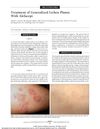
February 2006 in “Archives of Dermatology” This case report describes a 25-year-old woman with widespread lichen planus who did not respond to multiple systemic treatments, including antihistamines, hydroxychloroquine sulfate, and corticosteroids.
 September 2021 in “Hair transplant forum international”
 In this study, the P&P Hairline Laser, a hands-free laser-assisted device, was found to produce smoother and more symmetrical hairlines compared to traditional handheld laser devices.
1 citations
,
May 2024 in “Skin Appendage Disorders” This article discusses the importance of early recognition of LPP due to its significant aesthetic and psychosocial effects and calls for efforts to prevent misdiagnosis.
49 citations
,
November 2021 in “Annual review of pathology” This review discusses the regulatory roles of lysophospholipids like LPA and S1P in diseases such as fibrosis, neuropathic pain, and cancer, but reports no new clinical results.
 2 citations
,
January 2024 in “Advances in Dermatology and Allergology”
2 citations
,
January 2024 in “Advances in Dermatology and Allergology” This study suggests a potential role for S100A7 and IL-17 in the pathogenesis of lichen planopilaris.
July 2025 in “Case Reports in Dermatology” This case report highlights that early signs like pili torti may precede lichen planopilaris in some patients, emphasizing the importance of timely intervention to prevent permanent hair loss.
11 citations
,
April 2012 in “Journal of Investigative Dermatology” A specific mutation in PA-PLA1α causes abnormal hair growth.
 December 2025 in “Portuguese Journal of Dermatology and Venereology”
 In this study, researchers conducted a retrospective analysis of 16 cases of erosive palmoplantar lichen planus in North East India, finding a higher prevalence in pediatric and male patients, with common clinical features including plantar involvement and histopathological indicators such as basal cell degeneration.
 September 2017 in “The journal of investigative dermatology/Journal of investigative dermatology”
 This study reports that the loss of Langerhans cells in lichen planopilaris scars may be linked to the downregulation of ITG αvβ6, which is not seen in other scar formation diseases.
 1 citations
,
November 2024 in “Cutis”
1 citations
,
November 2024 in “Cutis” PLLA injections can cause hair loss and skin issues.