 17 citations
,
October 2006 in “Molecular and Cellular Endocrinology”
17 citations
,
October 2006 in “Molecular and Cellular Endocrinology” This study found that the L457(3.43)R mutation in the human luteinizing hormone receptor increases phosphodiesterase activity, reducing hormonal response despite elevated basal cAMP levels.
1 citations
,
September 2020 in “Journal of dermatology” This study identified a novel mutation and confirmed a previous mutation in the LIPH gene in a woman with autosomal recessive woolly hair, expanding the mutation spectrum for this condition.
 51 citations
,
March 2019 in “Journal of cellular physiology”
51 citations
,
March 2019 in “Journal of cellular physiology” This review discusses the use of platelet lysate and its growth factors in treating diseases and regenerative medicine but reports no new clinical findings.
220 citations
,
June 2013 in “The Journal of Pathology” This study found that immune privilege collapse in the hair follicle bulge and associated immune responses may contribute significantly to the pathogenesis of lichen planopilaris, suggesting a potential autoimmune basis for the disease.
31 citations
,
September 2011 in “European journal of pharmaceutics and biopharmaceutics” This study found that biodegradable PLA particles released fluorochromes in a time-dependent manner on human skin, with BP-PLA particles releasing rapidly and DiAsp-PLA particles providing sustained release and accumulation in hair follicles.
July 2022 in “Journal of Investigative Dermatology” This study suggests that using a non-medicated, hypo-allergenic scalp clarifying shampoo may improve hair volume and reduce shedding in women with lichen planopilaris and female pattern hair loss.
 33 citations
,
October 2013 in “Journal of The American Academy of Dermatology”
33 citations
,
October 2013 in “Journal of The American Academy of Dermatology” In this study, pioglitazone treatment in patients with lichen planopilaris showed limited success, with significant improvement seen in only a minority of cases.
10 citations
,
December 2008 in “Molecular Carcinogenesis” This study found that overexpressing the PML protein in transgenic mice decreased skin tumor occurrence and delayed their progression, highlighting PML's potential role in influencing keratinocyte growth and differentiation.
December 2024 in “Skin Appendage Disorders” This bibliometric analysis revealed important studies on LPP, noted essential trichoscopic features, and identified significant evidence gaps. The researchers emphasized a need for more robust and diverse studies to improve diagnostics and treatment strategies.

This chapter reviews the structure, pharmacokinetics, and clinical applications of PEGylated liposomes and reports no new research findings.
1 citations
,
October 2025 in “PLoS ONE” In this study, researchers found that overexpression of LncRNA RP11-818O24.3 in hair follicle stem cells promotes their proliferation, self-renewal, and differentiation while inhibiting apoptosis through the FGF2-mediated PI3K/AKT signaling pathway, suggesting potential therapeutic applications for hair loss treatment.
 November 2024 in “NeoReviews”
 Pallister-Killian Syndrome is a complex genetic disorder requiring coordinated care and genetic counseling.
 January 2015 in “Hair transplant forum international”
 Up to 10% of hair loss patients might have early signs of a condition called Lichen Planopilaris.
 7 citations
,
September 2024 in “BMC Genomics”
7 citations
,
September 2024 in “BMC Genomics” In this study, whole-genome sequencing of Lanping black-boned sheep identified ERBB4 and ROR1 genes as potentially important in their distinctive hyperpigmentation, enhancing understanding of their genetic evolution from Lanping normal sheep.
 14 citations
,
January 2015 in “Skin appendage disorders”
14 citations
,
January 2015 in “Skin appendage disorders” This study reports that subtle presentations of lichen planopilaris may be mistaken for seborrheic dermatitis in patients with androgenetic alopecia, highlighting the importance of dermatoscopy-guided biopsy for accurate diagnosis.
 8 citations
,
June 2012 in “PloS one”
8 citations
,
June 2012 in “PloS one” This study found that the Plcd3(mNab) mutation in mice worsens the alopecia caused by Plcd1 loss, suggesting synergistic effects between Plcd1 and Plcd3 on hair follicle health.

This study found that patients with lichen planopilaris exhibit a higher pro-atherogenic lipid profile and elevated atherogenic indexes, suggesting a need for increased cardiovascular and lipid monitoring in these individuals.
 9 citations
,
February 2018 in “The Journal of Dermatology”
9 citations
,
February 2018 in “The Journal of Dermatology” This study identified a novel splice site mutation in the LIPH gene associated with autosomal recessive woolly hair, contributing to understanding the genetic basis of this condition.
1 citations
,
March 2013 in “Journal of Dermatological Case Reports” This case report describes an atypical presentation of lichen planopilaris affecting only facial vellus hair, without scalp involvement, in a 46-year-old man.
 3 citations
,
August 2019 in “International Journal of Dermatology”
3 citations
,
August 2019 in “International Journal of Dermatology” In this observational study, dermoscopy was found to be a useful tool in diagnosing lichen planopilaris among patients with primary cicatricial alopecia.
 19 citations
,
April 2018 in “International Journal of Dermatology”
19 citations
,
April 2018 in “International Journal of Dermatology” This study found that female patients with frontal fibrosing alopecia are significantly more likely to have systemic lupus erythematosus compared to controls.
11 citations
,
August 2010 in “Annals of plastic surgery” This study found a significant relationship between lash ptosis severity and marginal reflex distance, levator function, and double fold presence in Asian patients, which may inform surgical planning for upper eyelid procedures.
 3 citations
,
May 2022 in “Clinical and experimental dermatology”
3 citations
,
May 2022 in “Clinical and experimental dermatology” This review discusses potential EMT-targeting drugs for treating lichen planopilaris and emphasizes the need for clinical trials, as current evidence is limited to individual cases or case series.
 October 2022 in “International journal of medical science and clinical research studies”
 In this study, the combination of Poly-D,L-Lactic Acid and Platelet-Rich Plasma was reported to be effective for improving wrinkle severity and skin brightness in a 45-year-old woman.
 39 citations
,
July 2008 in “Dermatologic Therapy”
39 citations
,
July 2008 in “Dermatologic Therapy” This review provides a practical approach to diagnosing pseudopelade of Brocq and updates on treatment options but reports no new clinical results.
 16 citations
,
October 2014 in “Journal of the American Academy of Dermatology”
16 citations
,
October 2014 in “Journal of the American Academy of Dermatology” This study found that oral retinoid therapy may provide clinical improvement in a small percentage of patients with treatment-resistant lichen planopilaris, although it is not commonly used as a first-line treatment.
 5 citations
,
October 2019 in “The journal of investigative dermatology/Journal of investigative dermatology”
5 citations
,
October 2019 in “The journal of investigative dermatology/Journal of investigative dermatology” This study identified a high-risk allele in the PLCD1 gene associated with hereditary trichilemmal cyst formation, proposing a monoallelic two-hit mechanism as the underlying genetic pathogenesis.
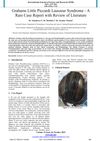 October 2023 in “International Journal of Science and Research (IJSR)”
 This paper describes Grahams Little Piccardi Lassueur Syndrome, a rare type of Lichen Planopilaris that causes different types of alopecia and distinctive skin papules, primarily affecting females aged 40 to 70, and notes the current challenges in treatment options, particularly once scarring occurs.
 December 2023 in “Journal of General Procedural Dermatology and Venereology Indonesia”
 The abstract highlights that lichen planus can manifest as cicatricial alopecia or lichen planopilaris, while discoid lupus erythematosus, a common form of lupus erythematosus, typically causes scarring alopecia. Results are not reported here.
 May 2025 in “International Medical Case Reports Journal”
 This case report highlights lichen planus pigmentosus in a 60-year-old man, which was linked to previously undetected hepatitis C infection and liver cirrhosis, suggesting a need for hepatitis C testing in patients with similar dermatological manifestations.