October 2024 in “Journal of Pakistan Association of Dermatologists” In this cross-sectional study, both follicular lichen planus and discoid lupus erythematosus were identified as common causes of scarring alopecia, affecting young people with a more favorable prognosis for hair regrowth in discoid lupus erythematosus compared to follicular lichen planus.
 4 citations
,
January 1970 in “Journal of Bangladesh College of Physicians and Surgeons”
4 citations
,
January 1970 in “Journal of Bangladesh College of Physicians and Surgeons” This report highlights a case of adrenoleukodystrophy, a rare disease, diagnosed in a young boy with neuropsychiatric symptoms and Addison's disease, stressing the importance of early diagnosis and genetic counseling.
 June 2023 in “International Journal of Research in Medical Sciences”
 This case report describes the first confirmed instances of X-linked adrenomyeloneuropathy/adrenoleukodystrophy in two brothers from Bangladesh, noting their progressive neurological symptoms, MRI findings, and differing disease outcomes over several years of observation.
1 citations
,
May 2016 in “Aktuelle Dermatologie” This case study reported that a 34-year-old woman with classic lichen planopilaris achieved disease remission after two months of hydroxychloroquine treatment following ineffective corticosteroid therapy.
May 2024 in “JAAD Case Reports” This case report describes a 29-year-old man with a year-long non-itchy skin eruption and hair loss, with distinct papules and plaques across his scalp, beard, body, and suprapubic regions, but no systemic symptoms or family history of autoimmune disease.
43 citations
,
March 2009 in “Archives of dermatology” No treatment showed clear superiority for lichen planopilaris.
37 citations
,
December 2001 in “Journal of the American Academy of Dermatology” This case report details significant hair regrowth in a patient with lichen planopilaris after treatment with thalidomide, suggesting its potential as a treatment option for this condition.
4 citations
,
September 2023 in “Journal of Dermatological Treatment” In this study, the use of wellness apparel emitting red and NIR light was associated with improved disease severity in patients with mild elbow psoriasis, PMLE, and limited AA, though the small sample size and continued use of other treatments were noted as limitations.
 2 citations
,
June 2020 in “Dermatology and therapy”
2 citations
,
June 2020 in “Dermatology and therapy” In this case report, narrowband-UVB phototherapy successfully treated a rare instance of Graham Little-Piccardi-Lassueur syndrome, a variant of lichen planopilaris, as investigated through non-invasive imaging techniques.
 May 2017 in “Journal of The American Academy of Dermatology”
 PLAU and SerpinB2 affect cell death differently in various forms of leprosy and could be targets for new treatments.
 3 citations
,
March 2012 in “Actas Dermo-Sifiliográficas”
3 citations
,
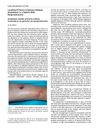
March 2012 in “Actas Dermo-Sifiliográficas” An elderly man with skin amyloidosis and abnormal blood proteins was monitored without finding widespread disease after 18 months.
19 citations
,
January 2015 in “International Journal of Cosmetic Science” This study reports that optimized PLA nanoparticles can effectively target hair follicles to deliver both lipophilic and hydrophilic compounds, suggesting potential applications in hair cosmetics and treatments.
 April 2023 in “Journal of Investigative Dermatology”
 This study found that PX-12 inhibited the NLRP3 inflammasome and reduced psoriasis-like symptoms in a mouse model, suggesting its potential as a treatment for psoriasis.
This study found significant variability in the production and use of platelet-rich plasma and related products in Brazil, highlighting the need for regulatory measures to ensure safety.
 April 2023 in “IP Indian journal of clinical and experimental dermatology”
 This article reviews the pathogenesis, complications, and management of lichen planus, especially its persistent oral form, and highlights the need for further prospective studies.
1 citations
,
February 2023 in “IntechOpen eBooks” This chapter discusses photodynamic therapy and its potential applications beyond cancer treatment, including conditions like alopecia and angina, but reports no new clinical findings.
In this observational and interventional study conducted in Dhaka, Bangladesh, PRP treatment led to clinical improvements in hair count, thickness, and density among 20 out of 30 male patients with androgenetic alopecia, with significant statistical support (p-value 0.00) following 2-3 treatment sessions.
33 citations
,
October 2016 in “Photomedicine and laser surgery” This review discusses the development of IPL devices, highlights their established cosmetic uses, such as treating vascular and pigmented lesions, and suggests potential expansion into more effective combination therapies.
 19 citations
,
January 2001 in “Internal Medicine”
19 citations
,
January 2001 in “Internal Medicine” This case report demonstrates a strong association between protein-losing enteropathy and systemic lupus erythematosus, with symptoms and conditions improving with prednisolone treatment.
26 citations
,
December 2020 in “Photodermatology Photoimmunology & Photomedicine” This review discusses photobiomodulation as a potential treatment for hair loss, highlighting its safety and possible effectiveness but noting cost, protocol standardization, and expectation management as limitations; it reports no new clinical results.
 June 2024 in “International Journal of Dermatology”
 This article in the International Journal of Dermatology reports on a case series where the drug upadacitinib was used to treat patients with recalcitrant lichen planopilaris, but no abstract or detailed results are provided to assess its efficacy or safety fully.
16 citations
,
April 2000 in “Contact dermatitis” In this report, a 19-year-old Japanese man experienced severe and prolonged urticarial reactions following treatment with diphenylcyclopropenone for alopecia universalis, emphasizing the need for caution with potent sensitizers.
5 citations
,
March 2020 in “Thoracic Cancer” In this phase I study, CT-707, a new ALK inhibitor, showed a 77% response rate among Chinese patients with advanced ALK-rearranged non-small cell lung cancer, suggesting clinical effectiveness despite some adverse events like diarrhea and liver enzyme elevation.
19 citations
,
October 1996 in “International Journal of Dermatology” This study concluded that pseudopelade is an autosomal dominant condition, distinct from other forms of alopecia, characterized by atrophic hair follicle loss and notable familial association.
54 citations
,
November 2014 in “JEADV. Journal of the European Academy of Dermatology and Venereology/Journal of the European Academy of Dermatology and Venereology” This study found that combining low-fluence Q-switched Nd: YAG laser and intense pulsed light led to faster and more effective melasma treatment compared to using the laser alone, though recurrence still occurred.
3 citations
,
July 2022 in “Indian Journal of Dermatology” This report describes a case of acute localised exanthematous pustulosis in a 19-year-old boy after using amoxicillin-clavulanic acid, with new dermoscopic features identified.
20 citations
,
November 2020 in “Stem Cell Research & Therapy” This study found that placenta-derived mesenchymal stem cells overexpressing PRL-1 inhibited adipogenesis in orbital fibroblasts from Graves’ ophthalmopathy patients by modulating specific signaling pathways, suggesting a potential therapeutic strategy.
November 2024 in “Journal of Investigative Dermatology” This study identified PTEN as a key regulator in non-healing venous leg ulcers, suppressing immune responses and lymphangiogenesis, suggesting its potential as a therapeutic target for promoting VLU healing.
 1 citations
,
June 2024 in “BMC Oral Health”
1 citations
,
June 2024 in “BMC Oral Health” In this study, autologous platelet concentrates and topical steroids similarly reduced lesion size, Thongprasom scale, and pain in oral lichen planus patients, suggesting autologous platelet concentrates as a potential alternative treatment.
August 2016 in “Anaplastology” This study reports that controlled release PRP therapy using dalteparin and protamine micro-particles may be effective for hair growth and skin rejuvenation in women.