 1 citations
,
October 2008 in “Expert Review of Dermatology”
1 citations
,
October 2008 in “Expert Review of Dermatology” This review discusses frontal fibrosing alopecia, noting its frequent misdiagnosis and highlighting the need for larger studies to better understand its epidemiology, causes, and treatment options; it reports no new clinical findings.
75 citations
,
September 2007 in “Journal of Heredity” This study found that mutations in the FGF5 gene are the primary genetic factor causing long hair in domestic cats through an autosomal recessive mechanism.
39 citations
,
January 2006 in “Journal of Cosmetic and Laser Therapy” This study found that pneumatic skin flattening (PSF) significantly reduces pain and post-treatment erythema during high-energy IPL and laser hair removal while enhancing treatment efficacy.
 March 2023 in “Journal of the American Academy of Dermatology”
 This review summarizes evidence that pityrosporum folliculitis in immunocompromised patients responds well to topical antifungals and treatment of underlying conditions, based on a limited number of studies with small sample sizes.
February 2017 in “Spectrum Research Repository (Concordia University)” This study confirmed porcine PRP's commercial viability as a fetal bovine serum replacement, showing higher growth factor levels and stability, without increasing human follicle dermal papilla cell proliferation compared to FBS.
159 citations
,
August 2010 in “British journal of dermatology/British journal of dermatology, Supplement” In this study, hydroxychloroquine significantly reduced signs and symptoms of frontal fibrosing alopecia after 6 months of treatment, with maximal benefits observed within the first 6 months.
This study reported that prompt diagnosis and treatment with 5-alpha-reductase inhibitors and topical immunomodulators are key to mitigating the effects of frontal fibrosing alopecia and preventing permanent hair loss.
 September 2021 in “CRC Press eBooks”
 This review discusses fibrosing alopecia in a pattern distribution and highlights diagnostic features, but reports no new clinical results; the authors emphasize the value of trichoscopy and histology in diagnosis.
January 2012 in “RWTH Publications (RWTH Aachen)” This study found that patient-derived HGF significantly accelerates wound healing in diabetic mice, particularly improving skin structure and flexibility, and rHGF plays a key role in boosting hair growth.
January 2012 in “Zhongguo shengwuzhipinxue zazhi” This study found that a complex filling material made from autologous skin fibroblasts and hair keratin significantly improved the appearance of facial wrinkles, suggesting potential for clinical cosmetic applications.
 9 citations
,
March 2022 in “Terapevticheskii arkhiv”
9 citations
,
March 2022 in “Terapevticheskii arkhiv” This article reviews human placenta hydrolysates and their complex molecular mechanisms in treating various conditions but does not present new clinical findings.
 February 2026 in “Annals of dermatological science.”
 In this case report, two young women with female pattern hair loss experienced significant hair regrowth without adverse effects after six months of treatment with bone-marrow-derived mesenchymal stem cells and their extracellular vesicles, suggesting potential for this approach when conventional treatments fail.
1 citations
,
August 2024 in “Anais Brasileiros de Dermatologia” This review discusses the non-follicular skin manifestations of frontal fibrosing alopecia and how they affect diagnosis and treatment, but reports no new clinical results.
 July 2024 in “New Phytologist”
 This study suggests that the transcription factor PDF2 in Arabidopsis may link lipid sensing with growth responses to phosphate starvation by acting as a sensor for lyso-PCs through its START domain.
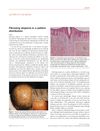 16 citations
,
February 2010 in “Journal of the European Academy of Dermatology and Venereology”
16 citations
,
February 2010 in “Journal of the European Academy of Dermatology and Venereology” This article is a letter to the editor about fibrosing alopecia in a pattern distribution and reports no new research findings.
1 citations
,
December 2013 in “Balkan Journal of Medical Genetics” This case study describes a 3.5-month-old girl with cystic fibrosis who experienced hair and skin depigmentation, which resolved after treatment with pancreatic enzymes and vitamins.
 October 2025 in “International Wound Journal”
 In a study using a rat model of hypertrophic scars, researchers found that gamma-irradiated human amniotic fluid improved wound healing, collagen remodelling, immune response, and scar characteristics more effectively than saline or non-irradiated amniotic fluid, indicating its potential for clinical applications in scar management.
 3 citations
,
September 2017 in “Stem cell investigation”
3 citations
,
September 2017 in “Stem cell investigation” This review discusses the various roles of skin-resident dermal white adipose tissue in hair growth inhibition, antibacterial responses, and wound healing, reporting no new empirical findings.
 8 citations
,
September 2011 in “European Journal of Dermatology”
8 citations
,
September 2011 in “European Journal of Dermatology” This study reports that most cases of frontal fibrosing alopecia did not show significant improvement with available treatments, and effective management remains unproven.
September 2023 in “Pharmaceutics” In this study, the authors developed a medicated face mask using electrospun fibers to deliver the active compound Eflornithine hydrochloride for managing hirsutism. The mask showed promising drug release characteristics, a high safety profile, and reduced hair growth in mice.
 1 citations
,
June 2022 in “Chinese medical journal/Chinese Medical Journal”
1 citations
,
June 2022 in “Chinese medical journal/Chinese Medical Journal” This study identified two novel mutations in the CDH3 gene causing HJMD in a Chinese patient, expanding the genetic and phenotypic understanding of the disorder.
12 citations
,
February 2023 in “Stem Cell Research & Therapy” This study found that injecting hepatocyte growth factor-enhanced hair follicle stem cells into a rat model of ischemic stroke improved recovery by reducing inflammation, protecting the blood-brain barrier, and promoting angiogenesis.
1 citations
,
March 2012 in “Actas dermo-sifiliográficas/Actas dermo-sifiliográficas” Dermoscopy helps diagnose frontal fibrosing alopecia by identifying specific scalp features.
This study found that the Arabidopsis thaliana protein Formin 2 localizes to plasmodesmata and is crucial for regulating their permeability by anchoring actin filaments, which affects virus susceptibility.
July 2024 in “Journal of Investigative Dermatology” Human hair follicles have their own thyroid hormone system.
1 citations
,
October 2024 in “Canine Medicine and Genetics” This study suggests a potential genetic component in CFA among Ridgeback dogs, but MLPH genotyping did not identify the MLPH gene as a contributing factor.
 April 2016 in “Journal of Investigative Dermatology”
 This study found that Pdgfα signaling is crucial for maintaining dermal adipose tissue in mice by initiating dermal adipocyte stem cell proliferation, with implications for age-related skin defects.
 14 citations
,
January 2015 in “Current problems in dermatology”
14 citations
,
January 2015 in “Current problems in dermatology” This review addresses treatment approaches for female pattern hair loss, highlighting that combining different therapies may be more effective than single treatments, but no new results are reported.
 8 citations
,
February 2010 in “Journal für Kardiologie (Krause & Pachernegg GmbH)”
8 citations
,
February 2010 in “Journal für Kardiologie (Krause & Pachernegg GmbH)” This study developed a detailed classification system for functional androgenization in females that may enhance diagnosis and personalized treatment by identifying individual dysfunctions.
January 2023 in “International journal of dermatology, venereology and leprosy sciences” In this study, patients with female pattern hair loss had significantly lower serum levels of vitamin D and ferritin, which could be risk factors for the condition's development.