 October 2020 in “Journal of Pharmaceutical Sciences”
 This study found that using gallate-containing formulations like EGCG or tannic acid increased the solubility and controlled release of finasteride in microspheres, enhancing its dermal penetration in pig skin by 10 to 50 times compared to a control.
August 2019 in “Key engineering materials” This study found that Carthamus tinctorius floret extract, at a concentration of 0.05 mg/mL, significantly inhibited 5α-reductase activity in DU-145 cells more effectively than standard treatments finasteride and dutasteride, with a stable microemulsion formulation enhancing its skin permeation and stability.
 May 2022 in “Research Square (Research Square)”
 This study found that the newly developed transdermal oil body microgel emulsion (OBEME) improved wound healing in mice by enhancing skin permeability, reducing inflammation, and promoting new blood vessel formation and re-epithelialization.
![Antiexudative Effects of Finasteride and a New Pyrazolo[C]Pyridine Derivative GIZh-72 in Acetic Acid-Induced Experimental Peritonitis](/images/assets/10e636c8-32b7-4d90-b645-80e0039c5960/small/4762.jpg) February 2020 in “Bulletin of Experimental Biology and Medicine”
February 2020 in “Bulletin of Experimental Biology and Medicine” Finasteride and GIZh-72 reduce inflammation, with GIZh-72 being more effective.
 3 citations
,
November 2017 in “International Journal of Pharmacy and Pharmaceutical Sciences”
3 citations
,
November 2017 in “International Journal of Pharmacy and Pharmaceutical Sciences” This study identified new oxidative derivatives of finasteride, including a newly discovered metabolite, by using the fungus Macrophomina phaseolina.
 1 citations
,
June 2021 in “Case reports in gastrointestinal medicine”
1 citations
,
June 2021 in “Case reports in gastrointestinal medicine” In this case study, a man's hair and nail symptoms, following dental treatments, resolved with mesalazine therapy after investigating suspected clindamycin allergy and diagnosing mucosal changes.
 January 2018 in “The journal of the convergence on culture technology”
 This study observed that applying astringent persimmon fruit extract may significantly enhance hair growth and lengthen the hair in genetically balding Black mice.
36 citations
,
August 2020 in “Polymers” The researchers developed semi-dissolving microneedle patches using TEMPO-oxidized bacterial cellulose nanofibers, which allow effective transdermal drug delivery by forming micro-channels for large drug quantities, overcoming traditional microneedles' low drug loading.
This study found that niosomal aminexil was more clinically effective for hair growth than conventional aminexil solutions, and that niosomes facilitated aminexil penetration through rat skin without propylene glycol.
 4 citations
,
November 2017 in “Journal of Cosmetic Dermatology”
4 citations
,
November 2017 in “Journal of Cosmetic Dermatology” This study found that polyquaternium-68 at pH 9 achieved the greatest hair deposition, while polyquaternium-44 demonstrated the best wash resistance at pH 6.
21 citations
,
December 2015 in “Development Growth & Differentiation” This study introduces genital sex differentiation parameters (GSDP) to analyze sexual differences in external genitalia and perineum development in mice, revealing varied sensitivity to androgen inhibition in genital structures.
 7 citations
,
April 2009 in “Bioorganic & Medicinal Chemistry Letters”
7 citations
,
April 2009 in “Bioorganic & Medicinal Chemistry Letters” Diphenyl ethers can potentially reduce excess oil production when applied on the skin, helping treat conditions like acne.
 8 citations
,
July 2018 in “Analytical sciences”
8 citations
,
July 2018 in “Analytical sciences” This study reported that derivatization with 5-butylpicolinic acid improved the sensitivity for detecting testosterone and DHT in saliva using LC-ESI-MS/MS, with minimal interference from the saliva matrix.
 October 2006 in “Eclética Química”
 This study presents three spectrophotometric methods for determining finasteride in bulk and tablet forms, showing a linear relationship between absorbance and finasteride concentration.
1 citations
,
May 2013 in “Polymer-korea” This study found that using dissolving micro-needles with minoxidil promoted more hair growth in an animal model compared to minoxidil treatment alone or no treatment.
1 citations
,
April 1986 in “The Journal of Dermatology” This study found that a topical plant worm extract significantly accelerated hair regrowth in mice without apparent toxicity or side effects.

This study found that a complex extract of Polygonatum sibiricum and Nelumbinis semen improved menopause symptoms in an ovariectomized rat model by enhancing blood lipid metabolism and reducing osteoporosis, without increasing risks of side effects like endometriosis, unlike conventional hormone-replacement therapy.
 8 citations
,
January 2011 in “Collection of Czechoslovak Chemical Communications”
8 citations
,
January 2011 in “Collection of Czechoslovak Chemical Communications” This study developed and validated a sensitive method using adsorptive cathodic stripping voltammetry to directly determine minoxidil in topical solutions, shampoos, and creams, achieving high recovery rates and precision.
 12 citations
,
February 2010 in “Tetrahedron Letters”
12 citations
,
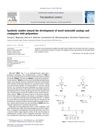
February 2010 in “Tetrahedron Letters” This article describes the synthesis of novel polyamine-modified minoxidil analogs and conjugates to potentially enhance minoxidil's biological activity, selectivity, and water solubility, but reports no new biological results.
 February 2026 in “Frontiers in Medicine”
 This study suggests that combining LMWHA solution and HCO might improve mild to moderate urinary incontinence in women with GSM, potentially offering benefits over HA therapy alone, but further research is needed.
April 2022 in “The Journal of Sexual Medicine” This study reports that simultaneous cystoscopy, electroejaculation, transurethral resection of ejaculatory ducts, and seminal vesiculography were safe and effective in diagnosing and treating concurrent hematospermia and anorgasmia.
 May 2026 in “Zenodo (CERN European Organization for Nuclear Research)”
 This research formulated and evaluated a multipurpose herbal liquid shampoo using plant-based extracts, which showed good cleansing action, medium foaming, and caused no skin irritation, suggesting it to be a safe alternative to synthetic shampoos.
4 citations
,
February 2015 in “PubMed” This study found that a minoxidil foamable emu oil emulsion significantly promoted hair growth in animals compared to a marketed 5% minoxidil solution, showing increased hair follicles in the anagenic phase.
 1 citations
,
December 2016 in “Vìsnik farmacìï”
1 citations
,
December 2016 in “Vìsnik farmacìï” This study found that a gel base with 0.2% potassium sorbate, 5% glycerin, and other specified components has optimal properties for use in telogen effluvium treatments.
December 2025 in “Molecular Pharmaceutics” In this study, researchers developed a coamorphous form of tadalafil and finasteride, showing improved solubility and dissolution in vitro, with results successfully translated in vivo in rats. They reported reasonable stability, suggesting this form could serve as a therapeutic alternative to the current marketed combination.
 30 citations
,
December 2014 in “Toxicological Research”
30 citations
,
December 2014 in “Toxicological Research” This study found that 3% peppermint oil significantly enhanced hair growth in C57BL/6 mice, showing increased dermal thickness, follicle number, and follicle depth compared to other treatments.
 24 citations
,
November 2018 in “International Journal of Molecular Sciences”
24 citations
,
November 2018 in “International Journal of Molecular Sciences” This review discusses ethosomes as lipid carriers that enhance drug penetration into deep skin layers and underscores the need for advanced research on their pharmaceutical applications, but it reports no clinical outcomes.
January 2022 in “Physics and Chemistry of Liquids” This study investigated the solubility of minoxidil in various solvent mixtures and applied multiple models to understand solute-solvent interactions and energy dynamics.
January 1996 in “Journal of Society of Cosmetic Chemists of Japan” This article reports preliminary findings on developing a stable emulsion-based semi-permanent hair dye by optimizing emulsification methods, surfactants, and conditioning ingredients.
In a study on mice, the addition of 100 µM zinc to green papaya extract significantly improved wound healing and hair regrowth compared to other treatments, without causing inflammation.