8 citations
,
November 2019 in “Clinical Science” This study found that higher levels of DHA from omega-3 fatty acids delayed inflammation resolution and impaired wound healing quality in both transgenic mice and wild-type mice supplemented with DHA.
4 citations
,
November 2024 in “Scientific Reports” This study found that bioconjugating 16-methylheptadecanoic acid to damaged human hair can mimic the protective function of the original 18-methyleicosanoic acid, effectively restoring both the hair's external structural integrity and its internal moisture balance.
 June 2010 in “Journal of Chemical Crystallography”
 This study determined the crystal structure and conformation of synthesized 17x-Acetoxy-pregn-4,6-diene-3,20-dione, revealing specific molecular interactions and structural details in an orthorhombic crystal system.
2 citations
,
January 2020 in “Evidence-based Complementary and Alternative Medicine” This study found that Hataedock may alleviate atopic dermatitis symptoms in mice by maintaining skin homeostasis and improving skin barrier formation through the endocannabinoid system.
 August 2002 in “Analytical Sciences”
 The document concludes that a compound with potential for treating prostate cancer and hair loss was successfully made and its detailed structure was confirmed.
8 citations
,
July 1977 in “Lipids” This study found a negative correlation between dietary monoene levels, particularly oleic acid, and the capacity for PGE₂ synthesis in rat skin, with the most severe skin issues noted in those fed Zephyr rapeseed oil.
 April 2024 in “Research Square (Research Square)”
 This study found that bioconjugating 16-methylheptadecanoic acid (16-MHA) to damaged hair can mimic the protective properties of 18-methyleicosanoic acid (18-MEA), restoring the hair's structural integrity and moisture homeostasis, even after washing.
January 2006 in “Benzina: Revista d'excepcions culturals” This study observed that new trienone compounds consistently showed higher 5alpha-reductase inhibitory activity compared to corresponding dienones across various biological models.
 8 citations
,
July 2018 in “Analytical sciences”
8 citations
,
July 2018 in “Analytical sciences” This study reported that derivatization with 5-butylpicolinic acid improved the sensitivity for detecting testosterone and DHT in saliva using LC-ESI-MS/MS, with minimal interference from the saliva matrix.
16 citations
,
November 2018 in “The journal of pain/Journal of pain” This study found that in a rat model, 14,15-EET may alleviate central poststroke pain by enhancing thalamic inhibition through neurosteroid signaling, potentially outperforming gabapentin in early-stage treatment.
 21 citations
,
January 2010 in “JOURNAL OF HEALTH SCIENCE”
21 citations
,
January 2010 in “JOURNAL OF HEALTH SCIENCE” This study found that abietic acid from pine resin more effectively inhibits testosterone 5α-reductase than several plant extracts, suggesting potential for treating androgen-dependent diseases.

In this study, researchers successfully synthesized a rigid 3a-arylhexahydropentalene-1,6-dione from the easily accessible starting material cyclopent-2-en-1-one, highlighting a structural motif common in natural products and pharmaceuticals.
June 2020 in “The journal of investigative dermatology/Journal of investigative dermatology” In this study, mice fed various high-fat diets showed changes in dermal white adipose tissue lipid composition, with decreases in essential omega-3 fatty acids, which are important for skin health.
14 citations
,
July 1977 in “PubMed” This study reported that a 19-year-old man's essential fatty acid deficiency was reversed with daily topical application of linoleic acid, improving clinical symptoms and normalizing certain fatty acid levels.
73 citations
,
July 1977 in “Archives of Dermatology” In this case report, applying linoleic acid topically reversed essential fatty acid deficiency and related skin symptoms in a patient receiving long-term fat-free intravenous nutrition.
 January 2017 in “Nasza Dermatologia Online”
 This study found that both new and old formulas of DCP for treating alopecia areata resulted in similar hair regrowth, but tolerance was significantly better with DCP in isopropanol.
64 citations
,
March 1984 in “Journal of steroid biochemistry/Journal of Steroid Biochemistry” In this study, cyproterone acetate combined with estradiol dramatically improved hirsutism symptoms and significantly reduced plasma testosterone and androstenedione levels in patients over periods of up to three years.
 January 2004 in “Analytical Sciences: X-ray Structure Analysis Online”
 This study reports the crystal structure of C28H32O5, revealing its monoclinic symmetry, unit-cell dimensions, and molecular conformation.
December 2022 in “Scientific Reports” This study found that caffeic acid amide derivative, compound 4, effectively inhibited steroid 5α-reductase type 1 in vitro, suggesting potential for development as a treatment for androgenic alopecia.
 13 citations
,
August 2007 in “Bioorganic & medicinal chemistry letters”
13 citations
,
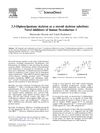
August 2007 in “Bioorganic & medicinal chemistry letters” This study developed a new competitive 5alpha-reductase inhibitor with an IC(50) of 0.84 microM using a novel chemical structure.
 April 2018 in “Journal of Investigative Dermatology”
 The researchers reported that nicotinic acid normalized excessive sebaceous lipogenesis without affecting basal lipogenesis and suggested potential anti-acne benefits.
 February 1999 in “Analytical Sciences”
 A new antiandrogen compound was made and its detailed three-dimensional shape was described.
1 citations
,
January 2012 in “Human health handbooks” This review discusses the essential role of linoleic acid in preventing deficiency symptoms and enhancing skin function, but notes that scientific knowledge on its potential therapeutic use for skin diseases remains limited.
 9 citations
,
November 2012 in “Biomolecules & therapeutics”
9 citations
,
November 2012 in “Biomolecules & therapeutics” This study found that diphlorethohydroxycarmalol significantly increased prostaglandin $E_2$ synthesis in HaCaT human keratinocytes by upregulating COX-1 and COX-2 expression, suggesting potential benefits from elevated $PGE_2$ production.
31 citations
,
July 2012 in “Journal of Lipid Research” This study found that the acyl-CoA binding protein is essential for the production of very long chain free fatty acids in the stratum corneum and maintaining normal epidermal barrier function in mice.
 18 citations
,
June 1998 in “Circulation”
18 citations
,
June 1998 in “Circulation” This letter discusses how outdated measurement technology may obscure evidence of essential fatty acid deficiency in low-fat diet patients, potentially leading to undiagnosed EFA insufficiencies related to heart disease.
 232 citations
,
June 1975 in “Journal of Steroid Biochemistry”
232 citations
,
June 1975 in “Journal of Steroid Biochemistry” In this study, a treatment regimen combining cyproterone acetate and ethinyl estradiol significantly improved acne and seborrhoea in most women after three months, but had varied effects on hirsutism and alopecia.
October 2017 in “Our Dermatology Online” This study reports that while DCP had similar treatment efficacy in propylene glycol and isopropanol for alopecia areata, the formulation in isopropanol was better tolerated.
 61 citations
,
September 2010 in “Fitoterapia”
61 citations
,
September 2010 in “Fitoterapia” This study found that the EtOAc extract of Tridax procumbens aerial parts significantly inhibited rat paw edema and COX enzyme activity, suggesting its potential anti-inflammatory properties.
September 2019 in “Journal of Investigative Dermatology” This study observed that PCE-DP may improve skin pigmentation by increasing epidermal turnover and inhibiting melanin uptake and inflammation in human epidermal keratinocytes.