 2 citations
,
May 1999 in “PubMed”
2 citations
,
May 1999 in “PubMed” This overview discusses the causes and evaluation of hyperandrogenism in Australian women and reviews current management strategies, without presenting new clinical results.
 2 citations
,
June 2024 in “Anti-Aging Eastern Europe”
2 citations
,
June 2024 in “Anti-Aging Eastern Europe” This review discusses the varied clinical presentations and management challenges of Polycystic Ovary Syndrome across different life stages, reporting no new clinical findings.
 42 citations
,
January 2006 in “Obstetrical & Gynecological Survey”
42 citations
,
January 2006 in “Obstetrical & Gynecological Survey” This article discusses the importance of recognizing and distinguishing polycystic ovary syndrome from similar endocrine disorders, and reports no new clinical results.
 18 citations
,
April 2016 in “Endocrinology and Metabolism Clinics of North America”
18 citations
,
April 2016 in “Endocrinology and Metabolism Clinics of North America” This review discusses the diagnostic challenges of PCOS in adolescents, noting that the persistence of hyperandrogenism and oligomenorrhea is required for diagnosis, while genetic studies suggest involvement of the hypothalamic-pituitary-ovarian axis.

This chapter discusses the role of orthognathic surgeons in facial feminization surgery, focusing on procedures such as forehead reduction and orbital rim contouring, but reports no new clinical results.

This study found that Botox® was most effective at a 25 U/ml concentration, while Dysport® and Neurobloc® were optimal at 100 U/ml for producing anhidrotic areas after injections.
 December 2021 in “THE THERAPIST (Journal of Therapies & Rehabilitation Sciences)”
 This review highlights the increased need for awareness about Polycystic Ovarian Syndrome (PCOS) and suggests that more research is necessary to understand its management through lifestyle modifications.
April 2026 in “ScholarWorks (Walden University)” This phenomenological study reported that Malaysian women with PCOS experience significant emotional, social, and physical challenges affecting their quality of life, highlighting the need for improved patient-centered care.
 24 citations
,
March 2003 in “Best Practice & Research Clinical Endocrinology & Metabolism”
24 citations
,
March 2003 in “Best Practice & Research Clinical Endocrinology & Metabolism” This review discusses female androgen insufficiency syndrome and reports no new clinical results; the authors suggest that testosterone replacement may alleviate symptoms like loss of libido and fatigue.
 2 citations
,
March 2011 in “Infertility”
2 citations
,
March 2011 in “Infertility” This review highlights that while lifestyle changes may help with many ovulatory disorders, oocyte donation is considered a viable option for patients who cannot undergo ovulation induction; it reports no new results.
 8 citations
,
August 2021 in “Fertility and Sterility”
8 citations
,
August 2021 in “Fertility and Sterility” This review discusses the potential risks of ejaculatory dysfunction associated with both medical and surgical treatments for lower urinary tract symptoms due to benign prostatic hyperplasia and their implications for male fertility, but it reports no new clinical results.
 September 2008 in “Fertility and Sterility”
 This study found that in female dogs, exposure to free fatty acids increased androgen production, suggesting a potential link to factors characteristic of polycystic ovary syndrome.
 May 1981 in “Inpharma (Balgowlah)”
 Medroxyprogesterone acetate improved sleep apnea symptoms in some obese patients.
51 citations
,
August 2012 in “Differentiation” This study found that penile and clitoral differentiation in mice is influenced by androgen exposure, with penile features developing postnatally requiring prenatal and ongoing androgen presence.
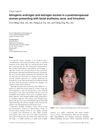 August 2009 in “International Journal of Dermatology”
 This case report describes a postmenopausal woman who experienced facial erythema, acne, and hirsutism due to excess androgen and estrogen levels.
 November 2018 in “International Journal of Current Pharmaceutical Research”
 This review discusses the causes, underlying mechanisms, diagnosis, and treatment strategies for polycystic ovary syndrome but reports no new clinical findings.
 6 citations
,
April 2018 in “Obstetrics, gynaecology and reproductive medicine”
6 citations
,
April 2018 in “Obstetrics, gynaecology and reproductive medicine” This article reviews the causes and management of hirsutism, reports no new results, and emphasizes that prolonged pharmaceutical treatment is necessary for improvement.
 October 2023 in “Journal of the Endocrine Society”
 This case report details a 73-year-old woman with significant hirsutism and hair loss linked to a rare ovarian Leydig cell tumor, which was resolved by bilateral salpingo-oophorectomy, normalizing her testosterone levels and addressing her symptoms.
17 citations
,
November 2017 in “Experimental physiology” This study found that in newborn rats, progesterone's effects on apnoea frequency are influenced by a sex-specific balance between its metabolite allopregnanolone and progesterone receptors.
 9 citations
,
May 2010 in “Gynecological Endocrinology”
9 citations
,
May 2010 in “Gynecological Endocrinology” In this study, echocardiographic measures of cardiac function in women with polycystic ovary syndrome were found to be similar to those of healthy women.
January 2025 in “Digital Commons - Gardner-Webb University (Gardner–Webb University)” This review discusses the adverse effects and societal influence of anabolic-androgenic steroid abuse, emphasizing its severe long-term health risks and calling for increased awareness and regulation; it reports no new results.
 4 citations
,
January 2014 in “Dermatology”
4 citations
,
January 2014 in “Dermatology” This case report details a woman with autoimmune primary ovarian insufficiency linked to hormonal contraception discontinuation, who achieved pregnancy through ovarian stimulation and in vitro fertilization despite typically low fertility in such conditions.
 December 2022 in “Cumhuriyet medical journal”
 This study observed that women with PCOS and no hyperandrogenism (group 3) had similar metabolic issues to those with classic PCOS, while those with no menstrual dysfunction (group 2) had milder issues related to lipid and insulin resistance.
 October 2022 in “The Egyptian Journal of Hospital Medicine”
 In this study, serum omentin-1 levels were higher in females with idiopathic hirsutism compared to those with hirsutism and polycystic ovary syndrome, suggesting it may help distinguish between these conditions.
June 2015 in “Obstetrics, gynaecology and reproductive medicine” This article reviews the causes, physiology, and treatment strategies for hirsutism in women, highlighting that effective management often requires addressing underlying conditions and may involve lifestyle changes and pharmacological interventions.
26 citations
,
August 2008 in “Clinical endocrinology” This paper summarizes proceedings from a PCOS Special Interest Group, reporting recent advances in the understanding of PCOS follicular abnormalities, associated cardiovascular risks, and dermatological issues, but does not present new clinical findings.
January 2012 in “The Journal of Qazvin University of Medical Sciences” This study examined the prevalence of polycystic ovary syndrome phenotypes among adolescent females in Shiraz, finding a notable presence of different symptoms and emphasizing the need for early detection.
 22 citations
,
January 2019 in “Endocrinology and metabolism”
22 citations
,
January 2019 in “Endocrinology and metabolism” This study found that among Filipino women, a modified Ferriman-Gallwey score of 7 or above indicates hirsutism and is significantly associated with elevated calculated free testosterone.
 1 citations
,
June 2023 in “Reproduction”
1 citations
,
June 2023 in “Reproduction” This review discusses the role of microglia in mediating prenatal androgen effects on the female brain, potentially contributing to PCOS development and neuroendocrine dysfunctions, but reports no new results.
 4 citations
,
September 2018 in “International journal of research - granthaalayah”
4 citations
,
September 2018 in “International journal of research - granthaalayah” This study reported that 12% of female Qassim University students had been diagnosed with PCOS, with misconceptions about the condition and treatments observed despite high awareness.