January 2006 in “International water power & dam construction” This report details a rare case of late-onset, bilateral nevus comedonicus on the eyelids in a 79-year-old man, discussing its clinical presentation and histopathologic features without presenting new research findings.
 August 2025 in “Stem Cell Reviews and Reports”
 This study demonstrated that adipose derived stem cells nanovesicles enhanced hair growth and reduced sebum secretion in androgenetic alopecia, showing effects comparable to minoxidil in laboratory and mouse models.
56 citations
,
October 2010 in “Pediatric Clinics of North America” This article discusses various types of epidermal nevi and associated syndromes but presents no new research findings.
December 2025 in “Journal of Drug Discovery and Therapeutics” This review discusses spanlastics, advanced elastic vesicles used in drug delivery to enhance bioavailability of poorly soluble drugs, offering improved stability and targeted delivery compared to traditional systems like liposomes and nanoparticles, thus reducing side effects and enhancing therapeutic outcomes.
 3 citations
,
September 2020 in “Molecular Brain”
3 citations
,
September 2020 in “Molecular Brain” This study reports that Elvitegravir, a drug currently approved for other uses, shows potential as a neuro- and mitoprotective agent by attenuating mitochondrial damage caused by NMDA receptors in primary mouse cortical neurons.
July 2024 in “Journal of Investigative Dermatology” This study found that systemic treatment with DS77754007, a KLK5 inhibitor, improved skin symptoms in a mouse model of Netherton Syndrome more effectively than certain antibody treatments, suggesting KLK5 inhibition as a promising therapeutic approach for this condition.
June 2022 in “Annals of Indian Academy of Neurology” This case report describes a rare association where herpes zoster infection may have triggered the first attack of NMOSD with systemic vasculitis in a patient, suggesting potential overlaps in immunopathogenesis.
March 2024 in “International journal of molecular sciences” In a mouse model study, transcutaneous auricular vagus nerve stimulation (taVNS) significantly reduced depigmentation in vitiligo, potentially through mechanisms that regulate oxidative stress and inflammation, indicating taVNS's promise as a therapeutic approach for this skin disorder.
January 2004 in “Headache” This study found that two-thirds of patients with persistent chronic daily headache showed significant improvement with divalproex sodium treatment, although common side effects included weight gain, tremor, hair loss, and nausea.
 6 citations
,
April 2013 in “International Journal of Dermatology”
6 citations
,
April 2013 in “International Journal of Dermatology” This correspondence describes the dermoscopic features of an osteonevus of Nanta but does not report new clinical findings.
This study suggests that bio-nanovesicles, such as exosomes and microvesicles, may enhance skin and hair follicle regeneration by modulating key signaling pathways, potentially overcoming the limitations of conventional treatments for alopecia and chronic skin diseases.
 May 2023 in “bioRxiv (Cold Spring Harbor Laboratory)”
 This study found that Cannabidivarin (CBDV) promotes neuronal survival, proliferation, and differentiation via TRPV1 activation but inhibits oligodendrocyte differentiation in postnatal neurogenesis.
49 citations
,
February 2025 in “Science Advances” This review discusses the potential of biomimetic synthetic vesicles to advance precision diagnostics and medicine by combining the beneficial properties of naturally occurring extracellular vesicles and synthetic nanoparticles, although no new clinical results are reported.
 1 citations
,
May 2023 in “International Journal of Applied Pharmaceutics”
1 citations
,
May 2023 in “International Journal of Applied Pharmaceutics” In this study, the researchers developed a novasome vesicle carrying bovine placenta extract, which demonstrated superior hair growth effects in rats compared to traditional minoxidil and PE-loaded liposomes, and showed good stability and physical characteristics over 90 days at 4°C.
5 citations
,
May 2022 in “Clinical & Experimental Metastasis” This study found that minoxidil and ranolazine, individually and in combination, reduced cellular invasiveness in hypoxic triple-negative breast cancer cell lines, suggesting potential anti-metastatic effects at clinically relevant doses.
 15 citations
,
February 2013 in “Pharmaceutical nanotechnology”
15 citations
,
February 2013 in “Pharmaceutical nanotechnology” This study found that invasomes enhanced the iontophoretic transdermal delivery of finasteride in rabbits, increasing AUC and T1/2 compared to oral suspension.
7 citations
,
December 2024 in “International Journal of Pharmaceutics” In this study, researchers developed a new method for producing dissolving microneedle array patches containing mesoporous silica nanoparticles, successfully confirming nanoparticle deposition and release in both ex vivo and in vivo models.
14 citations
,
November 2024 in “Pharmaceuticals” This study found that using spanlastics, a nano, surfactant-based drug delivery system, improved the bioavailability, drug release characteristics, and pharmacokinetic behavior of famotidine, a poorly soluble drug, by enhancing its dissolution and membrane permeation.
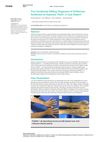
This study presents a rare instance of Netherton syndrome diagnosed incidentally in siblings of consanguineous parents, initially misdiagnosed as other skin conditions, emphasizing the need for careful evaluation in chronic skin cases to prevent misdiagnosis.
4 citations
,
March 2022 in “Cosmetics” This review suggests that a dual treatment approach using Nourella® cream with nano-encapsulated Retilex-A® and per-oral Vercilex® tablets may effectively improve skin thickness, elasticity, and overall rejuvenation in aging skin, as shown in interventional studies.
 June 2025 in “Journal of General-Procedural Dermatology & Venereology Indonesia”
 In this study, a 14-year-old boy with nevus sebaceous on his scalp underwent a three-stage serial excision, resulting in complete lesion removal with minimal scarring and no recurrence after six months.
 April 2026 in “International Journal of Clinical Case Reports and Reviews”
 In this preclinical study, researchers developed and evaluated a new non-invasive laser system designed for personalized medical use, showing its potential for chronic disease management and adjunctive fat reduction by offering enhanced treatment precision and adaptability over existing devices.
 February 2024 in “International Journal For Multidisciplinary Research”
 This review examines the advances in nanostructured lipid carriers for treating hyperpigmentation but presents no new clinical results; the authors highlight their potential benefits and applications.
 2 citations
,
December 2019 in “Cureus”
2 citations
,
December 2019 in “Cureus” This report describes a case of secondary cutis verticis gyrata due to a cerebriform intradermal nevus, highlighting clinical management and screening guidelines.
 34 citations
,
October 2021 in “Scientific Reports”
34 citations
,
October 2021 in “Scientific Reports” This study found that nobiletin-loaded vesicles effectively restored skin condition in a mouse model of skin cancer, suggesting they are a promising treatment delivery system.
5 citations
,
May 2024 in “Journal of Cosmetic Dermatology” In this study, treatment with cell-derived nanovesicles from hair follicle mesenchymal stem cells improved photoaging signs in UVB-exposed mice and human dermal fibroblasts by reducing oxidative stress, enhancing cell proliferation, and promoting extracellular matrix production.
6 citations
,
December 2021 in “Journal of Cancer Research and Therapeutics” In this study, induction nab-paclitaxel plus cisplatin, combined with nimotuzumab and IMRT, followed by S-1 adjuvant chemotherapy, showed excellent survival benefits with tolerable toxicities for stage N3 nasopharyngeal carcinoma patients.

This case study indicates that older patients with NMOSD may show favorable clinical improvements with aggressive treatment, even when the intervention is initiated later in the disease course.
 72 citations
,
December 2012 in “Expert Opinion on Drug Delivery”
72 citations
,
December 2012 in “Expert Opinion on Drug Delivery” This review discusses niosomes' increasing popularity in dermatology for topical drug delivery due to their ability to enhance drug penetration, provide sustained release, and carry various drugs, while reporting no new clinical findings.
January 2016 in “Munich Personal RePEc Archive (Ludwig Maximilian University of Munich)” This study demonstrated that a light-activated RNAi approach using hollow gold nanoshells effectively targets human prostate cancer cells with reduced off-target toxicity and material use compared to standard methods.