 31 citations
,
February 2014 in “Inflammation Research”
31 citations
,
February 2014 in “Inflammation Research” This study found that reduced expression of CD200R1 on monocyte-derived macrophages in rheumatoid arthritis patients was significantly associated with higher disease severity and an imbalance in Th17/Treg cells.
September 2025 in “e-space (Manchester Metropolitan University)” This study found that testosterone and its metabolite DHT reduced macrophage-mediated phagocytosis of bacteria like MRSA and P. aeruginosa in vitro, and blocking testosterone's conversion to DHT improved bacterial clearance, suggesting potential therapeutic strategies for combating wound infections in the elderly.
 September 2025 in “Deleted Journal”
 This study found that in vitro environments simulating testosterone levels in elderly males, testosterone and its metabolite DHT significantly reduced macrophages' ability to phagocytize MRSA and Pseudomonas aeruginosa, suggesting AR manipulation and inhibiting testosterone-DHT conversion might help fight wound infections in the elderly.
November 2025 in “Wound Repair and Regeneration” This review highlights single-cell sequencing's role in understanding macrophages' diverse functions and subtypes in skin wound healing, emphasizing macrophages' importance in tissue restoration and identifying key genes involved in the process.
 1 citations
,
February 2022 in “Experimental Dermatology”
1 citations
,
February 2022 in “Experimental Dermatology” This study found that the secretory profiles of adipose-derived stem cells vary between balding and non-balding scalp areas in androgenetic alopecia patients, suggesting involvement of angiogenic and inflammatory processes in the condition's development.
This study found that adipose derived stem cells in areas of alopecia in patients with androgenetic alopecia showed different levels of various signaling proteins compared to other scalp and periumbilical regions.
1 citations
,
January 2025 in “Clinical Cosmetic and Investigational Dermatology” This study found that specific inflammatory factors, including decreased SCF, MIP-1β, and MCP-1, and increased SDF-1α and HGF, have causal relationships with rosacea, highlighting potential targets for further research into disease mechanisms.
 1 citations
,
March 2023 in “Aggregate”
1 citations
,
March 2023 in “Aggregate” In this study, a hydrogel derived from Andrias davidianus secretion, combined with micronized amnion, promoted skin regeneration and achieved scarless healing in rats, suggesting potential for clinical use.
 130 citations
,
September 2018 in “Cell Reports”
130 citations
,
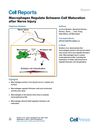
September 2018 in “Cell Reports” This study found that macrophages play a crucial role in nerve regeneration by regulating Schwann cell dynamics and remyelination, with Gas6 identified as a key factor in this process.
 3 citations
,
August 2024
3 citations
,
August 2024 In this study, researchers using single nuclei RNA-sequencing found that fibroblasts in deeper layers of mouse skin expressed higher levels of pro-inflammatory genes post-wounding compared to other cells, highlighting their significant role in early inflammation and tissue repair processes.

This study found that supraphysiological and physiological androgen levels inhibited U937 macrophages' phagocytosis of MRSA compared to untreated controls, but AR antagonism reversed this effect, suggesting targeting AR or using 5alpha-reductase inhibitors might aid bacterial clearance in elderly males' chronic wounds.
5 citations
,
January 2004 This paper describes the cellular and molecular processes involved in dermal tissue repair and reports no new experimental results.
53 citations
,
November 2014 in “International Journal of Oncology” This study found that wedelolactone, a natural compound from plants, inhibited breast cancer-mediated osteoclast differentiation and activity in vitro, suggesting its potential as a therapy for bone destruction in breast cancer bone metastasis.
 187 citations
,
April 2019 in “npj Regenerative Medicine”
187 citations
,
April 2019 in “npj Regenerative Medicine” This study found that hMSC secretomes from umbilical cord Wharton's jelly had the most potent angiogenic effects, whereas those from adipose tissue demonstrated the weakest angiogenic potential.
 18 citations
,
May 2018 in “International Journal of Molecular Sciences”
18 citations
,
May 2018 in “International Journal of Molecular Sciences” In this study, adipose-derived stem cells from superficial adipose tissue showed higher regenerative potential, and more macrophages were found in superficial than deep adipose tissue, potentially influenced by skin microbiota.
 2 citations
,
April 2023 in “Stem Cell Research & Therapy”
2 citations
,
April 2023 in “Stem Cell Research & Therapy” This study found that small extracellular vesicles derived from human adipose tissue could promote soft tissue regeneration and increase M2 macrophage polarization, suggesting a promising cell-free approach to tissue repair.
 March 2024 in “Advanced science”
 This study observed that a novel extracellular matrix hydrogel made from human fibroblast-derived matrix improved wound healing in animal models, showing significant effects such as hair follicle formation, reduced inflammation, enhanced pro-healing growth factor levels, and interaction with macrophages, compared to traditional collagen hydrogels.
 4 citations
,
September 2023 in “Stem cell research & therapy”
4 citations
,
September 2023 in “Stem cell research & therapy” In this study, umbilical cord mesenchymal stem cell-derived apoptotic extracellular vesicles were found to improve wound healing in type 2 diabetic mice by inhibiting macrophage pyroptosis and reducing oxidative stress levels.
 19 citations
,
May 2020 in “Cells”
19 citations
,
May 2020 in “Cells” This study found that 5% primed conditioned medium from human umbilical cord blood-derived mesenchymal stromal cells significantly improved hair density, thickness, and growth rate in patients with androgenetic alopecia.
39 citations
,
April 2023 in “Science Advances” This study identified that bone marrow-derived CD34+ cells act as fibroblast progenitors to enhance tissue regeneration in ischemic limbs by promoting angiogenesis through interactions with macrophages.
 610 citations
,
April 2014 in “Nature Reviews Immunology”
610 citations
,
April 2014 in “Nature Reviews Immunology” This review discusses the complex mechanisms regulating skin immunity to balance host defense with inflammation, but reports no new findings.
53 citations
,
April 2016 in “Stem cell research & therapy” This study reports that LL-37 treatment enhances cell proliferation, migration, and secretion of regenerative factors in adipose-derived stem cells, potentially promoting hair growth in vivo.
 16 citations
,
January 2020 in “Diabetes”
16 citations
,
January 2020 in “Diabetes” In this study using diabetic rat models, the combination of AMD3100 and low-dose FK506 reduced wound healing time and improved microcirculation in diabetic foot ulcers, indicating a promising new systemic therapy.
 October 2023 in “bioRxiv (Cold Spring Harbor Laboratory)”
 This study constructed a comprehensive atlas of prenatal human skin, revealing that innate immune cells, such as macrophages, play a crucial role in skin morphogenesis by interacting with non-immune cells, influencing hair follicle formation and angiogenesis beyond their traditional immune functions.
101 citations
,
July 1998 in “Journal of Investigative Dermatology” This study found that UV exposure in human skin induces IL-10 production by macrophages, while Langerhans cells are depleted and their IL-12 production is downregulated.
 October 2025 in “Materials Today Bio”
 In this study, researchers developed an axolotl skin-derived extracellular matrix scaffold that enhanced wound healing in mice by promoting skin regeneration and reducing fibrosis, offering potential as a regenerative biomaterial for clinical use.
 January 2014 in “Durham e-Theses (Durham University)”
 In this study, the activation of Notch1 signaling in keratinocytes was found to play a key role in recruiting immune cells and facilitating skin repair after injury.
 124 citations
,
June 2020 in “Cell Stem Cell”
124 citations
,
June 2020 in “Cell Stem Cell” This study found that in mice, dermal adipocytes initiate inflammation and aid repair after skin injury by releasing lipids, suggesting a role in managing inflammatory diseases and impaired wound healing.
7 citations
,
January 2022 in “Biomedicines” In this study, hair follicle-derived mesenchymal stromal cells showed potential for immunomodulation, with equivalent or superior responses compared to those from adipose tissue, suggesting a promising alternative cell source.
 May 2025 in “International Journal of Molecular Sciences”
 This study found that exosomes and secretome derived from rat hair follicle stem cells show promising potential for wound healing and tissue repair, demonstrating significant wound closure and suggesting their broader applicability in regenerative medicine.