July 2025 in “Pigment International” This case report highlights a 40-year-old Indian male diagnosed with follicular vitiligo, presenting as graying hair and depigmented patches, and emphasizes the importance of distinguishing this rare variant from similar conditions like alopecia areata due to its unique presentation.
June 2024 in “British Journal of Dermatology” This study reported a gap between podiatrists' frequent encounters with suspicious pigmented foot lesions and their lack of formal melanoma detection training, highlighting a need for improved education and referral pathways.
 67 citations
,
August 2013 in “International Journal of Cosmetic Science”
67 citations
,
August 2013 in “International Journal of Cosmetic Science” This review discusses the role of oxidative stress in hair greying and suggests that understanding melanocyte susceptibility at different follicular locations may help develop therapies for preventing and reversing the process; it reports no new experimental results.
81 citations
,
January 1987 in “Current topics in developmental biology/Current Topics in Developmental Biology” Keratins change and are modified differently in skin layers and body parts.
 94 citations
,
October 2017 in “International Journal of Dermatology”
94 citations
,
October 2017 in “International Journal of Dermatology” This narrative review discusses lichen planus pigmentosus, including its variations, associated triggers, and management strategies, but reports no new clinical results.
72 citations
,
November 1997 in “Clinics in dermatology” This review discusses the potential autoimmune etiology of vitiligo and its association with other autoimmune diseases but provides no new research findings; the authors highlight various treatment options.
7 citations
,
October 2011 in “BMC Cancer” This study found no evidence that HDGF expression transforms melanocytes into tumors in a mouse model, although it may play a role in cell differentiation and tumor progression.
12 citations
,
August 1988 in “Histopathology” This case report describes a giant pigmented tumor of the scalp in a 47-year-old woman and suggests a possible dual origin involving neural crest differentiation.
22 citations
,
June 1977 in “Postgraduate Medicine” This review discusses how certain skin disorders, pigmentation issues, and hair problems are more common in black individuals than white individuals and does not report new clinical results.

This study suggests that melatonin may promote hair growth properties by activating the AKT/GSK3β/β-catenin signaling pathway in dermal papilla cells.
 27 citations
,
June 2023 in “Nature”
27 citations
,
June 2023 in “Nature” In this study using genetic mouse models, researchers discovered that senescent melanocytes in nevi secrete osteopontin, which activates hair stem cells, enhancing hair growth; this process is mirrored in human hairy nevi, suggesting a potential therapeutic target for regenerative disorders.
January 2010 in “Pharmacy Today” This study found that collagen and its compound may have antioxidant effects and reduce melanin in guinea pigs, while increasing skin moisture and hydroxyproline content in mice.
130 citations
,
January 2000 in “Nature biotechnology”  31 citations
,
April 2019 in “Journal of Cutaneous Pathology”
31 citations
,
April 2019 in “Journal of Cutaneous Pathology” This review discusses the changes in hair follicles with aging, particularly graying due to decreased melanocyte activity, and suggests potential for hair repigmentation under certain conditions, but reports no new results.
24 citations
,
January 2009 in “International Journal of Trichology” This review discusses the mechanisms by which sunlight exposure aggravates hair aging and highlights the role of hair pigments in providing photochemical protection, reporting no new results.
 3 citations
,
December 2016 in “Journal of epidemiological research”
3 citations
,
December 2016 in “Journal of epidemiological research” In this study, only European-ancestry females showed a linear increase in cutaneous malignant melanoma risk with age, potentially due to the loss of HPV-infected androgenic follicles after menopause.
January 2022 in “SSRN Electronic Journal” This study reports that aging in mice leads to curved hair follicles and an increase in white hairs, potentially due to changes in keratinocyte and melanocyte stem cells.
 21 citations
,
February 2013 in “Clinics in Dermatology”
21 citations
,
February 2013 in “Clinics in Dermatology” This review discusses recent developments in targeted melanoma therapies, including BRAF/MEK/ERK pathway inhibitors and challenges like resistance and skin toxicities, but reports no new clinical results.
 March 2026 in “International Journal of Dermatology Venereology and Leprosy Sciences”
 This study describes vitiligo as an autoimmune disease marked by depigmented skin and mucosal patches, and reviews its complex pathogenesis and diagnostic features. Treatment aims for disease control and repigmentation through various topical and systemic therapies, phototherapy, and surgical options, emphasizing personalized, multimodal approaches.
 July 2002 in “Dermatologic Surgery”
 This study found that temporary or permanent leukotrichia may occur after intense pulsed light therapy for hair removal, likely due to differing thermal effects on melanocytes and hair follicle cells.
25 citations
,
August 2015 in “Molecules” This study found that mimosine dipeptide enantiomers inhibit melanogenesis and cyclooxygenase enzymes in B16F10 melanoma cells, suggesting potential for treating skin hyperpigmentation and inflammation.
 21 citations
,
September 2015 in “Journal of the European Academy of Dermatology and Venereology”
21 citations
,
September 2015 in “Journal of the European Academy of Dermatology and Venereology” This review examines the diagnostic significance of yellow and orange colors in skin lesions and concludes that their role is often underrepresented in the literature.
January 2012 in “한국미용학회지” This study found that gene expression changes in hair bulb cells are linked to graying hair, affecting processes like melanogenesis and cell-cell interaction.
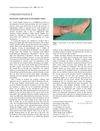 May 2002 in “British Journal of Dermatology”
 A pregnant woman's skin condition improved after giving birth, possibly due to high estrogen levels during pregnancy.
15 citations
,
January 2013 in “Dermatologic Surgery” This study observed that white hair follicles in vitiligo patients may repigment following epithelial grafting and phototherapy, suggesting potential cosmetic improvements in vitiligo treatment.
February 2022 in “Brazilian Journal of Health Review” In this study, researchers found that among women with frontal fibrosing alopecia and hyperpigmented facial lesions, most cases were diagnosed with lichen planus pigmentosus, while some were identified as melasma or drug-induced.
 31 citations
,
January 2011 in “Dermato-endocrinology”
31 citations
,
January 2011 in “Dermato-endocrinology” This review updates the protective effects and molecular mechanisms of melatonin against ultraviolet-induced damage in human skin, reporting no new clinical findings.
14 citations
,
December 2009 in “Der Hautarzt” 4 citations
,
January 1982 in “Neuroendocrinology” This study found that pimozide, d-butaclamol, and pituitary pars intermedia grafts darken hair color in agouti C3H Avy mice, suggesting dopaminergic inhibition influences peptide-controlled hair color cycling.
June 2024 in “Lasers in Surgery and Medicine” This study found that the novel dermal cooling system was an effective and safe treatment for reducing pigmentation in benign pigmented lesions in Asian patients, with minimal side effects.