 7 citations
,
June 2021 in “Cell Proliferation”
7 citations
,
June 2021 in “Cell Proliferation” This study found that direct interactions between human dermal papilla cells and melanocytes under low oxygen conditions improved cell functions and could be important for hair regeneration efforts.
18 citations
,
March 2009 in “Skin pharmacology and physiology” This study found that sunlight exposure causes significant structural and chemical damage to hair, including cuticle loss, cortex damage, and discoloration, with water playing a major role in discoloration of brown hair.
 1 citations
,
September 2024 in “Quality in Sport”
1 citations
,
September 2024 in “Quality in Sport” This review explores the complex biological process of hair graying, highlighting oxidative stress, genetic factors, and interventions like antioxidants and genetic therapy as key aspects affecting the preservation of hair pigmentation.
 18 citations
,
January 2020 in “Ecology and evolution”
18 citations
,
January 2020 in “Ecology and evolution” This study analyzed gene expression changes during the autumn coat color change in mountain hares and found conserved gene regulation with snowshoe hares, highlighting its role in seasonal camouflage adaptation.
 3 citations
,
May 2022 in “The journal of investigative dermatology/Journal of investigative dermatology”
3 citations
,
May 2022 in “The journal of investigative dermatology/Journal of investigative dermatology” In this study, researchers found that skin pigmentation alterations in a mouse model of Carney complex may be caused by specific dermal fibroblasts promoting melanogenic signaling.
 January 2014 in “Pathology”
 Early subungual melanoma might be treated with less aggressive surgery because it invades the skin under the nail more slowly.
December 2021 in “Figshare” This review discusses recent advancements in targeted therapies for vitiligo, including JAK inhibitors and mesenchymal stem cells, and highlights the need for further research.
June 2025 in “Academic Medical Journal” This review discusses the complex etiology and pathogenesis of vitiligo, noting challenges in treatment effectiveness and relapse, and reports no new clinical results.
 October 2023 in “Medical records-international medical journal”
 In this study, researchers sought to explore whether there is a correlation between melasma and ABO/Rh blood types, using data from 100 patients with melasma and 1000 healthy controls.
73 citations
,
December 2015 in “Nature Genetics” This study found that the Dun camouflage color in horses is due to TBX3 expression, which causes uneven pigment deposition, whereas non-dun coat colors result from regulatory mutations affecting TBX3 expression.
 August 2026 in “Journal of Personalized Medicine”
 This narrative review proposes the concept of "repigmentation competence" for vitiligo lesions, suggesting that therapy responses are influenced by lesion-specific biological factors related to immune, regenerative, regulatory, and microenvironmental processes, and highlights the emerging role of combination therapies targeting these pathways.
 18 citations
,
September 2016 in “International Journal of Molecular Sciences”
18 citations
,
September 2016 in “International Journal of Molecular Sciences” This study reports that PDRN, commonly used for wound healing, may also have anti-melanogenesis and potential skin whitening effects in both experimental models and clinical settings.
 July 2026 in “International Journal of Stem Cells”
 This review highlights that genetically engineered mouse models are valuable for studying melanoma development and progression by mimicking human skin biology, revealing key signaling pathways and molecular mechanisms that contribute to melanoma heterogeneity and offering insights into potential therapeutic targets.
82 citations
,
March 2013 in “PLoS ONE” In this study, vemurafenib was associated with a wide range of cutaneous side effects in patients with advanced melanoma, including photosensitivity and various skin and hair changes, necessitating regular dermatological management.
August 2021 in “Journal of Investigative Dermatology” In this study, Rahim et al. found that keratinocyte differentiation requires changes in polyamine ratios mediated by AMD1, suggesting that targeting polyamine availability could be useful for treating hyperproliferative skin disorders.
 February 2025 in “International Journal of Molecular Sciences”
 In this study, researchers identified significant differences in lipid composition between grey and black hair follicles in women with type 2 diabetes and healthy controls, suggesting these lipids may contribute to the production of grey hair and may offer targets for anti-grey-hair treatments.
1 citations
,
January 2022 in “Book Publisher International (a part of SCIENCEDOMAIN International)” This review concludes that exogenous hydrogen peroxide, rather than UV light, is likely the key factor in the development of cutaneous melanoma in swimmers, as it can penetrate water-submerged hair follicles.
 2 citations
,
January 2019 in “Springer eBooks”
2 citations
,
January 2019 in “Springer eBooks” This review discusses segmental vitiligo as part of the vitiligo clinical spectrum and highlights its role as a model for studying repigmentation, but reports no new clinical results.
 29 citations
,
January 2013 in “International Journal of Medical Sciences”
29 citations
,
January 2013 in “International Journal of Medical Sciences” This study found that Wnt10b promotes melanocyte maturation and pigmentation in the hair bulbs of mice by activating canonical Wnt signaling.
 July 2025 in “International Journal of Dermatology Venereology and Leprosy Sciences”
 This review explores the potential of microneedling as a drug delivery system for treating melasma, focusing on its mechanisms, safety, efficacy, and clinical advantages over conventional therapies like hydroquinone and lasers.
 1 citations
,
May 2018 in “International Journal of Molecular Biology Open Access”
1 citations
,
May 2018 in “International Journal of Molecular Biology Open Access” This manuscript suggests that exogenous hydrogen peroxide is a primary risk factor for higher incidence of cutaneous melanoma in swimmers, with UV radiation playing a secondary role.
4 citations
,
May 2022 in “PeerJ” This study suggests that melatonin promotes hair growth-related properties in DP cells by activating the AKT/GSK3β/β-catenin signaling pathway through melatonin receptors in a 3D spheroid culture system.
 June 2025 in “Cell Regeneration”
 In this study, Dguok deficiency in mice led to premature hair greying due to a loss of melanocyte stem cells and mature melanocytes, with increased oxidative stress and cell death; treatment with an antioxidant mitigated these effects, suggesting DGUOK's importance in hair pigmentation maintenance.
10 citations
,
October 2023 in “Indian Dermatology Online Journal” In this study, the researchers highlighted the availability of new topical and systemic agents with varied mechanisms for treatment, emphasizing that the choice of agent should be tailored to individual needs and the options available in different countries.
 3 citations
,
January 2019 in “Journal of Dermatology”
3 citations
,
January 2019 in “Journal of Dermatology” This letter to the editor discusses the natural course of epidermolysis bullosa simplex with mottled pigmentation in a Japanese family but does not present new clinical results.
 9 citations
,
May 2013 in “JAMA Dermatology”
9 citations
,
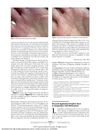
May 2013 in “JAMA Dermatology” This report documents two cases of eruptive nevi occurring in the skin folds of children with Langerhans cell histiocytosis.
 January 2007 in “Journal of the American Academy of Dermatology”
 A 73-year-old man's grey-white hair turned dark brown after eczema treatment.
2 citations
,
January 1999 in “Dermatology” 8 citations
,
July 2001 in “JEADV. Journal of the European Academy of Dermatology and Venereology/Journal of the European Academy of Dermatology and Venereology” This review summarizes the historical and evolving treatments for vitiligo, highlighting that combining medical and surgical approaches may enhance repigmentation outcomes, though more research and new protocols are needed.
4 citations
,
October 2021 in “International Journal of Cosmetic Science” This study found that C. japonicum flower extract significantly increased melanin content and cellular activity in human melanocytes and may improve follicular depigmentation and vitiligo through cAMP signaling.