 26 citations
,
February 2011 in “Journal of Plastic Reconstructive and Aesthetic Surgery”
26 citations
,
February 2011 in “Journal of Plastic Reconstructive and Aesthetic Surgery” Technique effectively treats deformities, achieves re-pigmentation, and releases scar contractures.

In this case study, an 80-year-old woman developed lichen planus pigmentosus inversus after receiving multiple intra-articular injections of a homeopathic preparation, suggesting a possible link, though causality remains speculative.
 4 citations
,
February 2018 in “Journal of Investigative Dermatology”
4 citations
,
February 2018 in “Journal of Investigative Dermatology” This study suggests that thermal imaging may aid in diagnosing cellulitis, potentially improving patient care, although its applicability to certain cases requires further investigation.
 1 citations
,
June 2001 in “Annals of Internal Medicine”
1 citations
,
June 2001 in “Annals of Internal Medicine” This letter to the editor discusses data from a study on troglitazone for lipodystrophy, noting significant increases in subcutaneous fat without dietary changes.
 132 citations
,
January 2017 in “International Journal of Molecular Sciences”
132 citations
,
January 2017 in “International Journal of Molecular Sciences” This review explores how adipose-derived stem cells contribute to skin homeostasis and highlights recent advances in their clinical applications in dermatology, but it reports no new clinical results.

In this study, researchers used a mouse model to identify an adipocyte-to-fibroblast conversion pathway that promotes mast-cell recruitment and dermal fibrosis in atopic dermatitis, suggesting a potential therapeutic approach to block this process and reduce inflammation and fibrosis.
1 citations
,
July 2025 in “Journal of Cosmetic Dermatology” This case report suggests that exosome therapy may offer a promising alternative treatment for lichen planopilaris, showing potential benefits in hair regrowth, reduced inflammation, and improved scalp condition, but further studies are needed to confirm long-term efficacy and safety.
12 citations
,
August 2007 in “Human Molecular Genetics” This study found that Lymphotoxin-beta primarily influences periderm differentiation, impacting epidermal and hair follicle differentiation at later stages.
15 citations
,
February 2021 in “Frontiers in immunology” This review discusses leptin's regulatory roles in the progression of various dermatological diseases and reports no new clinical results, highlighting a complex relationship still under investigation.
297 citations
,
December 2005 in “Journal of controlled release” This study found that POD-loaded solid lipid nanoparticles using 0.5% poloxamer 188 and 1.5% soybean lecithin (P-SLN) improved epidermal targeting and POD accumulation in porcine skin compared to traditional tincture.
 2 citations
,
January 2018
2 citations
,
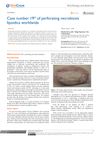
January 2018 This article reports the first case of perforating necrobiosis lipoidica in Colombia and the 19th case worldwide in diabetic patients.
1 citations
,
May 2024 in “PubMed” This study highlights the insufficient research on how dermal adipose tissue regulates the hair cycle through signaling molecules, noting that further investigation is necessary to understand its specific mechanisms.
37 citations
,
November 2019 in “Journal of Microbiology and Biotechnology” This study found that loliolide enhanced hair growth-related functions in 3D dermal papilla spheroids by activating AKT/β-catenin signaling pathways, with increased expression of related growth factors and genes.
 4 citations
,
September 2017 in “Dermatologic surgery”
4 citations
,
September 2017 in “Dermatologic surgery” This article contains no new research findings or results.
 18 citations
,
June 2018 in “Journal of The American Academy of Dermatology”
18 citations
,
June 2018 in “Journal of The American Academy of Dermatology” This review found that existing studies on adipose tissue for scarring, wound healing, and hair growth show some positive outcomes, but the evidence is insufficient to change current dermatological practices.
July 2025 in “Journal of Investigative Dermatology” Discoid lupus erythematosus involves immune activation and fibrosis around hair follicles, with shared pathways across humans, dogs, and mice, suggesting potential treatments for both humans and animals.
 April 2023 in “Digital Library of Theses and Dissertations (Universidade de São Paulo)”
 This study concluded that mesenchymal stem cells from adipose tissue harvested using laser-assisted liposuction with selective photo-stimulation are as effective and low-risk for cell therapy as those obtained through conventional liposuction, based on their differentiation potential, cellular proliferation, and cytokine expression.

In this case report, a 59-year-old woman experienced burning sensations and developed atrophic, hypopigmented, ivory papules and plaques on her palms and soles over three years, which worsened after walking for extended periods.
 April 2016 in “Journal of Investigative Dermatology”
 This study found that Pdgfα signaling is crucial for maintaining dermal adipose tissue in mice by initiating dermal adipocyte stem cell proliferation, with implications for age-related skin defects.
 9 citations
,
September 2006 in “Veterinary pathology”
9 citations
,
September 2006 in “Veterinary pathology” This case report describes a dog diagnosed with discoid lupus erythematosus, presenting unusually with perianal rather than facial lesions, which resolved after corticosteroid treatment.
13 citations
,
March 2008 in “Journal of the European Academy of Dermatology and Venereology” This article reports a case of linear lichen planus developing along the lines of Blaschko during intramuscular triamcinolone acetonide therapy for alopecia areata multiplex.
January 2026 in “Journal of Cosmetic Dermatology” This study reviewed evidence suggesting that the loss of dermal white adipose tissue (dWAT) during menopause may be linked to decreased estrogen levels, potentially affecting skin health, and discussed non-hormonal treatments, like magnolol, that might help restore dWAT and improve menopausal skin changes.
 October 2015 in “Reactions Weekly”
 A woman got a scalp condition from using latanoprost, but it improved after stopping the drug and starting other treatments.
January 2005 in “Life sciences” This review discusses the pathophysiologic role of lysophosphatidic acid in the skin and reports no clinical results, suggesting pharmacological inhibition as a potential treatment for various skin disorders.
25 citations
,
January 1999 in “Journal of cutaneous laser therapy” This report describes an African-American woman with pseudofolliculitis barbae, hirsutism, and associated postinflammatory hyperpigmentation who was effectively treated with a diode laser.
 14 citations
,
January 2012 in “International Journal of Dermatology”
14 citations
,
January 2012 in “International Journal of Dermatology” This case report describes oleoma on the thighs and buttocks appearing two years after an injection for cellulite treatment, suggesting the need for more research to ensure the procedure's safety and efficacy.
November 2025 in “Scientia Pharmaceutica” This review highlights that injectable biostimulatory agents like poly-L-lactic acid, polycaprolactone, and calcium hydroxyapatite are effective in regenerative aesthetics by enhancing collagen production, stimulating adipogenesis, and improving dermal quality, although further research is needed to standardize protocols and confirm long-term safety and efficacy.
31 citations
,
November 2020 in “International journal of molecular sciences” This review discusses the role of adipokines in skin physiology and pathology, suggesting they may influence skin conditions and diseases through interaction with various skin cell types, but reports no new clinical results.
 June 2024 in “Journal of Allergy and Clinical Immunology”
 In this study, thymic stromal lymphopoietin (TSLP) induced IL-4/IL-13 from T cells, prompting sebum secretion and adipose loss, suggesting IL-4/IL-13 may affect skin barrier function in atopic dermatitis.
 26 citations
,
March 2014 in “International journal of pharmaceutics”
26 citations
,
March 2014 in “International journal of pharmaceutics” This study confirmed that the novel solid lipid microparticle formulation of adapalene demonstrated follicular penetration potential and targeted particle erosion in sebum in in vitro tests.