 July 2025 in “Journal of Ayurveda and Holistic medicine.”
 In this study, researchers reported significant improvements in hair follicle diameter, thickness, and reduced hair root gap after treating male pattern hair loss with a regimen of Prachanna, Chitrakadi lepa, and Jeevamrutham lehyam over four months.
29 citations
,
March 2016 in “Dermatologic therapy” In this study, a patient with lichen planopillaris experienced complete resolution of itching and hair shedding following treatment with a new platelet-rich plasma regimen, marking the first reported success in this context.
 October 2022 in “International journal of research and review”
 This case report suggests that intracanal medication with calcium hydroxide paste may alleviate colitis symptoms triggered by Formacresol used during dental retreatment in a 46-year-old patient.
July 2024 in “Skin Appendage Disorders” This review discusses the role of trichoscopy in diagnosing lichen planopilaris and reports no clinical results; the authors emphasize early recognition to potentially prevent permanent scarring.
This case study reports that a 35-year-old woman developed nonscarring alopecia following the cosmetic use of poly-L-lactic acid on her face and hairline.
 94 citations
,
October 2017 in “International Journal of Dermatology”
94 citations
,
October 2017 in “International Journal of Dermatology” This narrative review discusses lichen planus pigmentosus, including its variations, associated triggers, and management strategies, but reports no new clinical results.
October 2007 in “Obstetrical & Gynecological Survey” The researchers reported that low-dose methotrexate, in combination with surgical dilatation and local treatments, may improve symptoms in patients with severe stenosing vulvovaginal lichen planus.
4 citations
,
January 2022 in “Dermatology Research and Practice” In this study, methotrexate therapy with or without corticosteroids showed similar efficacy and safety in treating patients with lichen planopilaris, with no significant differences in the primary outcome or adverse effects between the two groups.
 7 citations
,
February 2016 in “TANG [HUMANITAS MEDICINE]”
7 citations
,
February 2016 in “TANG [HUMANITAS MEDICINE]” This study reports that the homeopathic drugs Lycopodium clavatum and Calcarea carbonica showed significant ameliorative effects on polycystic ovarian syndrome symptoms, with some differences in individual symptom response.
 October 2022 in “CRC Press eBooks”
 This review explores the botany, traditional uses, phytochemicals, and pharmacological activities of Cinchona pubescens but presents no new clinical findings.
 January 2026 in “Zenodo (CERN European Organization for Nuclear Research)”
 This study observed that Prachhanna followed by Guñjā lepa was more effective than Platelet-Rich Plasma therapy with Minoxidil 5% in promoting hair regrowth and reducing symptoms of Indralupta, showing greater reductions in hair loss and itching over a 45-day period.

In this case report, a 65-year-old woman with lichen planopilaris achieved stabilization of her condition through early recognition and systemic corticosteroid therapy, emphasizing the critical role of coordinated management between primary care and dermatology.
 August 2024 in “Journal of Clinical Medicine”
 This study evaluates the effectiveness of hydroxychloroquine in treating lichen planopilaris, suggesting varying success based on a real-life retrospective analysis.
This case report describes successful treatment of a 21-year-old patient with lichen planopilaris using keratolytic lotions, a combination of corticosteroids, salicylic acid, and tacrolimus cream, which stopped disease progression.
 May 2019 in “Asian Journal of Pharmaceutical and Clinical Research”
 This study found that the ethyl acetate and chloroform fractions of Eclipta prostrata Linn. exhibited significant anti-inflammatory activity in a carrageenan-induced paw edema model and showed notable anti-arthritic potential in a formaldehyde-induced arthritis model.
 5 citations
,
January 2014 in “Asian Journal of Chemistry”
5 citations
,
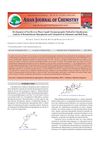
January 2014 in “Asian Journal of Chemistry” This study developed a simple and cost-effective chromatographic method for simultaneously analyzing betamethasone dipropionate and calcipotriol, achieving rapid separation within 7 minutes suitable for routine applications.
December 2020 in “Forum Dermatologicum” In this case report, a combination treatment of intralesional triamcinolone acetonide, oral acitretin, and topical clobetasol propionate showed effectiveness in reducing symptoms of Graham-Little-Piccardi-Lasseur syndrome in one patient over two months, with no new areas of hair loss observed.
 5 citations
,
June 2015 in “British Journal of Dermatology”
5 citations
,
June 2015 in “British Journal of Dermatology” This article discusses the role of lysophosphatidic acid-induced histamine release in generalized pruritus among patients with primary sclerosing cholangitis and reports no new clinical results.
15 citations
,
July 2009 in “Biomedical Chromatography” This study developed and validated a sensitive liquid chromatography–mass spectrometry method to measure aristolochic acid‐I in rat plasma, successfully applying it to pharmacokinetic research.
 6 citations
,
May 2022 in “Chemistry & biodiversity”
6 citations
,
May 2022 in “Chemistry & biodiversity” This study identified compounds from Laportea bulbifera with potential inhibitory effects on human steroid 5α-reductase 2, suggesting their application in treating benign prostatic hyperplasia.
 December 2022 in “Indian Journal of Animal Research”
 This study found that both fluoxetine and clomipramine are effective in treating psychogenic triggers of acral lick dermatitis in dogs, with fluoxetine leading to quicker recovery and lower recurrence rates, while clomipramine showed better overall recovery rates but was associated with fewer side effects.
1 citations
,
June 2023 in “Journal of Patchouli and Essential Oil Products” This literature review suggests that patchouli essential oil may help reduce eczema symptoms in infants and young children due to its anti-inflammatory, antimicrobial, and antioxidant properties, though it highlights the need for further standardized studies to confirm optimal use and safety.
 4 citations
,
January 2021 in “Postępy Dermatologii i Alergologii”
4 citations
,
January 2021 in “Postępy Dermatologii i Alergologii” This study found that hydroxychloroquine significantly reduced disease activity in women with frontal fibrosing alopecia and lichen planopilaris, particularly benefitting patients after 12 months of treatment.
 155 citations
,
June 2009 in “International Journal of Dermatology”
155 citations
,
June 2009 in “International Journal of Dermatology” This extensive review discusses the clinical manifestations, potential associations, and treatment approaches for lichen planus, but reports no new clinical results, highlighting gaps in evidence for therapeutic strategies.
 May 2015 in “Journal of The American Academy of Dermatology”
 Mycophenolate mofetil may improve symptoms and stop hair loss in Lichen planopilaris, but more research is needed.
June 2025 in “Healthy-Mu Journal” The optimized Cinchonine gel effectively fights acne bacteria and is safe for twice-daily use.
14 citations
,
June 2009 in “Journal of veterinary internal medicine” This study describes presumed albendazole toxicosis in alpacas, suggesting that repeated doses as low as 19 mg/kg can lead to severe neutropenia, enteropathy, and potentially death in this species.
3 citations
,
July 2022 in “Indian Journal of Dermatology” This report describes a case of acute localised exanthematous pustulosis in a 19-year-old boy after using amoxicillin-clavulanic acid, with new dermoscopic features identified.
January 2025 in “Dermatology Research and Practice” In this research, RNA expression analysis of scalp biopsies from lichen planopilaris patients revealed changes in specific genes after treatments with hydroxychloroquine, narrow band UVB, or low level laser light therapy, suggesting potential biomarkers and implicating M2 macrophages in the disease's immunopathogenesis.
 13 citations
,
January 2018 in “International Journal of Dermatology”
13 citations
,
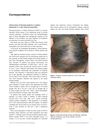
January 2018 in “International Journal of Dermatology” This clinical study on fibrosing alopecia in a pattern distribution among a Latin American population reports no new results but addresses this specific condition in its demographic context.