 13 citations
,
January 2018 in “International Journal of Dermatology”
13 citations
,
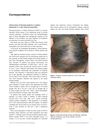
January 2018 in “International Journal of Dermatology” This clinical study on fibrosing alopecia in a pattern distribution among a Latin American population reports no new results but addresses this specific condition in its demographic context.
 52 citations
,
February 2006 in “Archives of Dermatology”
52 citations
,
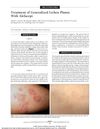
February 2006 in “Archives of Dermatology” This case report describes a 25-year-old woman with widespread lichen planus who did not respond to multiple systemic treatments, including antihistamines, hydroxychloroquine sulfate, and corticosteroids.
 February 2013 in “Journal of the American Academy of Dermatology”
 This case report found that intense focused skin tightening ultrasound reduced excessive underarm sweating by nearly 80% in two patients and was associated with temporary side effects like tenderness and redness.
 3 citations
,
September 2015 in “Journal of Vascular Surgery”
3 citations
,
September 2015 in “Journal of Vascular Surgery” This study found that chemical lumbar sympathectomy with 5% phenol effectively treated idiopathic livedo reticularis in most patients, offering a potential long-lasting solution with repeatable efficacy upon recurrence.
December 2013 in “Bőrgyógyászati és venerológiai szemle” This case report describes a 14-year-old boy who developed toxic epidermal necrolysis, involving over 30% of his body surface, following treatment with amoxicillin-clavulanate, cefuroxime, and lamotrigine.
February 2026 in “JEADV Clinical Practice” This report describes a rare case of scarring alopecia, diagnosed as lichen planopilaris (LPP), affecting solely the limbs, highlighting the necessity for thorough evaluation of LPP beyond the scalp.
12 citations
,
August 2016 in “Biomedical Chromatography” This study developed and validated an HPLC-UV method for accurately quantifying clobetasol propionate in skin and hair follicles, demonstrating its application in in vitro permeation experiments.
 1 citations
,
October 2023 in “Skin research and technology”
1 citations
,
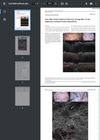
October 2023 in “Skin research and technology” This study found that line-field confocal optical coherence tomography effectively visualized key diagnostic features of classic lichen planopilaris in real time, suggesting its potential as a valuable diagnostic tool.
 January 2026 in “Zenodo (CERN European Organization for Nuclear Research)”
 In this clinical study, Prachhanna followed by Guñjā lepa was found to be more effective than PRP therapy with Minoxidil 5% in improving hair regrowth and reducing symptoms in patients with Indralupta (Alopecia Areata), achieving 91.14% overall improvement compared to 74.74% for the alternative treatment.
37 citations
,
December 2001 in “Journal of the American Academy of Dermatology” This case report details significant hair regrowth in a patient with lichen planopilaris after treatment with thalidomide, suggesting its potential as a treatment option for this condition.
July 2025 in “Case Reports in Dermatology” This case report highlights that early signs like pili torti may precede lichen planopilaris in some patients, emphasizing the importance of timely intervention to prevent permanent hair loss.
 January 2024 in “Bratislavské lekárske listy/Bratislava medical journal”
 This study examined the vasorelaxant effects of two similar alkaloids, chloroquine and cinchonine, in a model of smooth muscle contractions induced by phenylephrine. Results are not reported in the abstract.
11 citations
,
January 2018 in “Jaypee's international journal of clinical pediatric dentistry” This report describes the clinical presentation of Papillon-Lefèvre syndrome in two brothers and reviews the related literature, without providing new clinical outcomes.
12 citations
,
May 2005 in “Journal of the American Geriatrics Society” This case report describes successful treatment of valproate-induced hyperammonemia in a 79-year-old man using lactulose, marking the first such documented use for this condition.
3 citations
,
September 2018 in “JAAD case reports” This case report discusses a rare occurrence of systemic sclerosis with lupus erythematosus panniculitis in a Japanese patient and highlights hydroxychloroquine as a potential treatment, noting a dramatic improvement.
9 citations
,
September 2018 in “JAAD Case Reports” This article describes a unique case of lichen planopilaris with a previously unreported trigger in one of the youngest documented adult patients, without providing new clinical results or data.
 1 citations
,
April 1976 in “Archives of Dermatology”
1 citations
,
April 1976 in “Archives of Dermatology” Sudden weight loss can cause significant hair loss, and using colchicine on the skin for psoriasis may be unsafe.
 May 2023 in “Frontiers in chemistry”
 This study found that hair from the vertex posterior is a reliable sampling region for detecting zolpidem intake, showing consistent drug concentration and peak position compared to other scalp regions.
35 citations
,
November 2019 in “Journal of the American Academy of Dermatology” This study reviewed 40 patients with scalp symptoms and identified a new variant of diffuse lichen planopilaris in 20 individuals, suggesting these conditions should be considered in similar cases.
5 citations
,
January 2024 in “Fermentation” This study found that fermenting porcine and equine placentas with a specific lactic acid bacterial strain enhanced the moisturizing abilities and cell proliferation properties compared to traditional placental extracts, suggesting their potential for cosmetic applications.
 April 2012 in “Informa Healthcare eBooks”
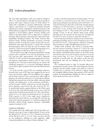
 Lichen planopilaris is a rare, chronic condition causing hair loss, mainly in middle-aged women, and early treatment is important to prevent permanent baldness.
 December 2020 in “The Journal of Family Practice”
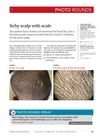
 This report describes an 11-year-old boy in Panama who visited a village health center due to scalp itching and subtle hair loss, previously treated for head lice, with no hair pulling reported.
1 citations
,
July 2024 in “JAAD Case Reports” This study links scalp pruritus in lichen planopilaris and its variants to the inflammation-induced release of substance P and calcitonin gene-related peptide by sensory nerves around hair follicle inflammation sites.
28 citations
,
October 1987 in “PubMed” This study found that treating Tradescantia stamen hair cells with LiCl disrupts mitotic progression, leading to metaphase arrest, which can be reversed by myo-inositol or CaCl2 addition.
32 citations
,
August 1982 in “Journal of the American Academy of Dermatology” This study reports two cases of follicular lichen planus, suggesting that GLPLS and LPP may be variants of this condition based on clinical and immunofluorescent findings.
December 2024 in “Skin Appendage Disorders” This bibliometric analysis revealed important studies on LPP, noted essential trichoscopic features, and identified significant evidence gaps. The researchers emphasized a need for more robust and diverse studies to improve diagnostics and treatment strategies.
This study found that combining prodigiosin and essential oil from Thuja orientalis leaves showed a synergistic effect against the 3rd larva stage of Cx. pipiens, significantly reducing acetylcholine esterase activity and altering midgut pH, compared to untreated larvae.
4 citations
,
January 1988 in “Cosmetics and toiletries” 0.1% piroctone olamine in hair tonics effectively treats dandruff.
 October 2023 in “Journal of the American Academy of Dermatology”
 This source reports that clascoterone cream has been approved in the U.S. for treating acne vulgaris in patients aged 12 and older, suggesting it works by competing with dihydrotestosterone at androgen receptors to mitigate acne's effects.
 5 citations
,
September 2011 in “Bioorganic & Medicinal Chemistry Letters”
5 citations
,
September 2011 in “Bioorganic & Medicinal Chemistry Letters” This study identified pantolactam based compounds as effective topical antagonists of the androgen receptor, reducing sebum components in a hamster model.