 1 citations
,
January 2007 in “The Kitakanto Medical Journal”
1 citations
,
January 2007 in “The Kitakanto Medical Journal” This report documents a case where a man survived sub-acute toxicity from an overdose of the anticancer drug UFT due to effective treatment with antibiotics and granulocyte colony-stimulating factor.
 October 2023 in “Urologie in der Praxis”
 This article reviews the diagnostics and medical transition options for adults with gender incongruence, reports no new clinical results, and highlights the importance of primary care knowledge in managing these patients.
 14 citations
,
November 1987 in “Journal of The American Academy of Dermatology”
14 citations
,
November 1987 in “Journal of The American Academy of Dermatology” A woman developed a severe skin reaction called toxic epidermal necrolysis after taking the antibiotic cephalexin.
147 citations
,
October 2021 in “Cancer Communications” This study found that the novel anti-HER2 antibody RC48 demonstrated promising activity and manageable safety in patients with HER2-overexpressing, advanced gastric or gastroesophageal junction cancer after at least two prior chemotherapy lines.
March 2026 in “Chemical Engineering Journal” The hydrogel helps heal diabetic wounds by combining antibacterial, antioxidant, and immune-boosting effects.
 22 citations
,
September 2019 in “ACS omega”
22 citations
,
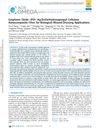
September 2019 in “ACS omega” This study found that AGO@HPC nanocomposite films demonstrated enhanced mechanical, anti-ultraviolet, and antibacterial properties, suggesting potential for use in antibacterial packaging and wound-dressing applications.
January 1994 in “Toxicological Sciences” This study found that chronic high dosages of 2-(difluoromethyl)-dl-ornithine caused various toxicities in rats and dogs, with some effects potentially minimized at lower dosages.
8 citations
,
January 2024 in “Regenerative Biomaterials” This study found that a novel bioceramic/alginate hydrogel with photothermal properties and multiple ion release effectively reduces infection and inflammation, and enhances osseointegration in early-stage peri-implant lesions, potentially improving dental implant survival rates.
1 citations
,
January 2024 in “Pharmaceuticals” The researchers reported that dPGS-PCL as a carrier improved the penetration of tofacitinib in an ex-vivo human skin model compared to free tofacitinib, but did not show significant differences in inhibiting IL-6 and IL-8 during short incubation.
14 citations
,
January 2011 in “The International Journal of Developmental Biology” This study showed that coexpression of TG2 and Gbx1 in the epidermis is necessary for esophagus-like mucosal transdifferentiation, with TGF-beta2 in the dermis essential for the process through epithelial-mesenchymal interaction.
52 citations
,
June 2009 in “Clinical Toxicology” This article reviews the clinical features, diagnosis, and treatment of acute radiation syndrome caused by ingesting (210)polonium, emphasizing the need for supportive care and potential benefits of chelation therapy.
January 2026 in “Journal of Crohn s and Colitis” This study found that high-dose intravenous iron therapy was effective and safe for patients with inflammatory bowel disease-associated anemia, improving hemoglobin and iron levels, reducing inflammation markers, and alleviating disease activity and symptoms, even in those with active inflammation.
 4 citations
,
December 2023 in “Advanced science”
4 citations
,
December 2023 in “Advanced science” This study found that injectable gelatin/metal/tea polyphenol double nanonetworks significantly accelerated wound healing in diabetic wounds by enhancing cell migration and providing anti-inflammatory and antioxidant properties, without detectable cytotoxicity in tests.
July 2026 in “Journal of Enzyme Inhibition and Medicinal Chemistry” This review discusses the evolution of Cereblon ligands in PROTAC technology, highlighting chemical innovations that may enhance drug-likeness and applicability in protein degradation, while noting challenges and future research directions.
March 2021 in “Arrow - TU Dublin (Technological University Dublin)” This study tested a folate-conjugate drug delivery system and found its cytotoxicity depends on whether the treated cells overexpress folate receptors, suggesting potential for targeted chemotherapy.
 1 citations
,
June 2022 in “JAAD case reports”
1 citations
,
June 2022 in “JAAD case reports” This case report describes a woman who developed toxic epidermal necrolysis, potentially linked to an etonogestrel contraceptive implant, suggesting the need for further research into such adverse reactions.
 August 2023 in “Gastroenterology”
 This study describes the diagnosis and successful management of Cronkhite-Canada syndrome in a 78-year-old man, highlighting improvement in symptoms and endoscopic findings after treatment with prednisone and supportive therapies.
33 citations
,
May 2017 in “Journal of Clinical Oncology” This phase I study reported that ETC-159, targeting Wnt signalling, showed tolerable safety profiles at doses that inhibit its pathway, though bone turnover markers increased, warranting early and regular monitoring. No tumor responses were observed, but two patients achieved stable disease for several cycles.
This study investigated the safety and efficacy of IV iron maltoside 1000 in treating iron-deficiency anemia among children with IBD and found a significant increase in hemoglobin levels by 6 weeks, maintained for up to a year, with minimal side effects reported.
5 citations
,
January 2010 in “The Journal of Internal Korean Medicine” This study suggests that Lygodium japonicum may reduce cell damage and tissue proliferation in a rat model of benign prostatic hyperplasia, indicating potential as a treatment.
 January 1993 in “Journal of International Medical Research”
 The document corrects errors in previous articles, including a reversed term, updated subject weights, hair count data, and reference numbering.
61 citations
,
January 2013 in “International Journal of Biological Macromolecules” This study found that applying both dehydrothermal treatment and carbodiimide crosslinking improved the mechanical properties of porcine acellular dermal matrix scaffolds without added cytotoxicity, suggesting potential applications in tissue engineering.
In this study, researchers developed a method using stencils to create controlled stiffness gradients in alginate hydrogels, revealing that stiffer regions within the gels promote deeper invasion by breast cancer cells, facilitating the study of mechanosensitive cellular behaviors.
 4 citations
,
July 2012 in “Genesis”
4 citations
,
July 2012 in “Genesis” This study reported that a Megsin-Cre transgene enables genetic manipulation primarily in skin, forestomach, and esophagus tissues, offering a new tool for studying development and diseases in these areas.
 6 citations
,
February 2025 in “Scientific Reports”
6 citations
,
February 2025 in “Scientific Reports” This study found that MEGA PROTAC improved the prediction of ternary structures with higher maximum DockQ scores compared to the BOTCP method in 16 out of 22 test cases.
 March 2025 in “Frontiers in Pharmacology”
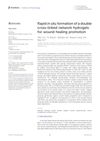
 This study developed a hydrogel dressing incorporating angelica polysaccharides, demonstrating enhanced wound healing properties in a mouse model by promoting rapid hemostasis, tissue healing, and new blood vessel formation compared to Tegaderm™ film.
 June 2022 in “Journal of Experimental Biology and Agricultural Sciences”
 In this study, researchers identified high levels of multidrug resistance in E. coli samples from broiler chickens in Malang Regency, with all positive samples resistant to multiple antibiotics including Erythromycin, Bacitracin, and Amoxicillin.
 January 2025 in “ACS Materials Letters”
 This study developed a GelMA-based hydrogel system that supports all stages of severe burn wound healing by reducing inflammation and enhancing tissue regeneration, including neovascularization and hair follicle growth, potentially improving clinical outcomes for complex wounds with multidrug-resistant bacterial infections.
April 2025 in “Cermin Dunia Kedokteran” This review discusses the challenges in diagnosing and managing gastroesophageal reflux in children, particularly in primary care settings, emphasizing the need for appropriate treatment and referral when necessary.
1 citations
,
May 2022 in “European Journal of Dermatology” This study found that while no predictive factors for response to vismodegib were identified, longer treatment duration was associated with a lower risk of relapse in basal cell carcinoma patients.