11 citations
,
October 2007 in “Journal of Investigative Dermatology” Mutations in the Sgk3 gene cause fuzzy hair in mice.
3 citations
,
January 2018 in “International Journal of Trichology” The authors concluded that their new grading system can effectively classify early female pattern hair loss and evaluate treatment progress.
73 citations
,
June 2006 in “Animal genetics” This study found that a missense mutation in the FGF5 gene is associated with hair-length differences among various dog breeds.
January 2020 in “프로그램북(구 초록집)” This study found that treating androgenetic alopecia patients with microneedle-delivered GFC containing FGF5s and NMN increased hair density and diameter compared to normal saline.
 5 citations
,
June 2023 in “BMC genomics”
5 citations
,
June 2023 in “BMC genomics” This study found that a specific genetic mutation in the Fgf5 gene may contribute to the long-hair trait in Angora rabbits by reducing the binding capacity of the FGF5 protein.
In this study, researchers used the CRISPR/Cas9 system to edit the FGF5 gene in Dorper sheep, observing increased density and finer wool, along with changes in cortisol levels and antioxidant enzyme activity linked to hair follicle development.
 7 citations
,
February 2022 in “International Journal of Pharmaceutics”
7 citations
,
February 2022 in “International Journal of Pharmaceutics” In a mouse model of androgenetic alopecia, this study found that a safflower oil body nanoparticle loaded with human fibroblast growth factor 10 significantly improved hair regeneration and reduced associated microinflammation without significant toxicity.
January 2020 in “Global dermatology” This study found that iontophoresis with growth factor cocktail including fibroblast growth factor 5-short significantly increased hair density in patients with androgenetic alopecia over 24 weeks.
 16 citations
,
August 2015 in “Protein Expression and Purification”
16 citations
,
August 2015 in “Protein Expression and Purification” This study found that recombinant human FGF9 expressed in Arabidopsis thaliana oil bodies significantly promoted the proliferation of NIH/3T3 cells.
 2 citations
,
November 2007 in “Hair transplant forum international”
2 citations
,
November 2007 in “Hair transplant forum international” This abstract introduces the concept of follicular units (FUs) in the human scalp but presents no new research findings.
September 2016 in “Journal of dermatological science” This study suggests that FGF18 may enhance radioresistance in telogen hair follicles by inducing cell cycle arrest, potentially serving as a radioprotector against radiation-induced hair follicle damage.
October 2021 in “QJM: An International Journal of Medicine” In this pilot study, treatment with lyophilized platelet derived growth factors showed improvement in women with androgenetic alopecia, suggesting it may be a promising new therapy.
157 citations
,
May 2016 in “Plastic and reconstructive surgery/PSEF CD journals” This review of facial feminization surgery literature suggests it is generally safe and satisfactory for patients, though more research is needed to establish best practices and quality-of-life outcomes.
 2 citations
,
January 2020 in “Elsevier eBooks”
2 citations
,
January 2020 in “Elsevier eBooks” The document concludes that individualized Facial Feminization Surgery plans and comprehensive care are crucial for successful outcomes.
 45 citations
,
July 2009 in “Journal of human genetics”
45 citations
,
July 2009 in “Journal of human genetics” This study found that an SNP in the FGFR2 gene, rs4752566, was significantly associated with hair thickness in Asian populations, suggesting an effect on hair morphology through altered FGFR2 expression levels.
 44 citations
,
March 2015 in “PLOS ONE”
44 citations
,
March 2015 in “PLOS ONE” This study found that FGF-9 treatment in diabetic mice improved heart function after myocardial infarction by decreasing monocyte infiltration and promoting anti-inflammatory macrophage differentiation.
 39 citations
,
March 2008 in “Journal of biological chemistry/The Journal of biological chemistry”
39 citations
,
March 2008 in “Journal of biological chemistry/The Journal of biological chemistry” This study found that GLI2 plays a key role in activating follistatin, an activin/BMP antagonist, in response to hedgehog signaling in human epidermal cells, with implications for hair follicle development and basal cell carcinoma.
November 2025 in “Biomolecules” This study found that overexpressing FGF22 in dermal papilla cells enhanced hair follicle stem cell proliferation and viability, while its knockout reduced these attributes, indicating its role in hair follicle regeneration.
November 2021 in “CRC Press eBooks” This article discusses female pattern androgenic alopecia, emphasizing its impact on women's lives and highlighting the need for further research into effective treatments, but reports no new clinical results.
 October 2025 in “Asian Journal of Oral Health and Allied Sciences”
 In this case report, a 28-year-old male with androgenetic alopecia showed improved hair density and shaft thickness after four monthly sessions of autologous growth factor concentrate injections, with no adverse effects and high patient satisfaction, suggesting the treatment’s promise as a safe and effective option.
January 2014 in “Ghent University Academic Bibliography (Ghent University)” FGF18 may influence hair loss in dogs.
 6 citations
,
January 2017 in “British Journal of Dermatology”
6 citations
,
January 2017 in “British Journal of Dermatology” This article reviews frontal fibrosing alopecia, exploring its characteristics, demographics, and associated conditions, and calls for controlled trials due to an increase in worldwide cases; it reports no new findings.
 September 2013 in “Hair transplant forum international”
 This abstract describes frontal fibrosing alopecia, a type of cicatricial alopecia identified in post-menopausal women, and reports no new clinical findings.
 24 citations
,
July 2017 in “Structure”
24 citations
,
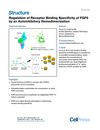
July 2017 in “Structure” In this study, researchers found that ligand homodimerization controls the receptor binding specificity of the FGF9 subfamily, preventing off-target activation of FGFR "b" isoforms.
November 2021 in “International Journal of Trichology” This study found that trichoscopy can confirm the diagnosis and assess the clinical severity of female androgenetic alopecia, correlating specific features with different severity grades.
2 citations
,
March 2011 in “Veterinary Dermatology” This study identified fibroblast growth factor 18 in various components of canine hair follicles and other tissues, but found no significant differences in its presence across seasons, body regions, or sexes in beagle dogs.

The document recommends a multidisciplinary approach and experience sharing to advance facial feminization surgery as a medical field.
 February 2024 in “Skin research and technology”
 The researchers in this study identified molecular mechanisms involved in frontal fibrosis alopecia, highlighting immune response and fatty acid metabolism, and developed a four-gene diagnostic model showing high accuracy in distinguishing affected individuals from controls.
7 citations
,
June 2017 in “Gene” This study found that ectopic expression of FGF5s in transgenic Chinese Merino sheep increased wool length and greasy fleece weight compared to non-transgenic controls.
 1 citations
,
September 2022 in “Evidence-based Complementary and Alternative Medicine”
1 citations
,
September 2022 in “Evidence-based Complementary and Alternative Medicine” In this study, Gardenia florida fruit extract promoted hair growth in vitro and in vivo by enhancing hair growth-promoting gene expression and increasing hair follicle number, size, and depth in mice.